Thought I’d make an entry on this as every year the Fantasy Premier League is a bane and pain for millions of sufferers. Unless you’re one of the few fortunates who just happen to pick the striker in form consistently enough or have an unquestionable hunch for the right captain.
As I write, I am listening to the BBC 606 Fantasy Podcast and they’re discussing, among other things, the Aguero conundrum. Having scored a couple of goals in the Champions League, what will happen on Saturday – will he start or be on the bench again? They toss a coin in the studio and it’s heads for Aguero and tails for Jesus. It’s a tails but it’s very much wait and see.
The Manchester City rotation is a huge issue for FPL fans in any case. De Bruyne and/or Sterling are often rested along with Aguero and even David and Bernardo Silva seem to take it in turns. A few managers dodge the bullet by not having any of these City players and turn their attentions elsewhere to more guaranteed starters, which after all, is what you need.
One of the first things to consider once the season has begun is when to use the first wildcard. Every year I use it by week three, usually because I’m already playing catch-up and it’s easy to do but really you should keep faith for a whole lot longer because you can guarantee that the players you change will start producing once you’ve binned them!
Of the chips, I have at least learnt never to use the free hit until there is a possibility of a double game week later on – it’s usually towards the end of the season. You can also keep your January wildcard for that purpose and another trick is to play your triple captain chip during a double game week. I did it last season with Harry Kane though and he was ill the first game and did nothing when he played the second – so it doesn’t always work!
This season has seen some low-scoring gameweeks. Take last weekend, 34 points is something you would usually shudder at but actually the week average was 37 and it didn’t put you further behind at all because all the major captaincy picks flunked.
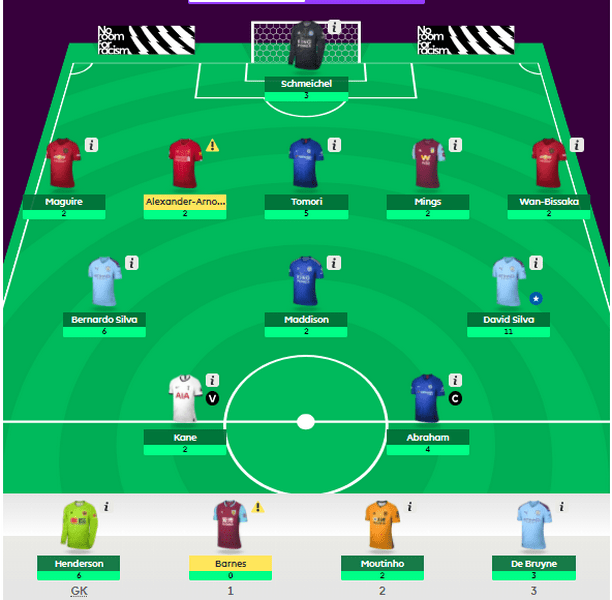
Let’s look at my current team and see what surgery may be needed.
Depending on what kind of illness TA-A has, he could be recuperated by 4.30pm Sunday but Lundstram over Maguire as the replacement might be a decent call. Sheffield United’s defence looked very organised against Arsenal and West Ham may not find it a walk in the park breaking them down. Harry Maguire has mustered just below two points per game on average and missed a couple of very good chances to score with headers, chances you feel that would have been put away if he was still at Leicester!
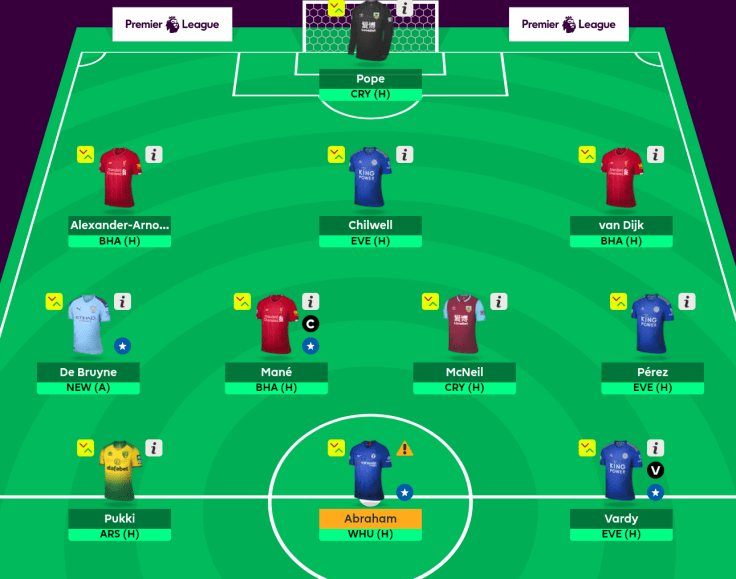
Defence-wise I had chosen Trent and Virgil from the off and while LFC haven’t been as mean in defence as they usually are, these two are not players I would ever consider changing. Luca Digne was an addition but mainly due to the teams above me having him. Note it is always worth tracking your nearest rivals transfer movements. To that end, and to compare my own team, here’s the team that’s top of the main league I am in.
Notice they left KdB on the bench but he had had that injury so nobody was quite sure if he would start at Selhurst. Like me, they captained Abraham and with Kane not firing much AND with me being just seventy-odd points worse off as we enter the second quarter, it really isn’t panic stations yet.
Mo Salah is back from a brief injury now but Mane for Salah has been a very popular switch of late. With Mane, KdB, Bernardo and Mount, you’d think that’s a strong enough midfield for the long haul.
And with the strikers, I’ve continued to employ the budget price brigade, keeping faith with Pukki for the moment and Maupay could yet be a shrewd pick for third choice forward.
Gameweek ten begins tonight with Southampton v Leicester but before I go, one last tip. On transfers, if you can, save them up. If you don’t make one then the following week you will be able to make two changes. Okay, sometimes you will be at the point where there’s no-one you’re that interested in but it’s still a luxury; put to good use you may well benefit from getting rid of someone who just sin’t doing it. Bear in mind however that once you ditch them, they;ll score or keep a clean sheet next gameweek – it’s the Fantasy Premier League way of things.
Gameweek 14 and 15
Tammy has picked up a hip injury in the Valencia game and is rated 50/50 so while leaving him in the team, I went and replaced Digne with Tomori who will be first sub.
This frees up £1m for other areas and with a round of midweek matches incoming, the goalkeeping situation needs addressing. I’d be happy to leave Pope in against Manchester City at Turf Moor but may look at replacing Ryan with Brighton playing at Arsenal.
The contenders would be Henderson (Sheffield United home to Newcastle United) and Guaita (Crystal Palace home to Bournemouth).
This week’s captain pick by most I feel will be Vardy with Leicester hosting an hapless and enigmatic Everton but I’ll probably make another captaincy faux pas in sticking with Sadio.
My hunch is that Liverpool haven’t pasted anyone of late and they are due to hand one out to someone. Of course having two Liverpool defenders playing is a concern as they struggle to keep clean sheets these days.
Replacing van Dijk may well be an option, bringing in an Ake or Tarkowski perhaps, while Moutinho might reap finer rewards than Rodrigo.
Currently we are 15th in the A/V Forums league and probably over a hundred points behind the leading team.
Finished sixth last season and tenth in 2017/18 and while my team looks decent enough on paper, I have suffered as usual in two on going problem areas, captaincy and players on the bench performing a lot better than I considered.
Fantasy Premier League is so rich in hindsight; you always see the errors in your ways after the horse has bolted!
Old tv programmes that you remember as a child can often rear their heads in conversation. Yesterday while queuing for a pre-shop breakfast at a local Tesco, Ken Goodwin came to mind with his catch-phrase “settle down then”. I wondered if he was still with us. Sadly not. Goodwin died aged 78 of Alzheimers back in 2012.
But it inspired me to write a feature on the seventies tv show, The Comedians, which starred, as well as Goodwin, many other great stand-ups, household names many of them.
Also featured on the TV show, were Shep’s banjo boys, a 7-piece band comprising (for the first 5 series) Charlie Bentley (tenor banjo), John Drury (sousaphone), Andy Holdorf (trombone), John Orchard (piano), John Rollings (drums), Graham Shepherd (banjo) and Howard Shepherd (lead banjo). In 1973, the line up was Mike Dexter (banjo), Tony “Tosh” Kennedy (sousaphone), Ged Martin (drums), Tony Pritchard (trombone), Graham Shepherd (banjo) and Howard “Shep” Shepherd (lead banjo).
The Comedians began as an experiment for Granada TV. Filmed before a live audience in Manchester, comics each performed 20-minute sets, which were then edited together into half-hour shows. Each edition featured up to ten stand-up comics.
Working men’s clubs are numerous in Britain, especially in North East England and have been a useful training ground for artists, especially comedians. Most of these clubs are affiliated to the CIU (Working Men’s Club and Institute Union) founded in 1862 by the Rev. Henry Solly. There are also political clubs, as well as Servicemen’s Clubs affiliated to the Royal British Legion.
It was remarkably popular during the earlier series. An LP recording of the show reached the best-seller charts, several sell-out national tours followed, including a season at the London Palladium, and the programme won the Critics’ circle Award.
The comedy frequently took the form of anecdotes or jokes and often involved racist or sexist stereotypes. Like other British comedy successes of the day, notably, Love Thy Neighbour, this kind of entertainment was acceptable on British television during this period but would not be so today. Viewing the series in retrospect it stands as a major social document of the times.
In recent years, the series has been repeated on the (now defunct) British satellite television channel Plus, and can now be bought on DVD, having been released by Network.
Remarkably popular during its earlier series, The Comedians was basically a bunch of stand-up comedians and a Dixie Jazz band (Shep’s Banjo Boys) in Acker Bilk vests.
Recruited from the hard-drinking Northern night clubs and working men’s clubs that were their staple environment, Granada TV put the North’s best ‘unknown’ comics into the studio, taped their (expletives deleted) live acts and edited the material into non-stop barrages of quips to slay the audiences at home, packing up to 50 jokes into each half-hour show (although 80% of the material recorded was never used).
Even though some of the comics had been working for 20 years, many were appearing on television for the first time.
Many of the lines were so old they creaked, and there was a fair dose of racist, sexist and physical defect material that was only just acceptable then and would not be today, but mostly the jokes were of the mother-in-law, Irishman and three-men-walk-into-a-bar variety.
Viewers took to the series with great enthusiasm and from those first few golden series many stars were born, among them Colin Crompton (a weedy Northerner, pictured below left), Ken “settle down now” Goodwin (a shy stutterer), Charlie Williams (an ex-professional footballer and ‘coloured chap’ from Yorkshire), Bernard Manning (a portly club man), the great if relentless Frank Carson, Lennie Bennett (a giggler) and Mike Reid (a ‘marfy’ cockney).
All of them found their nightly fees skyrocketing from around £50 to £1000 or more.
So popular was the series at the time that in the summer of 1972 The Comedians became a stage show, mounted in Blackpool, Great Yarmouth and London, and an album made the lower reaches of the charts.
The series was created by Granada’s Light Entertainment producer Johnny Hamp, whose father had been a magician playing music halls as The Great Hamp.
Being steeped in the tradition of old-fashioned stage entertainment, both knew exactly where to find the best local talent, and had the stamina not only to last the exhausting three-hour recording sessions where each comedian would perform a stand-up spot of around 15 to 20 minutes but also to edit the resulting tape into finished shows.
In 1974, on the back of its major success with The Comedians, Granada launched a Northern working men’s club variety show, The Wheeltappers And Shunters Social Club which featured many of the same comics, with Bernard Manning and Colin Crompton as comperes.
Although The Comedians was still turning up fresh talent, audiences at home grew tired of the formula after three years and the series came to an end after 50 editions.
Three separate revivals then followed and although none matched the success of the earlier shows, some new stars were unearthed, among them Stan Boardman and Roy Walker – indeed, perhaps the best epitaph for The Comedians is that it spawned more TV games show hosts than any other series before or since.
“As the Pope once sad to Michelangelo; ‘You’d better come down, I think we’ll have it wall-papered’”.
Michael Stipe, as you can tell, is not your usual pop star. In fact, he’s not really a pop star at all these days, though he’s working on solo material, occasionally produces other bands, such as Fischerspooner, and is still best known as the singer in REM. Now 59, slight and neat, he has the hard-to-pin-down feel of a much younger person. There’s no weight about him, no sense of him becoming settled in his ways. Instead, he reminds me of a curious faun: skittery, friendly, interested but naturally shy. He’s a talker, but he’s not dominant; he doesn’t swamp you with big ego charisma, though he’s utterly charming. How astonishing that he became so famous, I think. You wouldn’t imagine he’d be able to bear it, despite his ease in a suite. Instead of a lead singer, Stipe has the air of an artist, regarding the world from unusual angles.
And actually, since REM split, in 2011, Stipe has been just this, making installations and video work, sculpture and photography. He filmed his first artistic mentor, Jeremy Ayers, dancing for seven minutes, then set it to house music composed on a Moog. He makes books and experimental sculptures in his studio in New York, where he lives with his long-term partner, Thomas (pronounced Tohma) Dozol, who’s also a photographer. In fact, in the years since REM, Stipe has been quite at ease with exploring his art, with not performing. “It feels like the real me,” he says. “I’m working in all these different mediums and it makes sense.” At one point he grew the most enormous wild man beard, though it’s trimmed short today. He wears a green polo shirt, jeans, green socks and a beautiful large gold ring on his left hand.
Stipe is in London as part of a short promotional tour, with a double set of duties. It’s the 25th anniversary of REM’s Monster, and there’s a special box set coming out, so he’s been chatting about that to journalists, alongside REM musicians Peter Buck and Mike Mills. Separately, he’s also here to discuss his new book of photographs, the second in a series made in collaboration with other people. The first, Volume 1, came out last year: it featured just 35 photographs and was made with artist/curator Jonathan Berger. The second, Our Interference Times: A Visual Record, with writer Douglas Coupland, has just been published. And it’s Interference Times that we’re here to contemplate. We put the book on the table, open it at page one… “A window,” says Stipe. “In black and white. And kind of shitty, like a shitty cellphone picture. Every image after this is colour, like boom, here we are in real life. Or fantasy life. It’s basically the mind of Michael.”
The new book is less densely populated, though there are pictures of people, and those without humans show evidence of our interference with nature’s design. Stipe talks about one, which seems to be there to deliberately annoy neat freaks. It’s a picture of a manhole cover, a pavement and a fence. None of them fit together properly. It’s maddening … though Stipe sees it differently.
“You have these striations from a natural material, made into concrete,” he says. “You have these stones laid out as a mosaic, a manhole cover. And then a tree that’s been cut into slabs. It’s man attempting to create order from chaos. A lot of the book is really about that old waltz between man and nature.”
Stipe has taken thousands of photographs in his time: about 37,000, he thinks, kept in “a house” and in storage facilities. He’s a massive hoarder (when he puts on a jumper later, he mentions that it’s one that he bought in the 1990s, and found the other day when going through a storage container), and he started photography young, taking a course when he was 13, then studying photography and painting at the University of Georgia before leaving to form REM. And he often used his training and art sensibilities while in the band – directing videos, overlooking graphics and stage design. His photographs became LP covers, and he used his camera as a diary when touring. Despite all this, he says that he would have preferred to have been a fine artist, but he doesn’t like his drawing line. In Our Interference Times, there’s some of his drawing near the front – a profile, drawn when he was very young, some school work, a copy of some graphic writing. “I liked how it looked, which is very unusual for me,” he says. There’s also a picture of a smashed lightbulb, representing an incident that happened when Stipe was three years old.
“I bit into a lightbulb because I wanted to be the filament,” he says. “And the only way that I knew to get inside was to bite through. So I did. My father and my uncle got the glass out of my mouth, they got some glue, and they put the lightbulb back together to make sure I hadn’t swallowed any glass. I distinctly remember doing it. The desire to be the filament…”
To become the light? I say. That’s an easy metaphor.
“Well, I was a year out of scarlet fever,” says Stipe. “I had scarlet fever as a two-year-old and it boils your brain. You use your synapses differently. And that’s become part of my mythology of myself, and I go along with it. I do think differently and I know that. I’m neither synesthetic nor on the spectrum, but there are similarities. I talk differently, I know!”
Stipe puts on a beanie hat, and his 90s jumper, and we go down to the lobby. He wants to check on the Extinction Rebellion protest before dinner. Erdem is a bit worried – he doesn’t like crowds, in case they turn nasty – but we all walk to Trafalgar Square, to wander between the tents and the flags, to dart through the crowd around an anarcho-rap band, the people queuing for vegan curry. It’s like the Green Fields at Glastonbury. And Stipe is utterly at home, moving swiftly between everyone, always looking, never stopping. I leave him there, in the dark, completely happy.
*Selected extracts from Our Interference Times in The Guardian, courtesy of Miranda Sawyer.
I always thought the best thing to come out of Wiltshire was XTC. And perhaps their song ‘English Roundabout’ refers to that particular madness in Swindon. But within the confines of the county lay some really beautiful and interesting towns and villages.
On the Somerset / Wiltshire border is the town of Frome and where many of these hamlets have the same character, I’ve often though that perhaps Frome should belong in Wiltshire. Anyhow, my mum lives in and loves Westbury and I’ve friends in Warminster and Marlborough. So, being left to my own Devizes, here’s a look at some of these places that are worth a visit, like the village of Upavon…
Amesbury
Amesbury is a small Wiltshire town. It lies on a meander of the River Avon, eight miles north of Salisbury, at a point where the main road from London to Exeter bridges the river. The chalk downlands of Salisbury Plain surround the town, pocked with the remains of earlier civilizations.
Until the present century Amesbury depended largely on agriculture, but now its population of some 6000 inhabitants looks mostly to the neighbouring defence establishments or to Salisbury for employment. The nucleus of the town and its medieval abbey church remain, although the ‘ great thoroughfare’ which once formed the High street has been channelled into a modern by-pass.
The abbey mansion, the abbey was founded in 979, is now a nursing home, the 18th century houses of the town centre are interspersed with modern shops, and housing estates have encroached onto the common fields.
Amesbury may not impress the casual visitor, or even the resident, with a sense of history in the way that Salisbury (an altogether younger place) does, but there is plenty in Amesbury’s past that deserves to be remembered.
Bradford on Avon
Bradford on Avon grew up around ‘broad ford’ and the slopes of the river. The narrow roads are lined with grey buildings in mellowed Bath stone. The textile industry had been the backbone of the local economy for six ceturies until its demise at the begining of this century.
At one time Bradford had more than thirty cloth factories. However when King James I enacted a law compelling all cloth to be dyed in London, by a merchant to whom he was in debt. This law ruined most of the trade in the West Country. The trade changed when Paul Methuen (one of Bradfords great clothiers, whose family now own Corsham Court ) brought over a colony of Flemish weavers to introduce improved techniques.
The 19th century cloth mills still line the banks of the river and the old clothiers houses and weavers cottages provide plenty of old world charm.
Well worth a visit is the Saxon church of St laurence, this building dates back to the eleventh century but was only rediscovered in 1871. It may even be built on the site of the earlier construction by St Aldhelm in 700AD.
It is incredible that a building this old is still in such a good condition. It owes its survival to the fact that it was not recognised as a church at all, as families used to live in it and even a school was once housed inside.
Other places of interest include the Holy Trinity Church, St Mary’s Chapel and the Tithe Barn at Barton Farm.
Calne
Currently the town centre is going through transition, following the demolition of the Harris Factory. A new supermarket is under construction and the intention is that the town centre will be landscaped.
Historically, Doctor Joseph Priestley discovered Oxygen while living in Calne from 1772-1779. There is a memorial to him by the Doctors pond, not far from St Mary’s Church.
Walter Goodall George (1858-1943) was born near Calne Town Hall, and held the World Record for the mile from 1886-1915. A memorial to this was unveiled by Sydney Wooderson, the next British runner to achieve the fastest time (in 1935) on the centenary in 1986.
Calne also has St Mary’s Girls Public school. A centre for teaching excellence which ranks very highly in the national schools league tables.
Calne is one of the very few towns where you can stand in the centre, look up and see hills around you, towards the White Horse.
Chippenham
On the death of Alfred, that monarch bequeathed the lordship and town of Chippenham, with its palace, to his daughter Elfleda. In the Domesday Survey, the manor of Chepeham, or Chippenham, is entered as belonging to Edward the Confessor, and after the Conquest it continued in the possession of the crown. In the reign of Richard II. it had passed to the Hungerfords, who rebuilt the church; and in that of Charles I. it was taxed £30 as ship-money.
It had been a market town from the earliest times, as its name implies, being derived from the Anglo-Saxon word Cyppenham, a market-place, but it received its first charter from Queen Mary. It was subsequently incorporated under the Municipal Corporations Act, when the government was vested in a mayor, 4 aldermen, and 12 councillors, with the style of the “bailiff and burgesses of the borough of Chippenham. “The principal employment of the inhabitants is agricultural, but many of the townspeople are engaged in the manufacture of broadcloth and silks. Chippenham is the centre of the North Wilts Agricultural Association, and there is an annual show of cattle, sheep, pigs, and poultry.
The town is situated on a declivity on the S. side of the Avon, which is very wide at this place, and has a beautiful stone bridge of 20 arches, with an ornamented balustrade. It is well built, and extends for about half a mile in length, containing a townhall, market-house, two banks, savings bank, and literary institution. In 1834 it was improved under the provisions of an Act for lighting, cleansing, and paving it.
There are a few grist-mills and tanneries, and the town is connected by a short branch with the Wilts and Berks canal. It first returned two members to parliament in the reign of Edward I. The limits of the present parliamentary borough are much more extensive than the municipal, the former containing, according to the census of 1861, 1,345 inhabited houses, with a population of 7,075, while the latter comprises 300 houses, inhabited by a population of 1,603. It is also remarkable that while the municipal borough has declined 104 in the decennial period since 1851, the parliamentary has increased 792. The population of the parish of Chippenham is 4,753.
The living is a vicarage* annexed to which is the rectory of Tytherton Lucas, in the diocese of Gloucester and Bristol, in the patronage of the Dean and Chapter of Christ Church, Oxford. The parish church, dedicated to St. Andrew, is an ancient edifice in the Gothic style, partly built by the Hungerfords in the 12th century, and has a beautiful spire and peal of eight bells. It contains several brasses and tombs of the Bayntons, Prynnes, &c. The district church, situated near the railway station, stands in the parish of Langley Burrell, and is dedicated to St. Paul. It is an elegant building in the early English style, and was erected in 1555. There are five Dissenting places of worship, two of which are Baptist, the others Independent, Methodist, and Wesleyan. The Roman Catholics also have a chapel.
Here is an endowed school for the sons of freemen, as also National and British schools. The charities produce about £200 per annum. Bowood, the seat of the Marquis of Lansdowne, is not far from the town. In the vicinity were two chalybeate springs, formerly celebrated, but now neglected except by the poorer classes. One has recently been filled up. A paved causeway was constructed by Maud Heath in 1474, from Chippenham Cliff, through the town, to Wick Hill, a distance of 4 miles, at various points of which causeway stones have been erected, each bearing an inscription commemorative of its erection.
Friday is market day. Twice in the month the markets are for the sale of cattle and sheep, and once for cheese, of which several thousand tons are sometimes sold. There is also a corn market. Fairs are held for the sale of horses, cattle, and sheep, on the 17th May, 22nd June, 29th October, and 11th December.”
Devizes
Though it almost lies in the centre of Wiltshire, Devizes did not come into existance until after the Norman Conquest, making it rather unique among the other Wiltshire market towns.
Also evident in Devizes was the Castle originally constructed in 1080 by Bishop Osmund. Rebuilt in stone in 1120 (after a fire) by Bishop Roger. The castle changed hands twice during the civil war but originally Empress Matilda (daughter of Henry I ) held the castle until her death in 1167 where it passed to her son Henry II.
The castle was later dismantled after the battle of Roundway Down. The present castle was built in the 19th century as a private residence and is not open to the public. Devizes is home to over 500 listed buildings.In 1810 the Kennet and Avon opened, with its 29 locks that raise the water 230 feet (70 metres) and trade increased with the transport of tobacco and Bath stone.
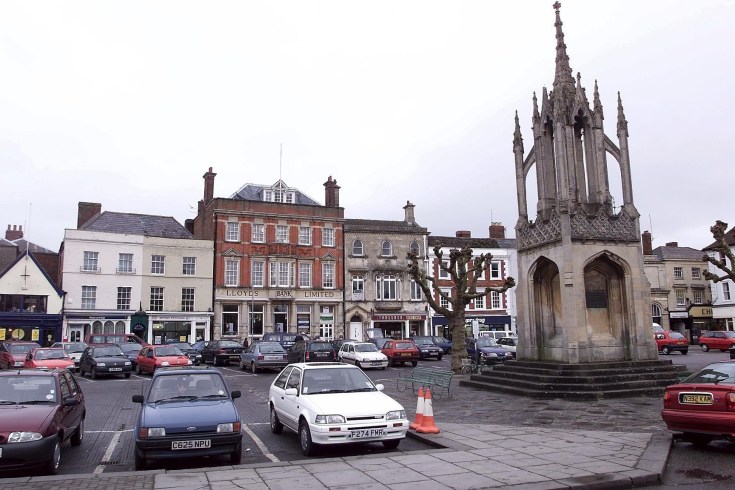
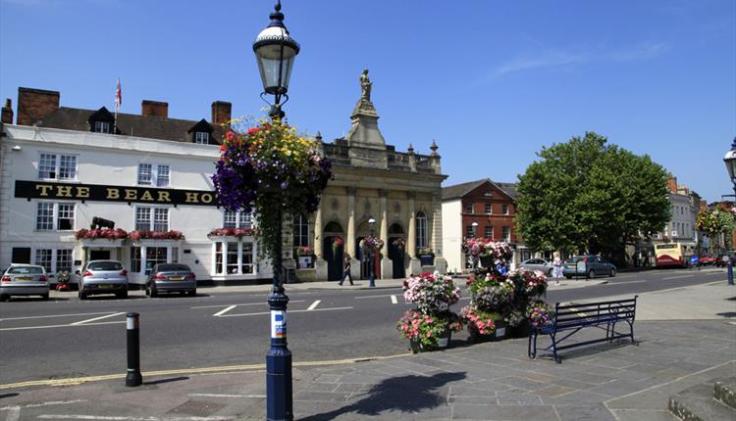
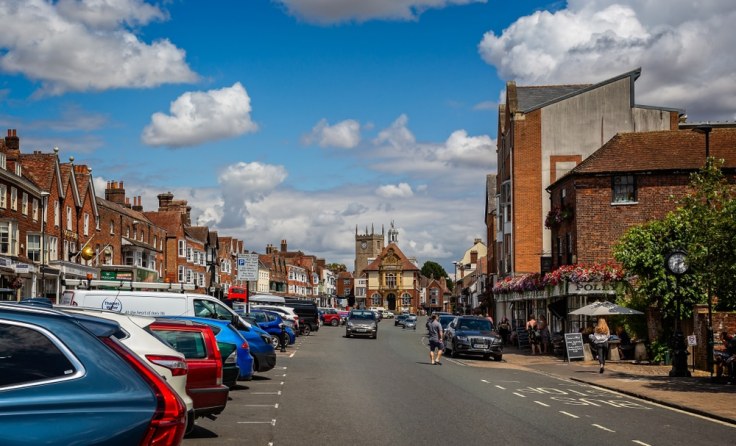
Marlborough
The town’s name — formerly Marlebridge or Marleberg — is taken from the marl or chalk hills in the vicinity.
Magicians…
In the grounds of Marlborough College there once stood a castle, first constructed in wood in 1086 or thereabouts. Local folklore asserts that the motte on which the castle’s keep was founded (known as the ‘Marlborough Mound’ and/or ‘Merlin’s Barrow’) is where the bones of Merlin — King Arthur’s magician — are buried. Whether that is true or not, samples of charcoal extracted from the Mound prove that it was built around 2004 BC, which makes the Marlborough Mound a prehistoric structure of historical significance.
Kings…
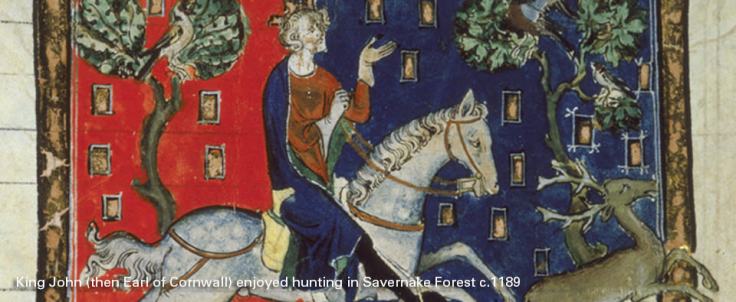
Marlborough’s castle was a royal residence and in 1204 the town was granted a Royal Charter by King John (yes, he of Robin Hood fame) so enabling Marlborough to achieve market town status. By the end of the 14th century however, the castle was in a state of disrepair as it had become militarily outmoded and not sufficiently comfortable for the occasional royal occupant. Although a Crown property, King Edward VI passed ownership of the castle over to the Seymour family — relatives of Edward’s mother. The site of the castle is now the property of Marlborough College.
Cardinals…
On March 10 1498, Thomas Wolsey — later to become Cardinal Wolsey — was ordained in St Peter’s; one of the two churches which stand at either end of Marlborough’s wide High Street.
Battles…
Because the people of Marlborough were against King Charles I, preferring instead to support Parliament, the town was sacked and burned following a fierce battle in 1642. The legacies of the violent historical past can in fact be seen in Marlborough’s architecture. Some of the town’s buildings (St Mary’s church in particular) still bear the scars of the 1642 battle.
Fires…
In April 1653, The Great Fire of Marlborough burned the Guildhall, St Mary’s Church, the town’s armoury and many houses to the ground. Devastating fires also swept through Marlborough again in 1679 and in 1690 causing an Act of Parliament to be passed which prohibited the covering of houses and other buildings with thatch in the Town of Marlborough.
This part of the world has many attractions for visitors, not the least of which is Savernake Forest (good Sunday morning walking just a five-minute drive away) established by William the Conqueror as a royal hunting ground — King Henry VIII being the last monarch to use it for that purpose.
The jewel of the town’s High Street is the Merchant’s House. Built and occupied by a prosperous silk merchant, middle class but with grand ideas, it contains nationally acclaimed wall paintings and decorative features. Humming with activity, it is an outstanding destination for anyone interested in fine old buildings and the craftsmanship needed to create and restore them.
If you’re feeling a little more adventurous, then motor west on the A4 for 20 minutes or so. And low and behold you find yourself in front of, or close to, a couple of World Heritage sites — Avebury Henge and Silbury Hill. Avebury’s stone circle is a prehistoric and massively atmospheric monument of unknown purpose; Silbury is Europe’s largest prehistoric man-made mound, but again, why is it there and who built it? Literally over the road from Silbury Hill is West Kennet Longbarrow — a burial chamber that dates back to 3700 BC and one of the biggest of its kind in Britain. All strange stuff!
On my first visit to Marlborough this past weekend, I went into the Green Dragon pub where a pint of Wadworth 6X was £4.05 (strange amount, that, the odd five pence!) and two guys were playing The Jam’s “English Rose” on gutiars; a rather upbeat version too where it’s a sombre song for the most part.
And one might be forgiven too for imagining that XTC’s “Great Fire” would pay deference to the fire of 1653 mentioned above. It’s one of my favourites (though reading Chalkhills it isn’t one of Andy’s) so I will use any excuse to play it!
On the Saturday morning, hardy souls out in shorts in the autumnal sunshine…
Typical of many of these market towns are the alleys and courtyards; just like in Frome I found a lovely record store…
Marlborough where, yes, old red telephone boxes still prevail!
When I saw this one, I instantly remembered that scene from Clockwise! Apologies for the subtitles – this is one of only two clips on Youtube and the other one was really ropey.
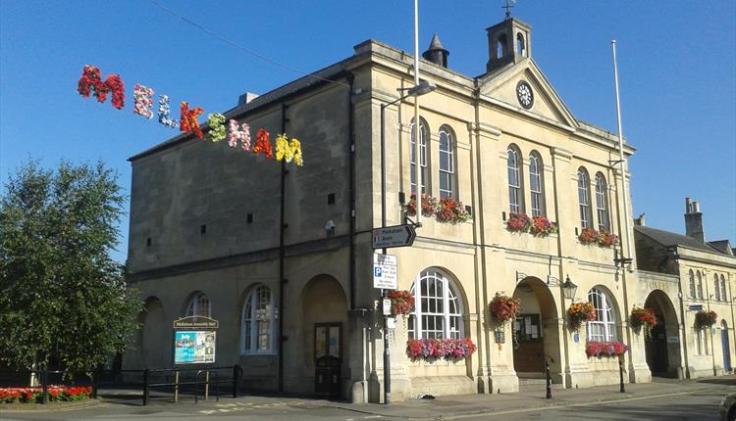
Melksham
In a beautiful pocket of rural Wiltshire, Melksham is a lovely market town situated on the banks of the Bristol Avon.
A beautiful historic quarter in the Town Centre features St Michael and All Angel’s Church, Canon Square and Church Walk. Nearby are the historic villages of Lacock and Castle Combe and the splendour of the Cotswolds. The friendly Town Centre is full of independent shops and plenty of cafes, pubs and restaurants, with a regular Tuesday Market. Compact and easily accessible, Melksham’s library, gym, swimming pool, tourist information centre and parks are all in easy walking distance of the centre.
The strong and vibrant community spirit ensures a busy calendar of events, including the Scarecrow Trail at Easter, the summer highlights of Melksham Music Festival, Carnival, Party in the Park and Melksham Comic Convention, and the Food and River Festival in September. The popular Christmas Fayre features the highly anticipated switching on of the Melksham Christmas Lights, a spectacular display put on entirely by volunteers.
Melksham people take great pride in their town, and the effort and creativity invested in the Christmas Lights is matched by the dedication in adorning the town with fantastic flowers in summer.
There are some beautiful walks in and around Melksham, including the Riverside Walk along the Avon. The Conigre Mead Nature Reserve is a fascinating and tranquil space hidden just a few minutes’ walk along the river. Managed by a voluntary team of enthusiasts, it is home to dragonflies, butterflies and the occasional kingfisher.
The Kennet and Avon Canal also passes through the Melksham area, offering a great bike ride or walk to the famous Devizes Caen Hill Locks to the east and Bradford on Avon and Bath to the west.
“Melksham has a wealth of clubs and societies for all ages and tastes”
They’re not kidding. Some townies might not even know that in an industrial unit there is a thriving adult swingers club… I won’t name it but you may know the one.
City of Salisbury
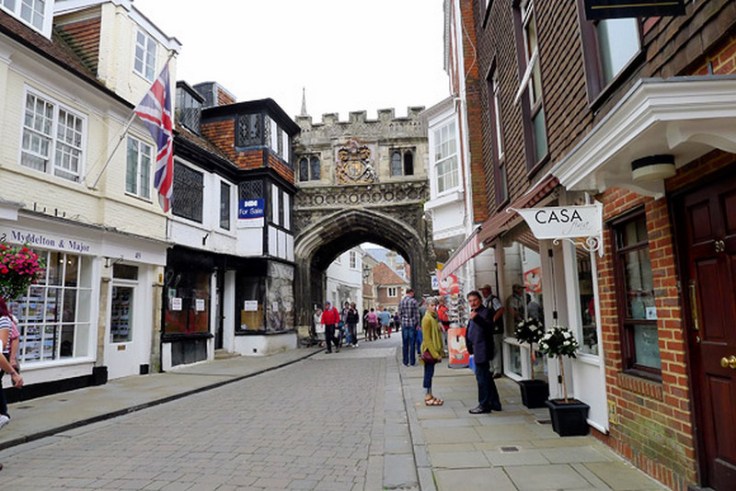
The story begins at a place called Old Sarum, two miles north of modern Salisbury. It was known to be an Iron Age earthwork and later became a Roman fort. In Saxon times was an important political centre, a Witenagemot being held there in 960 AD. In 1070, William the Conqueror reviewed his troops there and it became a Bishopric with a Cathedral and a Castle.
The first Cathedral was mostly destroyed within days of its consecration by a huge storm. Only the nave survived to be incorporated into Bishop Roger’s restoration. Osmund, a powerful Bishop and Chancellor of England, completed the rebuilding and established the Constitution based on the Chapter of the Bayeux Cathedral in France. In 1220 the authorities decided to abandon the site after problems arose between the military and the clergy.
The old Cathedral fell into ruin and many of its stones were used to build a new Cathedral in Salisbury. Situated at the confluence of four rivers, Salisbury is the only city within the county of Wiltshire.
The Cathedral hosts the tallest spire in England at 404 feet and it dominates the city. Many legends grew from the choice of the site to build the Cathedral; some say that the flight of an arrow shot by an archer from the ramparts of Old Sarum marked the place, another that the Virgin Mary appeared to Bishop Poore in a dream telling him to build in ‘Mary’s Field’ which was the site selected, even though is was low-lying and marshy.
Salisbury is one of the few Cathedrals built in the shape of a double cross with the arms of the transept branching off on either side. The cloisters are larger and older than any other of the English cathedrals.
The spire was added 100 years after its concecration and its immense weight, some 6000 tons, meant much strengthening. The Cathedral is home to a wealth of history and many unique treasures including an ancient clock mechanism dating from 1386 and said to be the oldest piece of machinery still at work in Britain, if not the entire world.
Swindon
Swindon is a modern town surrounded by some of England’s finest countryside and famous attractions. Enriched with Victorian parks and gardens, museums including the award winning Steam Museum, and an art gallery.
Originally, Swindon was a small market town mentioned in the Domesday Book. This original settlement is now known as Old Town. Here you can take time to wander through its quiet courtyards and alleyways, stroll around the Town Gardens, or enjoy a vibrant mix of traditional shops, pubs, bars, and cafes.
The arrival of the GWR in 1840 led to great expansion and the creation of the town as it is today.
The town centre is fully pedestrianized and offers both an indoor and outdoor shopping experience. Whether you are in search of the latest fashion, or have an eye for a bargain, this is the place to be. For those more creative purchases look out for the local and international markets that regularly come to the town.
There is also a buzzing arts scene with many events taking place throughout the year at venues including the Wyvern Theatre, Arts Centre and Swindon Museum and Art Gallery.
There are lots of things to see and do in Swindon including a visit to Lydiard House an elegant Georgian abode set in rolling parkland. or shopping at the McArthurGlen Designer Outlet.
You can also discover the history of the Great Western Railway at STEAM Museum, learn about the history of various gadgets at the Museum of Computing or visit nearby farm park Roves Farm or the butterfly world and craft village at Studley Grange.
Last but not least, there is a great selection of accommodation to be found in Swindon to suit all tastes and budgets.
And finally…
Warminster
Situated beneath the chalk downland, with its abundant flora and fauna, Warminster lies on the edge of the Cranborne Chase and West Wiltshire Downs Area of Outstanding Natural Beauty.
The town derived its name from the Minster Church of St Denys which was built in Saxon times within a loop of the River Were. There is evidence of earlier settlements in the seven hills that surround the town, three of which are Iron Age hill forts, the most notable being Cley Hill to the west of Warminster. Once part of the Longleat estate, it was entrusted to the National Trust by the sixth Marquess of Bath.
The town boasts many historic attractions including Warminster Maltings, Britain’s oldest working maltings, and Dents glove factory. Founded in 1777 the latter has been supplying gloves for royalty since the reign of George III, including Queen Elizabeth II’s coronation gloves. Visits by groups to the Dents museum can be made by private arrangement.
The town park with its tranquil lake is the jewel in Warminster’s crown and is being lovingly restored. The children’s paddling pool is a huge attraction in the summer months and a skatepark, tennis courts and putting green are available all year round.
The park leads to Smallbrook Meadows Nature Reserve which is run by Wiltshire Wildlife Trust and has a thriving population of water voles.
A rich variety of routes to nearby picturesque villages provide plenty of opportunities for cycling and walking activities, as well as sailing at Shearwater Lake.
Warminster is the nearest town to Longleat – home of the UK’s first ever Safari Park and one of Britain’s most impressive examples of high Elizabethan architecture.
ShotsWeb members in particular have immense musical taste and knowledge! Why, only a few weeks ago a thread turned into all things Bananarama and more besides. So, just for fun this morning as the lads head off to the Wastepaper Stadium for our FA Cup win, see how many album covers you can recognise. You can leave your guesses in the reply form. I guessed XTC’s English Settlement for the fifth in from the right but it isn’t apparently; so far I can only hazard at a guess for the one on the far right!
AN EXTINCTION Rebellion protester from Farnham has been arrested while in London – for ‘occupying a gazebo outside Downing Street’.
Lorna Thomas, a member of Extinction Rebellion (XR) Farnham, was arrested on October 7 for setting up the structure in Whitehall.
One of eight XR protesters arrested under Section 11 of the Public Order Act for laying under the gazebo, she was met with high fives and cheers as she was “lifted out by my under arms”.
Lorna was arrested at 4.20pm, before being held at the site of the arrest for three hours, following “miscommunication” with the police van.
Despite being held in custody until 4.30am on October 8, she added that she was “proud to have done that action” as there is “no more important cause in our lives”.
Lorna said: “It is something that I have felt really despondent and depressed about, the state of the environment and climate change action.”
In a further statement addressed at the Prime Minister, Lorna told Boris not to “patronise us” but rather to “do your duty as our leader” and “tell the truth for once and act now”.
More than 20 other Farnham residents joined XR activists from Godalming and Haslemere in Whitehall – including students from UCA, teachers and public servants.
The International Rebellion protests began on October 7, with hundreds of individuals stepping into the roads, blocking traffic and occupying areas of London such as Trafalgar Square and Westminster.
Jane Woodyer, a member of XR Farnham, said: “Putting yourself at risk of potential arrest, abuse from the general public and discomfort – sitting on a road in the rain is no picnic – is not an easy step to take. But local residents are doing it because they feel they don’t have another choice.”
Fiona Massari of XR Farnham also hit out at the Prime Minister’s dismissal of protestors as ‘uncooperative crusties’, instead describing campaigners as “ordinary people taking extraordinary action”.
She added: “Mass disruption is the only course of action that will make our government pay attention”.
A team of Extinction Rebellion Farmers from Hampshire also took to London – in a convoy led by a bright pink tractor. The group was set up “to promote the solutions that farming and land management can provide” when reducing greenhouse gas emissions and assist in building biodiversity.
The convoy set off from a farm in Winchester on Friday, October 4, before travelling via Odiham, Sandhurst and Ascot.
“The changes that are needed have to come from government, and we are taking radical and peaceful action to demand that the government acts,” said Dagan James, buffalo farmer.
“The science is clear, we are running out of time.
“We have no choice but to leave the farm and take to the streets to get our message heard.”
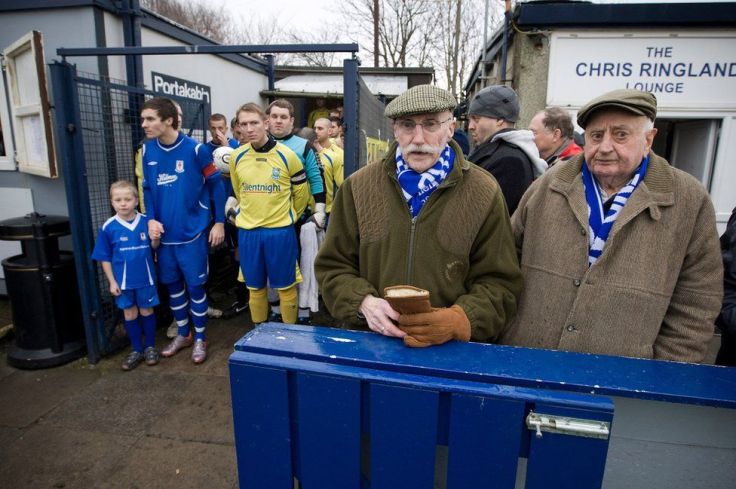
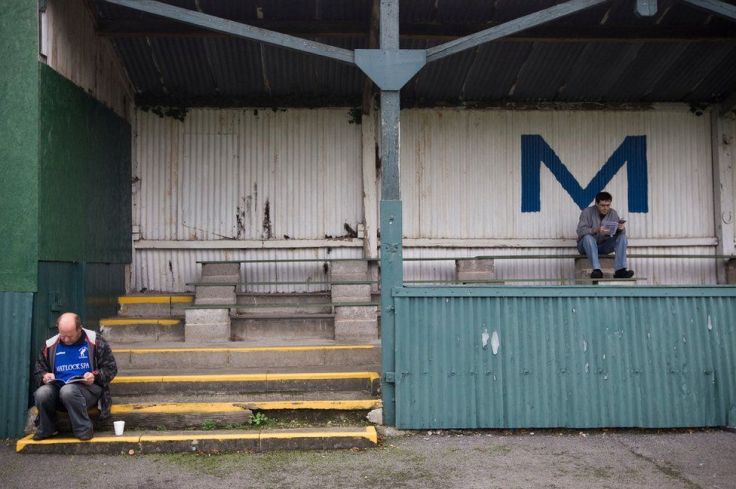
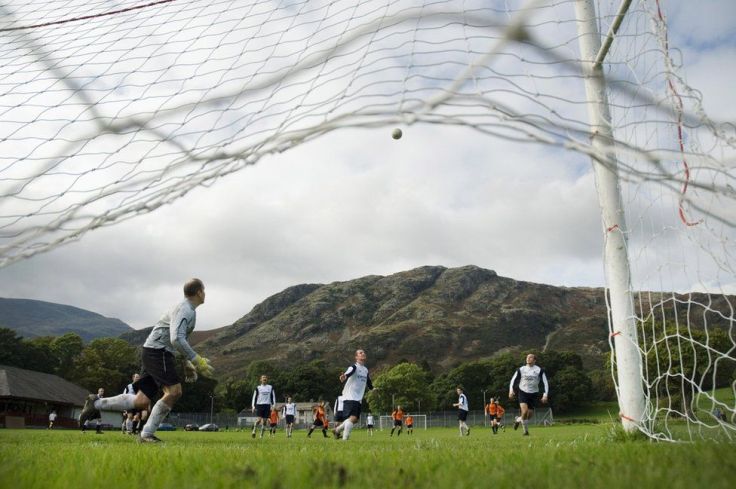
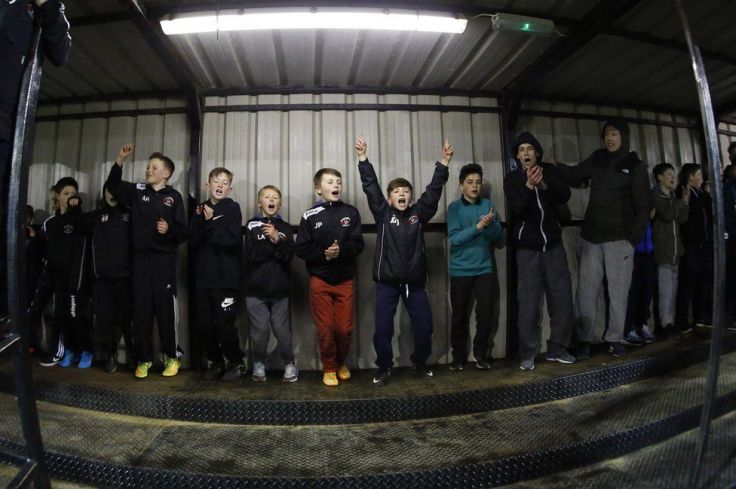
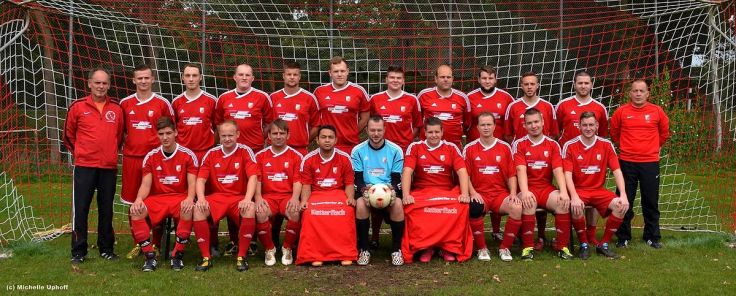
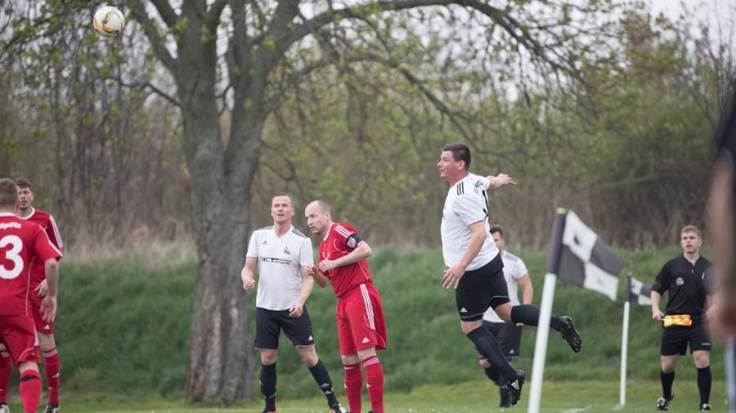
Away from the glamour of the Premier League, thousands of footballers turn out for their local team week after week.
Scheduled to coincide with an international break, Non-League Day is about giving football fans across the country the chance to show support for their local non-league side. This year it marks its 10th anniversary, on Saturday, 12 October.
The photographers of When Saturday Comes magazine have been documenting the game for the past 15 years and here we present a small selection from their archive.
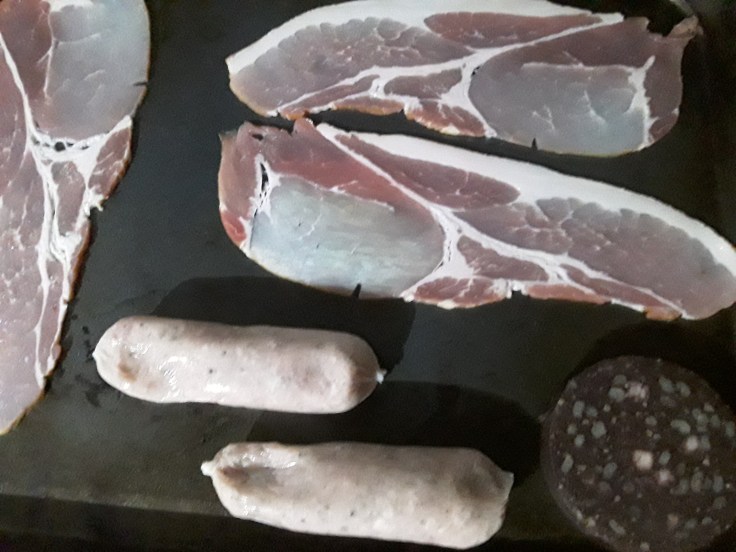
Good morning everyone. Today I will be attempting to prepare a full English breakfast at home. Tired of bacon and egg McMuffins or paying the £7-£9 at cafes. I decided to try making my own which will include hash browns! Yes I know it has become an Americanism in the cooked breakfast menu but I love them!
Also, while not that keen on black pudding, I’m going to include it. And the tomatoes? If someone were to be coming round, you must grill fresh tomatoes I feel, as if tinned would be an insult. The breakfast pictured above is the £6.50 model served at my favourite local eatery.
So, while everything is cooking along nicely, here’s a full article on the history of the traditional cooked English breakfast.
The traditional English breakfast is a national institution. Most of us love a full English breakfast; you can even travel abroad, to the Mediterranean resorts in Spain for example, and find this quintessentially British dish on sale in cafes and restaurants.
Sometimes also called a ‘fry-up’, the full English breakfast consists of fried eggs, sausages, back bacon, tomatoes, mushrooms, fried bread and often a slice of white or black pudding (similar to bloodwurst). It is accompanied by tea or coffee and hot, buttered toast. These days, breakfast may also include other items such as baked beans and hash browns.
There are many regional versions of this staple. For example, the Ulster Fry includes Irish soda bread; the Scottish breakfast boasts a tattie scone (potato scone) and even maybe a slice of haggis; the Welsh breakfast features laverbread (barra lawr, made from seaweed); and the Cornish breakfast often comes with Cornish hogs pudding (a kind of sausage).
The tradition of breakfast dates back to the Middle Ages. At this time, there were usually only two meals a day; breakfast and dinner. Breakfast was served mid or late morning, and usually consisted of just ale and bread, with perhaps some cheese, cold meat or dripping.
A lavish breakfast was often served by the nobility or gentry at social or ceremonial occasions such as weddings. A wedding mass had to take place before noon, so all weddings took place in the mornings. The first meal the new bride and groom ate together would therefore be breakfast and became known as the ‘wedding breakfast’.
By Georgian and Victorian times, breakfast had become an important part of a shooting party, weekend house party or hunt and was served a little earlier. The gentry loved to entertain lavishly and that included breakfast.
Breakfasts were unhurried, leisurely affairs with plenty of silver and glassware on show to impress the host’s guests. The breakfast table would groan under the weight of the produce from the host’s estate. Newspapers were available for the family and guests to catch up on the day’s news. Indeed, it is still socially acceptable today to read newspapers at the breakfast table (a definite ‘no-no’ at any other meal).
As well as eggs and bacon, which was first cured in the early 18th century, the breakfast feast might also include offal such as kidneys, cold meats such as tongue and fish dishes such as kippers and kedgeree, a lightly spiced dish from colonial India of rice, smoked fish and boiled eggs.
The Victorian era saw a wealthy middle class begin to emerge in British society who wished to copy the customs of the gentry, including the tradition of the full English breakfast. As the middle classes went out to work, breakfast began to be served earlier, typically before 9am.Surprisingly, the full English breakfast was also enjoyed by many of the working classes. The punishing physical labour and long hours of work in the factories of the Industrial Revolution meant a hearty meal first thing in the morning was necessary. Even as late as the 1950s, almost half the adult population began their day with a good old English fry-up.In today’s health conscious world, you may have thought that a full English breakfast was not the healthiest way to start the day, but some experts maintain that such a meal in the morning boosts the metabolism and needn’t be unhealthy, especially if the food is grilled rather than fried.Perhaps the full English breakfast remains so popular, not just because it tastes so good but simply because it has been enjoyed for centuries by people from all walks of life. It is served everywhere in Britain: in luxury hotels, country inns, guest houses, B&Bs, cafes and restaurants. Sometimes you will also find an ‘all day breakfast’ on the menu, as this is indeed a meal that can be enjoyed at any time of the day.
The trick with these meals is not to have them too often. That way you enjoy it more. Rather like something else I can’t quite put my finger on.
So for the ingredients I chose to go here.
The sum total was an inespensive £8.72. The breakdown…
And there’s enough for another two breakfasts at least!
At the cafe I’m served with toast and butter, which I actually prefer so the reason I made fried bread was because I realised I was out of butter! One thing’s for sure, an essential item for me is for this to be washed down with a good strong hot coffee!
Now I don’t know if that would pass served in a cafe and I didn’t go about it like I was a host on Four In A Bed but then, I’m the one eating it so… bon appetite!
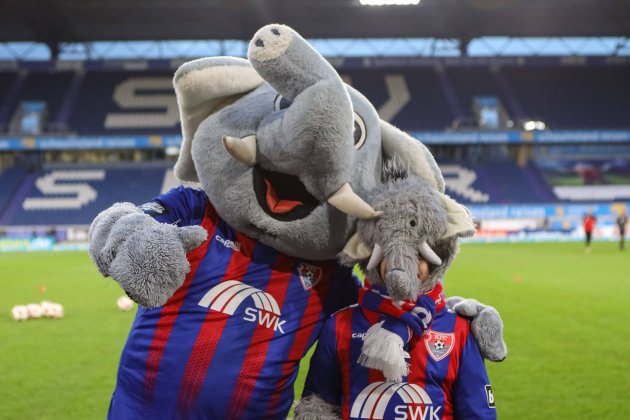
Gerotifant” (according to Getty), the mascot of KFC Uerdingen 05, celebrating a 2-0 victory over VfR Aalen, November 24, 2018.
Soccer is massive in Germany. In many ways, the teams from its local leagues are a reflection of the country itself. And in other ways, their names are just plain funny.
And just how big is soccer in Germany? Germany has a population of over 80 million people (82.79 in 2017), and about 6.5 million of them belong to one of the over 27,000 soccer clubs in Germany nationwide. The DFB’s local league and team website fussball.de lets your browse from the top tier all the way down to the lower levels of amateur leagues based in rural villages.
Now, some German clubs just sound plain naughty…
SV Sportlust Gröna
Sportlust plays in the Salzlandkreis, a rural district in the middle of Saxon-Anhalt, roughly between Leipzig and Hanover. Gröööööööna!
FC Sexau: Pronounced “sex-ow,” this painfully sexy little club is based in a tiny village north of Freiburg in southern Baden. Their first and second teams are currently in first place of the 2. Kreisliga B and C! Aw yeah!
Hymendorfer SV
The “hymen-villagers” hail from the far north, currently dead last (13th) in the “1. Kreisklasse – Kreis Cuxhaven” — something like the 9th tier — near the North Sea, north of Bremen and west of Hamburg.
SV Süptitz
The ‘titz hail from Saxony, northeast of Leipzig. They’re currently second behind ESV Delitzsch in the “Ur-Krostitzer Nordsachsenliga.”
DJK Pörndorf
Where, you ask, lay Pörndorf? Why, in eastern Bavaria, about 40km west of Passau. This particular club is especially naughty, because it’s exclusively a youth club. The DJK stands for “Deutsche Jugendkraft” (= “German youth power”), a very common acronym used for youth clubs.
FV Venusberg
The real Venusberg is a neighborhood of Bonn, but in medieval German myth the Venusberg was the home of a fairy queen and ultimately the inspiration of Richard Wagner’s Tannhäuser.
TSV Aßling
And of course TSV Assling 1932 is also based in Bavaria, about 45km southeast of Munich. The Asslings are currently 8th in the “Kreisklasse Inn/Salzach Chiem 2.”
There are a huge number of local clubs founded by the many immigrants who have made a home in Germany. First and foremost are Turkish clubs. Turkish clubs are so common in Germany that they have their own acronym. There are hundreds of clubs throughout Germany named Türkgücü (“Turkish power”), like SV Türkgücü-Ataspor München of the Turkish community of Munich. Many others bear the name “Türkspor” like Berlin Türkspor 1965 or Inter Türkspor Kiel in the far north.
There are many others, though, reflecting a wide array of nationalities. One standout I stumbled across is the Aramaic Christian club Aramäischer Kultur SV Leimen (“Aramaic Culture Sport Club Leimen”), based in a small town south of Heidelberg. There also are Greek clubs, like Griechischer SV Prometheus Köln-Porz 1964 (“Greek Sportclub Prometheus Köln-Porz”) from the Porz borough of Cologne; Italian clubs, like the confusingly named FC Eintracht Italia Köln (yes, Cologne has Italians, too); and many, many more.
FC Sprockets: Fußball durch Technik
If you venture into the former territory of East Germany, you’ll find a variety of clubs whose names recall the gritty, mechanical culture of the Soviet-backed state. Here, club names still evoke dedication to engineering and the hard sciences.
There’s SG Rotation Leipzig and TSV Rotation Dresden (yes, “rotation” is their name); SSV Fortschrit Lichtenstein (“progress” Lichtenstein)/FSV Motor Brand-Erbisdorf (“motor” Brand-Erbisdorf), and even some two dozen clubs named after “chemistry,” like SC Chemie Halle. Of course, there are outliers.
High-tech Bavaria has its own modern SV Plasmaphysik Garching, a soccer club founded by members of a local institute for plasma physics. Alas, a genuine FC Sprockets remains an unfulfilled dream.
FC Why-Is-My-Club’s-Name/So-Frickin’-Long?
One peculiarity of German soccer clubs is a predilection for rather cumbersome names. Virtually every soccer club in Germany has some sort of geographical term in it, ideally a city. Hence the FC Bayern Munichs and Borussia Dortmunds of the world. But in a nation full of tiny villages where everyone still plays soccer, it’s sometimes necessary to band together. That leads to some painfully complete club names. SG Butzweiler/Newel recently merged with the reserve team of SV Aach to create a new team called SG Aach/Butzweiler/Newel in the hinterland of Trier.
Of course, there are many other specimens of such club mergers. There’s SV Frisia 03 Risum-Lindholm near the border to Denmark. TSV Drelsdorf-Ahrenshöft-Bohmstedt, just a bit to the south, is so long they call themselves “TSV DAB” for short. My personal favorite, though, has to be SG Koosbüsch-Weidingen/Wißmannsdorf-Hütterscheid, although they now seem to have dropped Wißmannsdorf-Hütterscheid from the official name.
Of beers and beavers
Beers and beavers are regular occurrences in the German soccer federation — because of course they are. There’s FC 1934 Bierstadt (“beer city”) based out of . . . “beer city,” a suburb of Wiesbaden. Then there’s 1. FC Bierbach 1921 (“stream of beer”) near Saarbrücken, well west of Stuttgart.
But it gets so much better: the Altbier Rangers (“ale rangers”) based in Düsseldorf survived for a few seasons, at least until 2014-2015 — the date of their last squad picture. The Bierfreunde Mett (“beer-friends minced-raw-pork” — yes, mett is minced raw pork) played in the “Hobbyliga” of Düsseldorf for a year.
There also is a short-lived (2015-2016) 1. FassbierClub Kölsch (“1st Kölsch beer-on-tap club” — get it? 1. FC Kölsch?) on record. They were based, not in Cologne, but at the University of Passau in eastern Bavaria, playing against a strange array of clubs like Arminia Bierfehlt (“beer’s missing”), the Queens Park Pussy Rangers, Hangover 96, Fellatio Roma, Crystal Phallus — ahem… moving along now…
FC Germania Bieber (“Germania beaver”), not to be confused with Justin Bieber FC (an Indian Justin Bieber fan club, of which our own Ineednoname is a member), is a small club near Offenbach, near Frankfurt. That is hardly the last beaver club in Germany. There’s FSG Biebertal (“beaver valley”), SV Bieberehren (“beaver honors”), SV Hofbieber (“court beaver,” like a court jester), and — my personal favorite — VfL Oberbieber, the “Club for Light Athletics Supreme-Beaver.” Believe it or not, Oberbieber is a real place, a suburb of Koblenz north of the Rhine.
JRR Tolkien 1937
A few German clubs sound like they’ve been taken straight out of the works of J.R.R. Tolkien, and maybe they have. Suspect no. 1 is SV Schwarz-Gelb Radegast. You might recall Radagast the Brown, whom the Istari sent to Middle Earth along with Gandalf the Grey.
While Tolkien never elaborated much on Radagast’s personality, he was clearly a baller, playing as a (very) deep-lying midfielder for the forces of light against the Dark Lord. How he became Radegast the “black-and-yellow” in Eastern Germany is another tale.
Germany also boasts a few Silmarillion-sounding clubs in SV Fortuna Dingelstedt 1922, near Brunswick in central Germany, and FC Fortuna Dingolfing north of Munich.
FC WTF?
And then some German club names just catch the eye on their own unique merits.
DJK Don Bosco Bamberg: “Don Bosco” isn’t Don Ballon’s latest competitor, but rather St. Giovanni Bosco, an Italian priest who became famous during the 19th century. Bamberg being in Catholic northern Bavaria, this youth team was founded by a priest in 1950 and once managed to win promotion all the way to the Bayernliga.
Wormatia Worms
Worms is already just the coolest city name, but add the same name in Latin, and you get Wormatia Worms. The full name is VfR Wormatia Worms 08. This team is actually one of the bigger ones on this list, playing in the 4th tier of German soccer. They were even once in the top flight before the Bundesliga was founded in 1963.
KFC Uerdingen 05: Kentucky Fried Chicken Uerdingen? Alas, no. The unusual acronym KFC stands in this case for Kriegspiel-Gemeinschaft, “war-games-association,” derived from the name the club adopted during WWII. This KFC is based in Krefeld, just to the northeast of Mönchengladbach in North Rhine-Westphalia, and their mascot is reportedly the monstrosity named “Gerotifant” you see at the top of this page.
SV Spielberg: Spielberg is a real place, a suburb of Karlsbad, which itself is a suburb of Karlsruhe in Baden-Württemberg. It would have been pretty cool if ET had his own club, though.
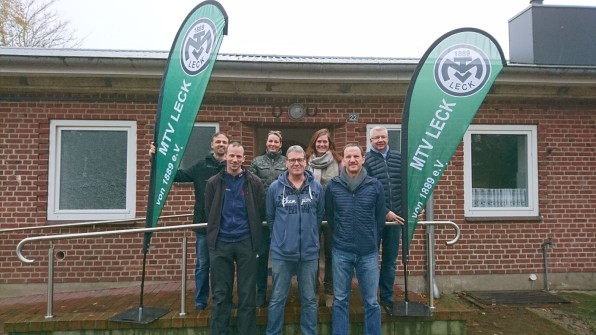
MTV Leck von 1889
No, that’s 1889, not 1989, so no Dire Straits on this MTV. MTV is actually a fairly common acronym for German soccer clubs. It stands for “Männer-Turnverein,” i.e. “men’s gymnastics club.” This particular MTV, from Leck near the Danish border, has multiple divisions, including a chess team.
Here are a few others…
Polizei SV Flensburg III: The third team of a police department? Believe it or not, there are many clubs in Germany that trace their roots back to the local police. One of BFW’s writers in fact plays for a Polizei club based in Mannheim (disclaimer: they’re not actually all cops anymore). Polizei SV Flensburg was founded by police officers in northern Germany not long after WWI, in 1924.
FC Spöck 1929 or TV Spöck 1896? It’s so hard to choose. SV Spöck and TV Spöck are different clubs in the same tiny town of Spöck and share virtually the same grounds. They’re based in fact right across the street from one another.
SV Battuna Beach ‘99: I can’t find where exactly this club is based, but it plays in a 1. Kreisklasse league against a bunch of villages north of Leipzig. Maybe one of the local ponds is called “Battuna”?
1. FC Ranch Plauen: This unusually named club is also based in Saxony, but south of Leipzig. There’s also a 1. FC Wacker Plauen, and SV Concordia Plauen, and a VfB Plauen Nord. That’s a lot of Fußball for one Plauen!
SSV Blau-Weiß Barby: Another blue-white Saxon club near Magdeburg. Barby just happens to be the town’s name. They’re still searching for their own SV Ken.
1. FC Willy Wacker Hechtsheim 1973
Willy Wacker and the … sausage factory? As the club’s page explains, after the club was founded and celebrated its first win, the founders settled on the name “FC Willy Wacker” after a Saturday comic series in the local newspaper in Mainz — but changing an i to a y. Willi Wacker was the German version of cartoonist Reg Smythe’s Andy Capp.
PSV Bork: Bork bork bork! This club is based in the village of Bork just north of Dortmund.
1. FC Aha 1976: FC Aha! Aha is a hamlet just outside of Frickenfelden, which in turn is a part of Gunzenhausen (each of them has their own FC [insert town name here]) — all in Bavaria, of course, between Munich and Nürnberg.
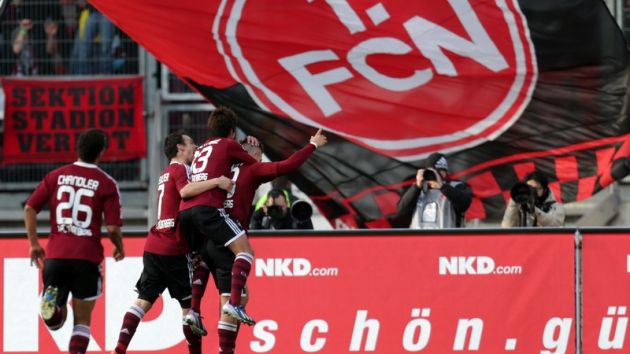
And on Nürnberg, as I had been conversing with someone in Hamburg on one of the forums I frequent, it seemed a fitting end to this post to take a llok at them and where they’re at.
Founded in 1900, the club initially competed in the Southern German championship, winning their first title in 1916. Their first German championship was won in 1920. Before the inauguration of the Bundesliga in 1963, 1.FCN won a further 11 regional championships, including the Oberliga Süd formed in 1945, and were German champions another seven times. The club has won the Bundesliga once and the DFB-Pokal four times.
Since 1963, the club has played their home games at the Max-Morlock-Stadion in Nuremberg. Today’s club has sections for boxing, handball, hockey, rollerblading and ice skating, swimming, skiing, and tennis.
1. FCN have been relegated from the German football league system top tier Bundesliga on nine occasions – beating the record earlier set by Arminia Bielefeld.
The Stadium Nürnberg
The Stadium Nürnberg, home of the great 1. FC Nürnberg, can boast over 80 years of enthralling history. Once called the ‘municipal’ stadium of Nuremberg, the venue has retained one defining feature: its classic appearance.
It all began when architect Otto Ernst Schweizer raised the idea of a stadium for the city of Nuremberg. By 1928, these plans had been put in motion and the region of Nuremberg could boast a brand new 50,000 capacity stadium. The architects of the main stand recreated it in the classic Bauhaus style. It is still listed as a protected architectural feature and can be admired today in its original form
During the time of National Socialism, the stadium was used as a site for party rallies and for the Hitler Youth. After the end of the Second World War in 1945, the US army converted the ‘municipal’ arena into a sports venue.
It wasn’t until 1963 that 1. FC Nürnberg returned to its old ground from before the war. As of 1963, the inaugural year of the Bundesliga, the Club began playing its home games here, soon equipped with grandstands and floodlights. From then on, the stands became places where people could witness unforgettable footballing moments in front of crowds as big as 75,000 (1. FC Nürnberg’s record attendance, set on may 30th 1971).
The first completed renovation took place between 1987 and 1991. The municipal stadium became the Frankish Stadium, a multi-purpose sports venue, developed to cater for sporting and cultural events and possessing a capacity of 44,833.
The second-to-last stitch in the fabric that is the stadium’ history came in 2004/05, when it was modernised and the capacity increased to 46,780 for the 2006 FIFA World Cup in Germany. And finally since the renovation of the stands in the winter of the 2009/10 season, the ground now boasts a maximum crowd of 48,548. It has been known as the easyCredit Stadium from March 13th 2006 till June 30th 2012.
I wasn’t any different to any other teenager growing up in Farnham. If you were tall enough you could chance your arm trying to get served in the Wheatsheaf or The Hop Bag… or wherever. Leaving school my first job was working for the office of a steel stockholding company not far from The Hop Bag. The boss was a fat Tory man called Archie who had gout and my immediate boss was a young wannabe guy in his forties called Paul Singleton with the middle name of, I kid you not, Groundwater.
I witnessed drinking and its behaviours much earlier than that as I was allowed in the Central Club in South Street. One of my best memories of that place was the juke box. One time they’d got John Lennon’s Imagine but that never got played as much as the flipside Working Class Hero. Those of you who know that song will understand why it got taken off… eventually but not before us kids had had a good giggle about it.
When I was old enough to legally drink there, it was the eighties and what I enjoyed most was the table top video games. They were in most of the pubs, the likes of Asteroids and co but Space Invaders was my favourite. Who remembers it was fourteen aliens you killed before waiting at the bottom for the Mothership to go across the top to get your big points. Once eighteen, my favourite tipple was Snakebites and rum and black chasers.
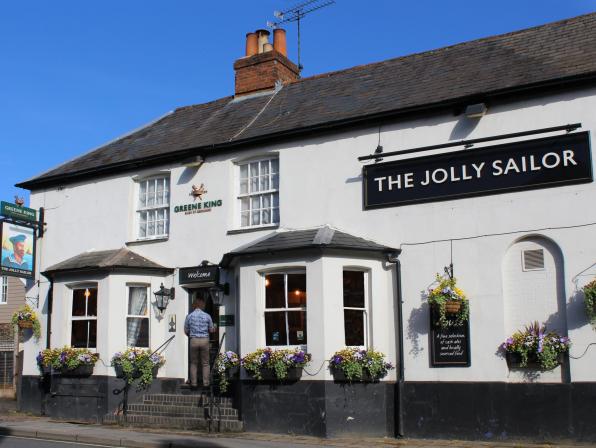
Wages were spent by the following Wednesday mostly if you got paid weekly on the Friday. My nights out were either at the Jolly Sailor or The Lamb in town; I never went in the Coach And Horses. I knew it had a reputation along the lines of Saturday night’s alright for fighting but I didn’t want to get a little action in.
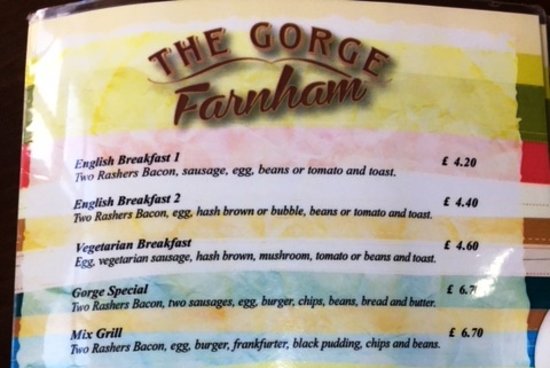
On a recent visit to my hometown I saw that the Coach And Horses had gone but so had all of The Woolmead! That used to be great on Saturday mornings as there was this cafe called The Gorge with its waterfalls and stalagmyte-like caves where you’d get a cola float or a milkshake maybe before heading to spend your pocket money in Pullingers or Our Price. The above is all I could really find for The Gorge; it’s certainly no longer in The Woolmead – has it moved elsewhere?
On ShotsWeb there was a discussion that began off-topic about Farnham’s pubs and LowerBourneShot mentioned that The Eldon Hotel was no longer. I didn’t remember that but knew The Fox of course and The Cricketers. You’d pass those on the drive out to Frensham Big Pond.
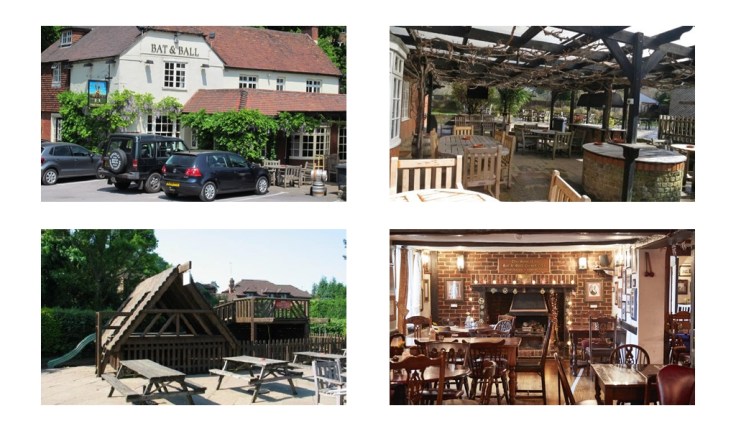
On the cricketing theme, there was the Ball and Wicket at Hale (long gone apparently) but the Bat And Ball Inn is still going and there’s a website with plenty of info.
The Bat and Ball is a Freehouse in the true sense – A family run public house over 2 generations and run completely free of any brewers ties. We are a traditional country pub offering excellent food and drinks whilst boasting a large child friendly garden with lovingly kept flower borders. The pub has been around for over 150 years and is located close to the Surrey/Hampshire border, nestled in the beautiful Bourne valley on the South side of Farnham. We are passionate about the quality and range of our food, using locally sourced produce as much as we can. Beer is just as important to us, so we have 6 constantly changing local traditional cask ales as well as local ciders and craft beers to tempt you.
I wondered how many of the pubs and inns were still around these days. The Spotted Cow at Lower Bourne is still going. On Sundays we were either taken there because it had a playground or we went over to The Cambridge Hotel in London Road, Camberley. There I’d listen to trad jazz and have chicken in the basket and a coke (too young for ale at the time) but they were very happy times.
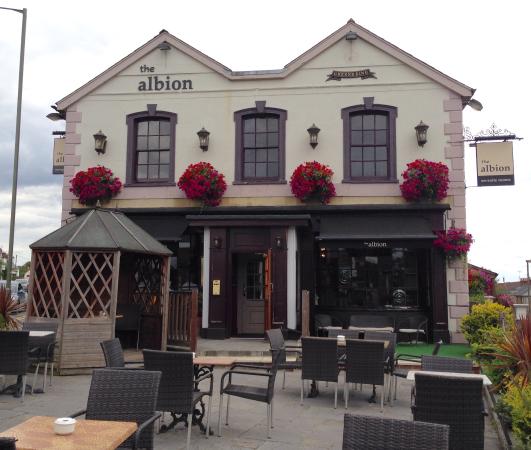
The Albion, still there, was opposite my old primary school. My mum worked at Martonair. That’s gone and so too has Crosby Doors! And the Seven Stars!
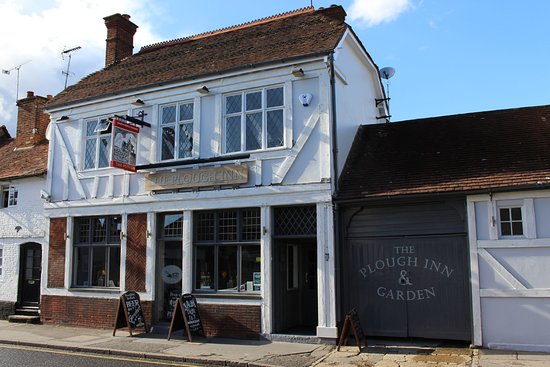
Farnham was such a great town to grow up in with summers playing down Gostrey Meadows or Farnham Park or at the open air swimming pool. And there was Aldershot FC a few miles away of course! Living in The Chantreys, West Street was my main walk into town and why The Plough and The Jolly Sailor were pubs I used most although from work, sometimes I’d lunch in The Bush Hotel.
Mekki’s is interesting isn’t it seeing as Aldershot had Adam Mekki at one time playing for them. Doubt there’s a connection but others would know. Used to be The Exchange and that’s as much as I know. I can only find images of The Exchange or related pictures of a pub that I don’t know of called The Mulberry.
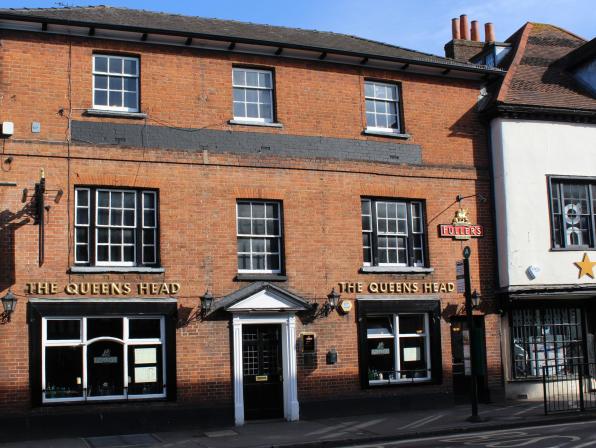
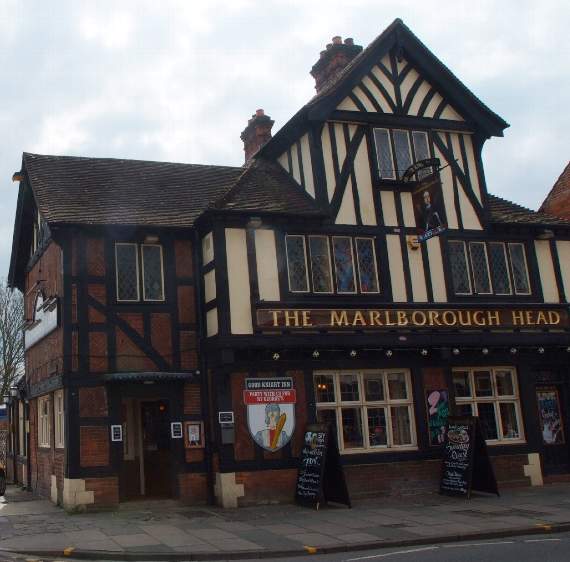
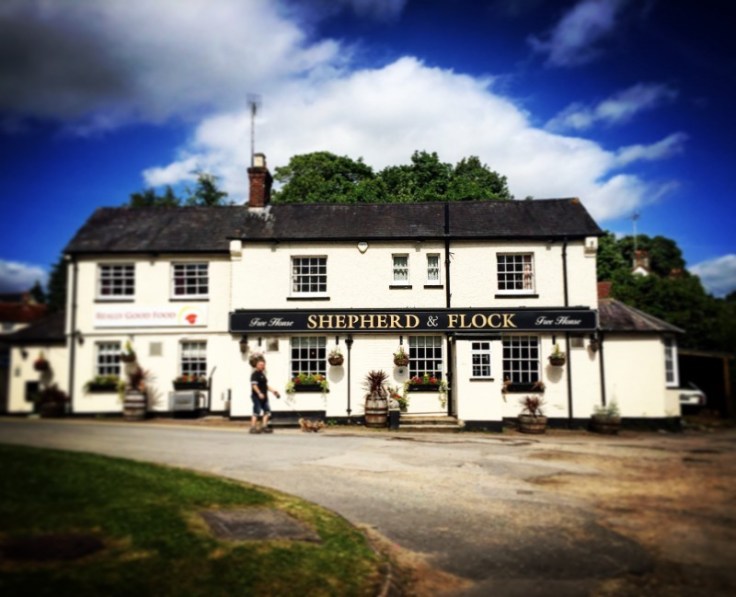
So these are the ten pubs I remember best that are still going, oh and remember I made a post about that singer Peter Crutchfield? Here’s a song he’s done asking where have all the pubs gone.
THE JOLLY SAILOR
THE QUEEN’S HEAD
THE LAMB
THE MARLBOROUGH HEAD
THE HOP BLOSSOM
THE WHEATSHEAF
THE SHEPHERD AND FLOCK
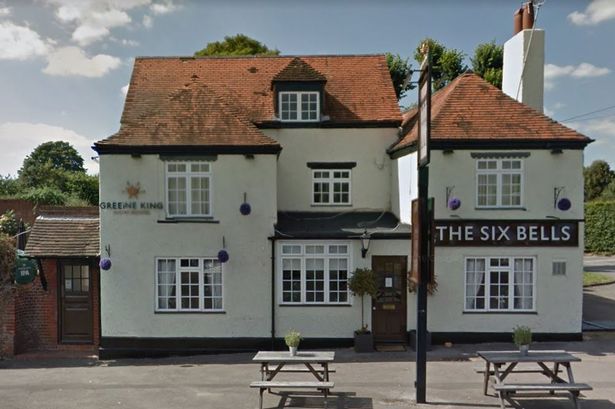
THE SIX BELLS
THE ALBION
THE PLOUGH
Finally, I found this article that gave a list of Farnham pub closures going way back when.
Farnham has lost lots of Pubs over the years, here’s a list of them in order by date.












































 Acid Mouse Music