Darlington’s post-war story is mostly one of serial, stubborn survival. The core of loyal fans are taking pride in past players, from Arthur Wharton, England’s first black footballer, who joined in 1885, to Craig Liddle, who played 315 matches in defence from 1998 to 2005.
And at Feethams, the unique, charming ground for cricket and football, with its twin towers, which sits abandoned in the town, missed by all who have shivered in Reynolds’s 25,000-seat arena since he moved the club there nine years ago.
The last owner, Raj Singh, appointed Madden after declaring the club unsustainable at the arena, having thrown in around £2m in three years, and been crippled by the stadium’s running costs. A local consortium is looking into salvage possibilities, but the overwhelming obstacle is the vanity stadium Reynolds built and named after himself.
With crowds of less than 2,000 huddled into one stand, the Darlington Arena is a rattling monument to the reckless buying, selling and mismanagement of historic football clubs.
The Football League used to laugh at the very idea of testing whether football club owners were “fit and proper people”, and back then it presented Reynolds in supporting evidence. He was a respectable businessman, it said, whose criminal career, which earned him time in prison for robbery, was behind him, so how would a test barring criminals apply to him?
The answer was obvious, incorporated into the fit and proper person test when the League finally adopted it in 2004, that convictions are a bar until they are spent.
But Reynolds’s case posed more difficult questions about his fitness, and the source of his money, which were never tackled, and to which football clubs are still vulnerable. He had made a fortune in chipboard, and via his company, GRUK, put £7m into Darlington, which was in financial difficulties then, with Feethams requiring repair.
Later, in 2005, Reynolds undertook not to act as a company director for eight years due to “unfit conduct” which, according to the Insolvency Service, was that the money was sunk into Darlington while GRUK was making “gross losses”, “to the detriment of GRUK’s creditors … imprudently or irresponsibly.”
Reynolds, in his autobiography – Cracked It! – chronicled his criminal life as a safecracker and thief, and the Dickensian misery of his childhood, when he was consigned to a residential approved school, where he was beaten and abused. But sympathy and admiration for his success dried up among most Darlo fans because Reynolds was a bully who did not listen to supporters dissenting from his grand plan.
Had he done so, he would never have considered spending around £20m building a 25,000-seat stadium for the Quakers.
In his time, and that of subsequent owners, it has proved a millstone to service, and a miserable experience for spectators. In October 2005 Reynolds, having lost the club and been forced to put it into administration, was convicted of defrauding the Inland Revenue and sentenced to three years in prison.
The arena is now owned by two businessmen, Philip Scott and Graham Sizer, who lent the last owner, George Houghton, £1.7m at 10% interest. They are not interested in taking over the club but said they will talk about a favourable rent deal for anybody who will.
A local consortium has been formed but the shortage of money is so acute that Madden is warning the club will fold before they have had a chance to inspect the disastrous accounts and consider whether any plans are viable.
Madden said he dismissed 12 staff the day he walked in because there was no money to pay them, and five employees remain, plus the players and the club legend Liddle, now the caretaker manager, awaiting their fate.
The supporters trust has raised £50,000 over years of rattling buckets, and some are urging it to hand that over now, to give the club a brief while longer to see if a rescue can be achieved. However, the trust says there is no viable long-term plan in which it can properly invest its members’ money; they do not want to lose it for Madden’s fees.
For years, since the first in a straggle of administrations, the trust has been preparing contingency plans for forming its own supporter-owned club and starting again, as AFC Wimbledon, now in the Football League, did, should the club finally fold.
Claire Stone, the trust secretary – the chairman, Tony Taylor, resigned following abuse he received – said she takes her autistic son, and four other young people with similar difficulties, to Darlington’s matches.
“Going to support the football has been a great benefit to these children; they have learned to socialise with each other, and make friendships.
If the club does fold, we will be devastated. We love the club, we want it to continue, but we cannot throw trust members’ money into a black hole.”
If Darlington do die, in the greatest financial boom English football has ever known, it will be at a folly of a stadium, built with millions improperly spent while Feethams, a beloved sporting home, sits rotting back in town.
That was a piece from an article published in The Guardian back in January 2012 when the death knell was sounding for one of our football league’s most loved clubs.
I say that because I always remember Darlo as perennial underdogs (and you do get status from being such) while as a traditional northern club, they were rich in cup history and slayed many a giant across the years. In any event, the sad demise of Darlington and that report apropos, came just a few years after another battle for survival, documented here in this article from the BBC.
What is it about following Darlo that seems to attract despair and joy in disproportionate measures?
In 1993, a farewell presentation was made to Dennis Thompson, my predecessor at BBC Tees (then BBC Radio Cleveland). Dennis had been covering the Quakers for around 30 years and somebody joked after the event: “Two good years, Dennis, and 28 bad ones.”
I think I’ve got almost the same ratio, since I started watching the Quakers in the early seventies as a teenager.
In only my second season, we had gates of around 1,000, and around Christmas one year, we lost 7-0 at Bradford City. The manager said afterwards: “That won’t happen again” – but a week later, we were thumped 7-0 at home by Southport.
In those days, Darlo were lucky that there was no automatic promotion and relegation into the Conference as there is now. The old pals’ act usually came to the rescue – that and the fact that Darlo is one of the stops on the main railway line and is right next to the A1. Barrow were booted out of the league because they finished at the bottom of the old Fourth Division at the wrong place at the wrong time – and Barrow doesn’t have a railway, and the nearest motorway is 40 miles away.
Owners have come and gone, the dim rays of hope have all too often been shut out, like a light bulb suddenly blowing when you arrive home from an away match at 3 in the morning.
The club has probably had more crises than any other in the Football League, and it hasn’t been helped by the spiralling costs of running a football club over the last three decades.
Managers have come and gone, so have ambitious owners who have vowed to turn the club – which hasn’t tasted football at a higher level since 1992 – and that one day it will play in the Premiership/Championship/Division Three.
Yes, it could be the Premier one day – the UniBond Premier.
And then, of course, there’s that 25,000 seater stadium, so grand, but so empty.
Feethams was maybe past its best, but it had a unique character – plus for us fans, you could walk all the way around the ground so then you could stand behind the end that Darlo were attacking, or in some of the bad seasons, watch them defend badly from 100 yards away.
There have been some great moments in the last thirty years or so. Back to back title wins in 1990 and 1991, a trip to Wembley for the play offs in 1996, a play off win against Hartlepool in 2000, a league cup draw at Leeds – and it’s the prospect of some sort of repeat that keeps us going.
Many fans thought before the home game with Rochdale on a Tuesday night in February that this could be Darlo’s year for promotion – and then suddenly at 11pm somebody switched the light off. We were in administration again, the Football League deducted ten points, and we’re trying to raise cash to save the club. Again – for the second time in six years, and for the umpteenth time in 35 years.
Why do we bother? Because it’s part of our lives and while we have more bad years than good, we always hope that there’ll be one good year around the corner.
So how had Darlington got to this stage in the first place?
In 1999, the club was bought by local businessman George Reynolds, who had huge ambitions for the club. This was shown by their unsuccessful approaches for players such as Paul Gascoigne and Faustino Asprilla, along with the brand new Reynolds arena. However, his ambition was the start of the end for Darlington.
Before the move to the Reynolds arena, Darlington played at Feethams, an 8,000 capacity stadium, right in the heart of the town. With Darlington only 30 miles away from Newcastle, many of the 100,000 population supported the Magpie’s, meaning that Feethams’ was rarely sold out. The small, intimidating ground suited Darlington, who became an established Football League club. Then Reynolds, in 2003, moved the club to the Reynolds arena.
On the outskirts of town, the Reynolds arena has an impressive capacity of 25,000, more than some Premiership clubs. An attendance of around 11,500 fans saw Darlington open the stadium against Kidderminster but this remains the stadium record to date. Even derbies against Hartlepool failed to attract large numbers, with the ground has averaging around 1,500 to 2.000 fans.
Six months after the completion of the stadium, Darlington went into administration. The cost and maintenance of the stadium (rumoured to be around £80,000 per month) was too much for the club to handle and it only survived due to a benefit match featuring ex-players such as Dalglish, which raised around £100,000.
Five years later the club was back in administration with the situation off the pitch affecting the one on it. In 2010, the club were relegated from the football league.
Darlington has remained in the Blue Square Premier ever since, struggling to attract crowds as the future looked bleaker and bleaker. The club won the FA trophy in 2011, but five months later, the club went back into administration. This saw a remarkable effort by fans, who helped raise money to pay for the club’s pre match meal, with the players only making the match due to the efforts of a local Newspaper.
The case of Darlington is a sad one, with one man’s ambition proving to be the downfall for the club. Fans plan to bring the club back under a phoenix name in a stadium closer to the town, where the Darlington story can start again.
The recent efforts of the fans and Liddle are truly remarkable, as they try to raise every pound they can in an effort to keep the dying club alive.
But there have been some better times:
Darlington 1883 were crowned Northern League Division One champions in 2012–13 with a club-record haul of 122 points, scoring 145 goals in the process. In the 2013–14 season they were Northern League Division One North runners-up, but lost in a play-off semi-final against Ramsbottom United.
Before I go on to look at where Darlington are right now, this piece taken from the blog ‘A Beautiful History’ tells us how Darlo came to be originally.
Despite there being a football club in the town since as far back as 1861, the Darlington Football Club that we know today grew from a meeting held at Darlington Grammar School in July 1883. They soon grew to be the leading club in South Durham and in 1889 became one of the ten founding members of the Northern League. Success followed with championships in 1896 and 1900, and the club moved on to the North Eastern League. Annual applications for Football League membership showed the club’s ambition, and although unsuccessful until 1921 they took professional status just before the First World War.
Football has been played at Feethams in one form or another since the 1860s. Feethams ground itself was originally rented from a certain magnificently named John Beaumont Pease, a prominent member of the local Quaker community. The ground was re-laid with turf from the old Park Street cricket ground, where cricket had been played since 1839. The early founder’s religious persuasion led to the team’s nickname of The Quakers.
Darlington took on the blue and white stripes of the first club in town, who in turn adopted these colours from the town’s shield, representing the River Tees. They introduced for themselves black and white hoops when they became founder members of the third division north in 1921. The choice for black and white was inspired by the traditional dress code of the Quakers and remains until today, having seen over the years both unusual and fashionable variations in shirt patterns, including chevrons and chest bands.
Towards the end of the penultimate century the town had adopted a locally designed “badge” or “symbol” which was widely used on uniform buttons, public transport and Council documents and publications. This was unofficial and never registered with the College of Arms. It also became Darlington’s first badge. The shield shows the Stephenson’s ‘Rocket Locomotion’, Stockton and Darlington Railway’s first steam engine, which dates from 1825.
The St. Cuthbert’s cross commemorates the legend of the monks of Lindisfarne fleeing from the Danish invaders. They carried with them the body of the Saint and eventually came to Darlington. On the spot where the body rested an early Saxon Church was built. Hence the Parish Church is named after Darlington’s Patron Saint, Cuthbert. The white and blue lines symbolise the River Tees. The motto ‘Floreat Industria’ means “Let Industry Flourish”
Darlo these days
Feethams these days means luxury homes. Darlington ground shared with Bishop Auckland at Heritage Park for a few seasons then struck a deal with Darlington Rugby Club to ground share at Blackwell Meadows in the town and have redeveloped the ground up to National League standard since.
Vanarama Northern League
Some household names there aren’t there. Kettering, Hereford and Altrincham with FA Cup pedigree and Southport, Chester and York City, all previously found in the fourth tier at least.
But while the Quakers may have had their oats so far as English league football is concerned, it’s good to know that Darlington are still alive and kicking.
It used to be said that the perfect pop song lasted just under three minutes. Now all that matters is the first 30 seconds. Songwriters desperate to catch the ear of fickle modern listeners are loading introductions with catchy hooks, samples and recognisable vocals. Experts say the shift is driven by streaming services such as Spotify, which are said to pay royalties only if a track is played for more than half a minute.
Most 45 rpm singles in the 1950s and early 1960s were around 3 minutes in length, the majority less than 180 seconds. This was both a historical hangover, but it was also down to the fact that AM radio liked their records to be short as well as a technological necessity in that this allowed the records to be as loud as possible; putting more grooves on a 45 to pack in more music meant that they played quieter.
The issue for me. reading Spotify and similar online lists, was that they were filled with anything and everything under three minutes duration. For me, the pre-requisite would have to be ten seconds either side, to give a more accurate evaluation of a three-minute recording.
Look at this compilation. Released in 1992 it proved very popular but you’d be hard-pressed to find anything much that stuck to the three minute hashtag.
Even Magazine’s “Shot By Both Sides”, the song that spawned my username is closer to four minutes!
So, songs exactamundo three minutes or slightly less. To that end, I’ve narrowed down my ten personal favourites, each with the story behind the song.
10: Public Image Limited – “Public Image” (02:59)
Something that’s only come to my cognisance in doing this article is that Public Image starts with ‘hello’ and ends with ‘goodbye’ – however as well as being such a great tune, it’s the reference to Monopoly that I like.
The song reached number nine on the UK Singles Chart. Public Image was written when Lydon was in the Sex Pistols. The song addresses John Lydon’s feelings of being exploited in the Sex Pistols by Malcolm McLaren and the press. Along with being released as a single, it appeared on PiL’s 1978 debut album Public Image: First Issue.
‘Public Image’, despite what most of the press seemed to misinterpret it to be, is not about the fans at all, it’s a slagging of the group I used to be in. It’s what I went through from my own group. They never bothered to listen to what I was fucking singing, they don’t even know the words to my songs. They never bothered to listen, it was like, ‘Here’s a tune, write some words to it.’ So I did. They never questioned it. I found that offensive, it meant I was literally wasting my time, ’cause if you ain’t working with people that are on the same level then you ain’t doing anything. The rest of the band and Malcolm never bothered to find out if I could sing, they just took me as an image. It was as basic as that, they really were as dull as that. After a year of it they were going ‘Why don’t you have your hair this colour this year?’ And I was going ‘Oh God, a brick wall, I’m fighting a brick wall!’ They don’t understand even now.
Hello, hello Hello, hello Hello, hello You never listened to a word that I said You only seen me from the clothes that I wear Or did the interest go so much deeper It must have been to the color of my hair (The) Public image Oh what you wanted was never made clear Behind the image was ignorance and fear You hide behind this public machine You still follow same old scheme (The) Public image Two sides to every story Somebody had to stop me I’m not the same as when I began I will not be treated as property (The) Public image Two sides to every story Somebody had to stop me I’m not the same as when I began It’s not a game of monopoly (The) Public image Public image you got what you wanted The public image belongs to me It’s my entrance my own creation My grand finale, my goodbye Public image Public image
Goodbye
09: The Smiths – Shoplifters Of The World Unite (02:59)
Very few songs in The Smiths catalogue go that close to the three-minute mark but while choice is limited, I reckon this little gem will go down a treat with fans of Manchester’s own fab four.
During a 1987 interview with Shaun Duggan, Morrissey said of the song: “It does not literally mean picking up a loaf of bread or a watch and sticking it in your coat pocket. It’s more or less spiritual shoplifting, cultural shoplifting, taking things and using them to your own advantage”.
Learn to love me
Assemble the ways
Now, today, tomorrow and always
My only weakness is a list of crime
My only weakness is well, never mind, never mind
Oh, shoplifters of the world
Unite and take over
Shoplifters of the world
Hand it over
Hand it over
Hand it over
Learn to love me
And assemble the ways
Now, today, tomorrow, and always
My only weakness is a listed crime
But last night the plans of a future war
Was all I saw on Channel Four
Shoplifters of the world
Unite and take over
Shoplifters of the world
Hand it over
Hand it over
Hand it over
A heartless hand on my shoulder
A push and it’s over
Alabaster crashes down
(Six months is a long time)
Tried living in the real world
Instead of a shell
But before I began
I was bored before I even began
Shoplifters of the world
Unite and take over
Shoplifters of the world
Unite and take over
Shoplifters of the world
Unite and take over
Shoplifters of the world
Take over
08: Blondie – “Picture This” (02:57)
“Picture This” was written by Chris Stein, Debbie Harry and Jimmy Destri. Debbie Harry wrote the lyrics while Destri and Stein each wrote portions of the music. The B-side of the single, “Fade Away And Radiate”, featured Robert Fripp on guitar and was also included on the Parallel Lines album. “Picture This” was included on the international version of the band’s first ‘greatest hits’ compilation The Best of Blondie, released in October 1981.
It was originally released in the UK in 1978 as the lead single from their third album Parallel Lines. It reached number 12 in the UK, giving Blondie their third UK Top 20 hit. It also charted in various other countries but was not issued as a single in the US.
All I want is a room with a view a sight worth seeing a vision of you All I want is a room with a view
I will give you my finest hour the one I spent watching you shower I will give you my finest hour
All I want is a photo in my wallet a small rememberance of something more solid all I want is a picture of you
Picture this – a day in December Picture this – feezing cold weather You got clouds on your lids and you’d be on the skids if it weren’t for your job at the garage if you could only, Picture this – a sky full of thunder Picture this – my telephone number One and One is what I’m telling you
All I want is 20-20 vision a total portrait with no omissions All I want is a vision of you
If you can…
Picture this – a day in December Picture this – feezing cold weather You got clouds on your lids and you’d be on the skids if it weren’t for your job at the garage if you could only, Picture this – a sky full of thunder Picture this – my telephone number One and One is what I’m telling you
get a pocket computer try to do what ya used to do
07: The (English) Beat – “Best Friend” (03:04)
A recent thread on Twitter asked for folk to mention their favourite ‘happy’ songs. Along with The Happening by Diana Ross and The Supremes, this number from Dave Wakelin’s boys is so upbeat, it deserves a place here even though it’s slightly over three minutes.
If I Just Can’t Stop It was the living embodiment of Pete Townshend’s maxim that “Rock ‘n’ Roll won’t eliminate your problems, but it will sort of let you dance all over them,” then “Best Friend” just might be the epitome of that embodiment.
With Andy Cox’s 12-string Rickenbacker playing high-and-seek with Dave Wakeling’s six-string and Saxa providing commentary throughout, “Best Friend” soars like the greatest power pop songs of the era.
Naturally, the soaring music is contrasted with Dave Wakeling’s scathing lyrics:
I just found out the name of your best friend,
you been talkin’ about yourself again,
and no one seems to share your views.
why doesn’t everybody listen to you kid?
how come you never really seem to get through, is it you?
talk about yourself again, you.
talk about yourself,
always you, you, you.
talk about yourself again.
she’s on a holiday,
she’s got her summer frock on.
suck on an ice cream,
it’s meltin’ in the hot sun.
first date’s made you pray for more.
i wanted you, wanted.
everybody knows the score,
i wanted you, wanted.
what are we pretendin’ for?
let’s talk about ourselves on the floor.
let’s talk about yourselves, nothing more I promise.
talk about ourselves again.
06: The Jam – “Smithers-Jones” (03:00)
That final verse, in fact the whole final sixty seconds of this song that’s high in my all time top ten songs by The Jam is just sublime!
Back in the sixties and seventies, when you left school those who weren’t massively educated either followed in the family business or took a job with a big industry company; gas, water, transport etc and were generally guaranteed a job for life. That almost certainly does not happen anymore and now looking less likely than ever as the big corporates talk about employing robots to do your everyday jobs. The city gent image of that long-forgotten era, with the men in their pin-stripe suits, bowler hats and umbrellas inspired a song which ended up as a B side, but its sentiment is probably more poignant now than it was back then.
The song is Smithers-Jones, a track recorded by The Jam which ended up on the B-side of their 1979, number 17 hit, When You’re Young. Like the Beatles whose almost entire hit singles catalogue were written by Lennon & McCartney, except From Something which was written by George Harrison, 16 of the the Jam’s 18 hits were written by lead singer and guitarist Paul Weller. David Watts, written by Ray Davies, and News of the World written by the band’s bass player, Bruce Foxton, were the only exceptions.
Bruce also wrote Smithers-Jones and said of it in an interview with Pennyblack Music, “Yeah, Smithers Jones was, and is, especially heartfelt. You still do get loads of people who give their lives to the job and then once they are past their sell-by date loyalty doesn’t matter. That is what happened to my Dad and hence that is how Smithers Jones came about. There is a lot of anger there in that song.”
It’s a shame there weren’t more Foxton-penned songs, he’d written two tracks that appeared on the 1977 album This Is The Modern World and one track on The Gift from 1982, Vic Coppersmith-Heaven, the Jam’s producer gave this explanation in an interview with Richard Buskin, “There were some Bruce songs that [manager and Paul’s father] John Weller was trying to convince me to include, but it was less about whose song than it was about the concept of the album. We were all very involved with the production at that stage, and we worked together pretty much as a four-piece in terms of choosing the songs. Smithers-Jones worked because it was fresh, it was new and it was interesting to have a different kind of arrangement.” The version that appeared as the flip side to When You’re Young was a band arrangement and, in my opinion the better version, but for the 1979 album Setting Sons it was a re-worked as a much more orchestral version. Vic continued, “We transposed rhythms from the original band arrangement to the violin score. It was a very good song. Paul’s music virtually conceptualised the Jam at that point.”
Here we go again, it’s Monday at last,
He’s heading for the Waterloo line,
To catch the 8 a.m. fast, its usually dead on time,
Hope it isn’t late, got to be there by nine.
Pin stripe suit, clean shirt and tie,
Stops off at the corner shop, to buy The Times
‘Good Morning Smithers-Jones’
‘How’s the wife and home?’
‘Did you get the car you’ve been looking for?’
Let me get inside you, let me take control of you,
We could have some good times,
All this worry will get you down,
I’ll give you a new meaning to life – I don’t think so.
Sitting on the train, you’re nearly there
You’re a part of the production line,
You’re the same as him, you’re like tinned-sardines,
Get out of the pack, before they peel you back.
Arrive at the office, spot on time,
The clock on the wall hasn’t yet struck nine,
‘Good Morning Smithers Jones’
‘The boss wants to see you alone’
‘I hope its the promotion you’ve been looking for’
Let me get inside you, let me take control of you,
We could have some good times,
All this worry will get you down,
I’ll give you a new meaning to life – I don’t think so.
‘Come in Smithers old boy’
‘Take a seat, take the weight off your feet’
‘I’ve some news to tell you’
‘There’s no longer a position for you’ –
‘Sorry Smithers-Jones’.
Put on the kettle and make some tea
It’s all a part of feeling groovy
Put on your slippers turn on the TV
It’s all a part of feeling groovy
It’s time to relax, now you’ve worked your arse off
‘cos the only one smilin’ is the sun-tanned boss
Work and work and work and work till you die
‘cos there’s plenty more fish in the sea to fry
05: REM – “Fall On Me” (02:59)
Though R.E.M. singer Michael Stipe once described the song as “pretty much a song about oppression,” the subject of the song was initially about acid rain and its effects on the environment, hence the first line of the chorus, “Don’t fall on me.”
When it first appeared during live concerts in 1985, the song had a different melody which had been entirely rewritten by the time of its recording for Lifes Rich Pageant. The counter-melody in the second verse is actually the song’s original tune and features the original acid rain inspired lyrics.
In an interview with David Fricke, singer Michael Stipe commented that the finished version of the song “is not about acid rain. It’s a general oppression song about the fact that there are a lot of causes out there that need a song that says, ‘Don’t smash us.’ And specifically, there are references to the Leaning Tower of Pisa and the guy dropping weights and feathers.”
In audience patter prior to a performance of the song on VH1 Storytellers in 1998, Stipe again mentioned the apocryphal tale of Galileo Galilei dropping feathers and lead weights off the Leaning Tower of Pisa (to test the laws of gravity) as partial inspiration for the first verse:
“I was reading an article in Boston when I was on tour with the Golden Palominos, and Chris Stamey showed me this article about this guy that did an experiment from the Leaning Tower of Pisa, whereby he dropped a pound of feathers and a pound of iron to prove that there was… a difference in the… density? What did he prove? I don’t even know. [A man shouts out from the audience] What? [“They fall just as fast,” repeated the disembodied voice] They fall just as fast. Thank you very much.”
The song is something of a duet between Stipe and Mike Mills, with the two of them sharing vocals prominently during the bridge and chorus. Mills takes lead vocals for the bridge. Later in the song, the pair are joined by Bill Berry’s vocals in the chorus with the words “it’s gonna fall”.
Stipe filmed and directed the video for this song, in which the lyrics are seen superimposed over upside-down, black-and-white footage of a quarry. Towards the end of the second verse, he misspelled the word ‘Foresight’.
There’s a problem, feathers, iron Bargain buildings, weights and pulleys Feathers hit the ground before the weight can leave the air Buy the sky and sell the sky and tell the sky and tell the sky
Don’t fall on me (what is it up in the air for?) (it’s gonna fall) Fall on me (if it’s there for long) (it’s gonna fall) Fall on me (it’s over, it’s over me) (it’s gonna fall)
There’s the progress we have found (when the rain) A way to talk around the problem (when the children reign) Building towered foresight (keep your conscience in the dark) Isn’t anything at all (melt the statues in the park) Buy the sky and sell the sky and bleed the sky and tell the sky
Don’t fall on me (what is it up in the air for?) (it’s gonna fall) Fall on me (if it’s there for long) (it’s gonna fall) Fall on me (it’s over, it’s over me) (it’s gonna fall)
Don’t fall on me
Well, I could keep it above But then it wouldn’t be sky anymore So if I send it to you, you’ve got to promise to keep it whole
Buy the sky and sell the sky and lift your arms up to the sky And ask the sky and ask the sky
Don’t fall on me (what is it up in the air for?) (it’s gonna fall) Fall on me (if it’s there for long) (it’s gonna fall) Fall on me (it’s over, it’s over me) (it’s gonna fall)
Don’t fall on me (what is it up in the air for?) (it’s gonna fall) Fall on me (if it’s there for long) (it’s gonna fall) Fall on me (it’s over, it’s over me) (it’s gonna fall)
Fall on me, don’t fall on me (what is it up in the air for?) (it’s gonna fall) Fall on me (if it’s there for long) (it’s gonna fall) Fall on me (it’s over, it’s over me) (it’s gonna fall)
Fall on me, don’t fall on me
04: Roxy Music – “Virginia Plain” (02:59)
It was the song that gave Roxy Music their big breakthrough, and the summer of 1972 one of its defining chart moments. Yet it was a hit single that didn’t so much ignore the rules as simply get them arse-backwards: no chorus, a faded-in intro and a sudden ending – the opposite of ‘normal’ singles. The song’s title wasn’t even mentioned until the final, dead-stop moment, when singer Bryan Ferry suddenly blurts: ‘What’s her name? Virginia Plain!’
“This day and age when you think of singles, they have the formula perfected,” says Roxy Music guitarist Phil Manzanera. “Straight into the chorus for the beginning, play the hook, quick verse, back to chorus, repeat until fade. There was none of that with Virginia Plain.”
A guileful subversion of existing tastes? An arrogant art-rock mission statement, signalling the arrival of a new way of being?
“No, none of that,” Manzanera insists. “We just hadn’t a clue how to make a single. We’d never done one before.”
In typically back-to-front fashion, Roxy had released their debut album two months earlier, in June 1972. Ripe with songs that had no chorus or didn’t even reference their titles, and often stopped without warning, it nonetheless managed to clip the edge of the Top 10.
Recording and releasing their very first single in August 1972 was almost an afterthought. “We were told: ‘The album’s done reasonably well. You should do a single,’” says Manzanera. “We all sort of went, ‘Oh, all right…’”
When the band entered London’s Command Studios in July, they hadn’t even rehearsed the song. “We just turned up at the studio, Bryan played us these three incredibly simple chords on the piano, and we just started messing around with it there and then,” says Manzanera.
‘We’ was the classic early Roxy line-up, also featuring sax and oboe player Andy Mackay, drummer Paul Thompson and the cryptically-named Eno (no one yet knew his first name was Brian) on VCS3 synthesizer and ‘treatments’, whatever they were. The messing around proved to be extensive. As well as the stream-of-consciousness _joie de vivre of the lyrics (‘Flavours of the mountain streamline, midnight-blue casino floors/Dance the cha-cha thru till sunrise, opens up exclusive doors, oh wow!’_), there were unique sounds: Ferry’s vibrato-heavy voice; the sound of a motorbike roaring off into the distance; Eno’s Tonka-toy synths; most absurd and beautiful of all, a parping oboe.
“Was there ever a hit single with an oboe in it?” muses Manzanera. “I don’t know. But I think the feeling was there should be. No other band at the time seemed to have one.”
But then Virginia Plain had a lot of things going for it that other bands could barely dream of – not least the sense that someone, somewhere, was having a giant laugh at the rest of the world’s expense.
“There were certainly some odd things in it that you couldn’t hope for other people to get,” allows Manzanera. “For instance, the opening verse…” To wit: ‘Make me a deal, and make it straight, all signed and sealed, I’ll take it/To Robert E. Lee I’ll show it, I hope and pray he don’t blow it ’cos/We’ve been around a long time/Tryin’, just tryin’, just tryin’, to make the big time!’ Most people, understandably, assumed Ferry was referring to the Confederate general in the American Civil War. Not so, says Manzanera. The verse had virtually no symbolism at all.
“Robert E. Lee was – and still is, actually – the name of the band’s lawyer. So when Bryan sang of taking a deal to Robert E. Lee and hoping he doesn’t blow it etc, he was being very literal. As that’s exactly what happened when we were offered the deal by Island Records to sign for them.”
Even then, Roxy Music had a reputation as musical futurists ushering in a new age. But what’s striking about the recording of Virginia Plain is just how old-school it was.
Manzanera: “Apart from Brian’s synths and various tape machines, which he had pretty much assembled randomly from whatever weird toys came his way, everything else was very much done as-live in the studio. For the sound of the motorcycle we actually had to borrow someone’s bike. Then wait till the middle of the night and take it out onto Piccadilly Circus, which is where the studio was, because in those days Piccadilly Circus was fairly deserted at night. Hard to believe now, but true. Then we got someone to start the bike up and rev the engines and finally speed off while we stood there recording it with this big reel-to-reel tape-recorder.”
There’s just one question left hanging: who or what was Virginia Plain? Some far-out, beautiful fox like the ones that used to feature on all Roxy’s album covers?
“Sadly, no,” replies Manzanera. “Bryan had been an art student and done a number of paintings, one of which was a sort of Warhol-type pop-art painting of a cigarette packet, which he’d called Virginia Plain.”
So Virginia Plain was a cigarette?
Manzanera laughs. “Well, it was a cigarette packet.”
How very Roxy Music.
Make me a deal and make it straight All signed and sealed, I’ll take it To Robert E. Lee I’ll show it I hope and pray he don’t blow it ’cause We’ve been around a long time just try try try tryin’ to Make the big time… Take me on a roller coaster Take me for an airplane ride Take me for a six days wonder but don’t you Don’t you throw my pride aside besides What’s real and make believe Baby Jane’s in Acapulco We are flyin’ down to Rio Throw me a line I’m sinking fast Clutching at straws can’t make it Havana sound we’re trying hard edge the hipster jiving Last picture shows down the drive-in You’re so sheer you’re so chic Teenage rebel of the week Flavours of the mountain steamline Midnight blue casino floors Dance the cha-cha through till sunrise Open up exclusive doors oh wow! Just like flamingos look the same So me and you, just we two got to search for something new Far beyond the pale horizon Some place near the desert strand Where my Studebaker takes me That’s where I’ll make my stand but wait Can’t you see that Holzer mane’ What’s her name? Virginia Plain
03: Elvis Costello & The Attractions – “Oliver’s Army” (03:00)
Oliver’s Army is Elvis Costello’s most successful single. Though its lyrics are quite dated, I think there is still an energy about it that keeps it sounding fresh.
The title of this song is a reference to the leader of the Parliamentary Army in the English Civil War against the Royalist Army of King Charles I, Oliver Cromwell, albeit the song has nothing to do with Cromwell really.
Elvis Costello wrote this song in 1978 as he was flying home to England from Belfast. He was disturbed by the sight of so many very young British soldiers walking around with machine guns. It was a time when unemployment figures were at an all-time high and the only option that many young men had in their quest for work was to join the army. Large numbers of squaddies were recruited straight from school, often from poor families and with poor exam results.
The line: with the boys from the Mersey and the Thames and the Tyne refers to the rivers which run through, Liverpool, London and Newcastle, three of the English cities that were suffering severe economic depression during the seventies: hence they were ideal areas for the army to find new recruits.
The song mentions the end of the British Empire and it describes the life of soldiers in the trouble hot-spots of the world, mentioning Northern Ireland, South Africa, Palestine and Cyprus.
Despite the strong political content of this song, many people: myself included bought this record just because it had a great pop melody.
In 2008, Costello told Q Magazine “I don’t think its success was because of the lyrics. I always liked the idea of a bright pop tune that you could be singing along to for ages before you realize what it is you’re actually singing. Of course, the downside of that is some people only hear the tune and never listen to the words. After a while, I got frustrated at that.”
The song lyrics contain the words “white nigger:” a phrase that is almost never censored by radio stations. However, in 2013, BBC Radio 6 Music did play the record with the potentially offensive word removed despite having been played by BBC radio stations for over 30 years uncensored. It was an unpopular move with the public, given the intended anti-racist and anti-war theme of the single.
At the Glastonbury Festival in 2013, Elvis Costello performed the song with its original lyrics.
Oliver’s Army features on the album Armed Forces. It was released as a single in February 1979 and peaked at No.2 in the UK singles chart.
Don’t start me talking I could talk all night My mind goes sleepwalking While I’m putting the world to right
Called careers information Have you got yourself an occupation?
Oliver’s army is here to stay Oliver’s army are on their way And I would rather be anywhere else But here today
There was a checkpoint Charlie He didn’t crack a smile But it’s no laughing party When you’ve been on the murder mile
Only takes one itchy trigger One more widow, one less white nigger
Oliver’s army is here to stay Oliver’s army are on their way And I would rather be anywhere else But here today
Hong Kong is up for grabs London is full of Arabs We could be in Palestine Overrun by a Chinese line With the boys from the Mersey and the Thames and the Tyne
But there’s no danger It’s a professional career Though it could be arranged With just a word in Mr. Churchill’s ear
If you’re out of luck or out of work We could send you to Johannesburg
Oliver’s army is here to stay Oliver’s army are on their way And I would rather be anywhere else But here today And I would rather be anywhere else But here today And I would rather be anywhere else But here today, oh oh oh oh oh, oh oh oh oh Oh oh oh oh oh, oh oh oh
02: The Beach Boys – “God Only Knows” (02:54)
God Only Knows is one of those shimmeringly perfect love songs. It worked especially well in that scene in the Wonder Years, because it summed up, too, the uncertainty of adolescence, that first step from the familiar security of childhood Kevin and Winnie were leaving behind and the great unknown of adulthood: “I knew then that the girl next door was gone,” Kevin recalled. “And my life would never be the same again.”
Composed by Brian Wilson, sung by his brother Carl, its lyrics dreamed up by Tony Asher, it appeared on the band’s 1966 masterpiece, Pet Sounds. It opens in a haze of french horns and harpsichord, it marries baroque and West Coast pop, combines multitracked, layered vocals, and some 16 musicians – a cellist, a flautist, and an accordionist among them. Brian Wilson once described the song as “a vision … It’s like being blind, but in being blind, you can see more. You close your eyes; you’re able to see a place or something that’s happening.” The idea of God Only Knows, he added, “summarised everything I was trying to express in a single song.”
Considering the fact that this is a song about devotion, its opening line has always been unsettling: “I may not always love you,” Wilson sings, a sudden cloud of uncertainty in the music’s clear blue sky. Yet it is of course this very line that makes God Only Knows truly extraordinary. This isn’t just a love song. It isn’t just about the billing and cooing, the early doveish days of courtship; it’s a song that recognises the fact that falling in love is somehow terrifying, that you go into that love blindly, as Wilson put it, but that in that blindness you can see that you are who you are because of someone else.
One of the controversies at the time of the song’s release was the fact that it had the word God in its title; it was so unprecedented that for a time the band was fearful that the record would not be granted airplay, while simultaneously fretting that to younger listeners the overtly religious title might seem, in the words of Wilson’s ex-wife, “too square”.
But “God” has its place in this song – not only does the jump into the unknown required to fall in love echo the leap of faith necessary to believe in God, the rest of the song’s lyrics proceed to dismantle the uncertainty of the first line while simultaneously citing godly creations: the stars above and the world that turns and the life that goes on. It first gives us doubt, then finds us reasons to believe.
I may not always love you But long as there are stars above you You never need to doubt it I’ll make you so sure about it
God only knows what I’d be without you
If you should ever leave me Though life would still go on believe me The world could show nothing to me So what good would living do me
God only knows what I’d be without you
God only knows what I’d be without you
If you should ever leave me Well life would still go on believe me The world could show nothing to me So what good would living do me
God only knows what I’d be without you God only knows what I’d be without you God only knows God only knows what I’d be without you God only knows what I’d be without you God only knows God only knows what I’d be without you God only knows what I’d be without you God only knows God only knows what I’d be without you God only knows what I’d be without you God only knows God only knows what I’d be without you God only knows what I’d be without you God only knows God only knows what I’d be without you God only knows what I’d be without you God only knows God only knows what I’d be without you
01: Pixies – “Debaser” (02:57)
There are few more startling examples of avant-garde cinema than Un Chien Andalou (it translates literally as ‘an Andalusian dog’), the surrealist fancy dreamed up by artist Salvador Dali and director Luis Buñuel un 1929. There’s no discernible plot and no one utters a word. A woman prods at a severed hand, a man drags two grand pianos stuffed with the rotting remains of donkeys, another cycles down a quiet street dressed as a nun, ants emerge from a hole in someone’s palm. It’s infamous for one scene in particular, in which Buñuel’s character is seen gazing at the moon before taking a razor and slicing the left eyeball of his dear wife, who sits implacably on a chair.
In the early 80s, it caught the imagination of a young anthropology student in Massachusetts called Charles Thompson. Later, as Black Francis, his noisy surf-punk four-piece the Pixies worked the idea into Debaser, the opening song from the band’s second album, 1989’s Doolittle. Not that the rest of the Pixies necessarily knew that.
“I’ve no idea what he was singing about,” admits lead guitarist Joey Santiago. “And I didn’t want to know either. It was the same throughout Doolittle. I’d catch a word here and there, but it was almost like I was intruding on his privacy. If I’d asked him what it was all about he’d probably tell me to just shut up and play something.”
Debaser opens with a single, throbbing bass line from Kim Deal, before Santiago’s blazing riff and the throaty yelp of Francis: ‘Got me a movie/I want you to know/Slicing up eyeballs/I want you to know/Girlie so groovy/I want you to know/Don’t know about you/But I am un chien Andalusia.’ It’s enough to make your scalp tingle.
Francis and producer Gil Norton were intent on making the structure of the song as unpredictable and abrasive as the lyrics.
“There are three chunks of music in it,” Francis says. “There’s a chorus, verse and pre-chorus. And when you have three chunks of music like that, you don’t necessarily have to put them in a straight order. It’s not just A-B-C, it can be A-C-B-B, whatever. You move things around and work on the transitions. We wanted the most exciting rock’n’roll arrangement.”
Santiago’s frenzied riffage, at full tilt as the song hurtles to its climax, took some working out, but the result is extraordinary.
“I remember having quite a tough time filling those bars at the end,” he recalls. “That was the only part that stressed me out. But when it was done, Gil said: ‘Wow!’”
got me a movie i want you to know slicing up eyeballs i want you to know girlie so groovy i want you to know don’t know about you but i am un chien andalusia wanna grow up to be be a debaser, debaser
got me a movie ha ha ha ho slicing up eyeballs ha ha ha ho girlie so groovie ha ha ha ho don’t know about you but i am un chien andalusia
From the national stadium in Oslo to a windswept but beautiful pitch in the Arctic circle, here are the best football stadiums in Norway.
Groundhopping is a popular hobby among football fans. Some in the UK try to join the ’92 Club’ by visiting all the stadiums used in the Premier League and Football League.
Others visit a stadium in a different European country each year. Norwegians join in on the hobby too. One Norwegian football fan interviewed by the BBC has been to over 400 grounds in the UK!
Norway has its fair share of football grounds and it’s relatively easy to plan a trip to a football match whether you’re in Norway or coming from abroad. But the interesting thing about groundhopping in Norway is that many of the most interesting grounds are some of the smallest!
Henningsvær, Lofoten
Up on the rocky islands of the Arctic circle, you find space for a football pitch wherever you can. Here in windswept Henningsvær on Norway’s famous Lofoten islands, this astonishing pitch was dubbed the world’s most beautiful by a UK newspaper.
In this aerial view, you can clearly see the fish drying racks that surround the pitch. These are to be found all over the islands. They are used to dry Arctic cod to make stockfish that is exported all over the world.
This tiny ground doesn’t seat the number of spectators as the country’s biggest stadiums. In fact, you’ll have to take your own chair if you want to sit down! But the bewildering views surely makes this one of the most incredible grounds at which to play or watch football anywhere in Norway. Perhaps even the world.
Ullevaal Stadion, Oslo
From one of the smallest grounds to the biggest. The national stadium hosts the home games of the Norwegian men’s national football team and the final of the annual Norwegian cup.
The Ullevaal Stadion also hosted the home games of Vålerenga until the club’s recent move to the purpose-built Intility Arena. Open since 1926, the stadium has been upgraded several times and now holds up to 28,000 for football matches.
Owned by the Norwegian Football Association, the stadium also stages a handful of major concerts throughout the year.
Fosshaugane Campus, Sogndal
Is it any wonder that the players of Sogndal haven’t been able to focus their minds on the job of staying in Norway’s Eliteserien when they have beautiful snow-capped mountain landscape all around their stadium?
The 5,500-capacity football ground is the centrepiece of the impressive Fosshaugane Campus development, which also includes substantial education and business elements.
One of the downsides of visiting the ground is its awkward location, making it difficult to get to easily. Perhaps that’s why a few years ago, captains of Eliteserien teams voted it their least favourite ground.
However, its location can also be seen as a plus if you plan on combining a visit with a holiday. Sogndal is at the very heart of the fjord region, with the epic Sognefjord, glaciers, stave churches and more nearby.
Lerkendal Stadion, Trondheim
The Lerkendal Stadium is home to the most successful team in Norwegian club football, Rosenborg. Based a mile south of Trondheim city centre, the Lerkendal has the highest average attendance in the domestic game.
It’s also the biggest club ground, so it’s usually possible to get a ticket for most games on the day. The exceptions are usually the 16th May game (the eve of the Norwegian national day) and if and when Rosenborg are closing in on the league title.
Rosenborg’s Lerkendal Stadium in Trondheim
The Lerkendal also hosts Champions League qualifying and Europa League games. In recent years, the likes of Ajax, Celtic and Lazio have played here.
In addition, the stadium hosted the 2016 European Super Cup between Sevilla and Real Madrid. The annual UEFA match is played out between the winners of the past season’s Champions League and Europe League. In recent years the showpiece game has been played in some of UEFA’s smaller member countries.
The large club shop is located within the western end of the stadium, along with a pizza restaurant and the ticketing offices. In 2014, the eye-catching Scandic Lerkendal hotel opened with a panoramic skybar that overlooks the stadium from the 20th floor.
Aker Stadion, Molde
The club that interrupted Rosenborg’s dominance by winning the league title in 2011, 2012 and 2014 play in this smart stadium by the water’s edge.
As with Rosenborg’s Lerkendal Stadion, a Scandic Hotel towers over the ground. The picture above was taken from one of the rooms, and the one below from the away end clearly shows the hotel. The stadium is within walking distance from the town centre, so there are several other accommodation options.
The stadium has hosted two international games (Norway v Saudi Arabia and Norway v Scotland) and several Molde games in the UEFA Champions League and Europe League. The stadium has had artificial turf since 2014.
Many visitors combine a trip to Aker Stadion with a trip to one of the many nearby tourist sites. I recommend the nearby Atlantic Road, a trip down to Ålesund, or some hiking in the Åndalsnes region.
Intility Arena, Oslo
The newest stadium on my list is Oslo’s Intility Arena. Capable of holding up to 16,555 spectators, the stadium is the new home to Oslo’s biggest club, Vålerenga.
The opening of the arena in 2017 was a landmark day for the club. After decades of playing at temporary homes, they were finally able to play a home game in east Oslo, their traditional home. A new ice hockey stadium is also being constructed at the site for Vålerenga’s top tier team.
The planning of the stadium wasn’t without its political controversy, with many people against the council selling the land to the club for a symbolic one krone. The club paid for the stadium, at a total cost of around 760 million kroner.
One of the intriguing features of the arena is the incorporation of a brand new school, one of the conditions of the stadium being built. The city council has entered into a 25-year-lease with the club for the school.
The stand behind one of the goals (pictured above) is entirely safe standing, along with one-third of the stand at the other end, which is where away fans are situated. Seats are locked for Norwegian games but can be put into place for European games that require all-seater stadiums.
With direct flights from all over Europe to Oslo, the Intility Arena is one of the easiest stadiums for international football fans to visit.
Alfheim Stadion, Tromsø
The last stadium isn’t on the list for its aesthetics. Depending on the league standings all over the world, Tromsø’s Alfheim Stadion is often ranked as the northernmost top flight stadium in the world.
Coming here for a match can be quite the experience, especially at the beginning or the end of the season. At these times, snowfall is common and the pitch often has to be cleared by volunteers for the game to go ahead.
Football fans of a certain age are sure to remember one of Tromsø’s most famous ever victories. In October 1997, Chelsea came to town for a UEFA Cup match. The English side were beaten 3-2 as a blizzard raged across the Alfheim during the second half.
Other notable stadiums
Other Eliteserien stadiums in easy to reach places include Bergen’s Brann Stadion, Stavanger’s Viking Stadion, and Lillestrom’s Åråsen Stadion. The latter is close to Oslo Airport.
If you’re of an middle-aged persuasion you’ll remember these. In the seventies they were the cheapest ways of owning a copy of songs that were hits but ‘sung’ by someone else. When you were eight, this really didn’t matter and adjectives like “Phwoar” came to mind apropos the album covers that would have tittilated many a pre-pubescent schoolboy. Finbarr Saunders would have had a field day.
I wanted to reminisce and look back at the making of these LP’s that ingratiated themselves onto our Fidelity record players at the time and fortunately online, some articles were available.
Also. dare you to click on this video… though I certainly recognised January by Pilot! We will never hear anything like this again… and nor would we want to!
Top of the Pops is the name of a series of records issued by Pickwick Records on their Hallmark label, which contain anonymous cover versions of recent and current hit singles. The recordings were intended to replicate the sound of the original hits as closely as possible. The albums were recorded by a studio group comprising session musicians and singers who remained uncredited, although they included Tina Charles and Elton John before they became famous in their own right.
Record producer Alan Crawford conceived the idea for Top of the Pops, having noted several UK labels such as Music for Pleasure pioneer the anonymous covers format during 1967 and 1968. Crawford’s key idea was to create a continuous series of albums with the same title. The Pickwick label agreed to undertake Crawford’s idea and the first volume was issued in mid-1968, containing versions of twelve hits including “Young Girl“, “Jennifer Eccles“, “Do You Know the Way to San Jose” and “I Can’t Let Maggie Go“. A second volume appeared later in the year and included versions of two Beatles songs.
In 1969 new volumes began appearing at generally regular intervals, with a new LP released every six to eight weeks. Volume numbers were not stated on the record sleeves, each edition simply called Top of the Pops, the name derived from the un-trademarked BBC television show of that name, with which there was no direct connection.
From 1968 to 1985, Hallmark Records released nearly 100 albums consisting of covers of Top 40 hits. According to session singer Tony Rivers, “In those days, more often than not, you had to do 3 songs in 3 hours then you were out of there!! Not much chance of getting good at it!”. However, he also notes that “there was good and there was bad” and that the studio singers and musicians usually tried their best. Dave Thompson for AllMusic stated that “it becomes apparent that the trick is not to look upon the songs as straightforward attempts to copy the hit song, but as interpretations rendered in the style of the hit”.[3] Part sound-alikes, part true covers, the series sold well, and two of the albums reached No. 1 in the UK Albums Chart. In 2002, Hallmark Records went back to the mastertapes, re-issuing several of the original albums, and releasing compilations using the recordings, which have a following of their own.
During the early 1970s, the Top of the Pops series enjoyed considerable success and buoyant sales. Budget albums were accepted into the main UK album charts for a few months in 1971, during which four Top of the Pops LPs charted, and two made No. 1. However, they were disqualified in early 1972 since their budget selling price was perceived as giving them an unfair advantage in the market.
The albums continued to be released at regular intervals throughout the 1970s, with the general theme and cover art largely unchanged throughout. The cover designs featured female models in period attire, some with the models in skimpy clothing such as miniskirts and bikinis.
There were numerous similar album series in existence in the 1970s, put out by other labels. These include 12 Tops on the Stereo Gold Award record label, Hot Hits on the Music for Pleasure label, 16 Chart Hits on the Contour label, and Parade of Pops on the Windmill label (and, later, the Chevron label), plus several others. Some of these were also commercially successful.
While recently searching for Car 67 (Driver 67) to download from Youtube, scrolling down I discovered a version with said TOTP treatment, clicked play and heard just how bad most of this stuff must have been.
We can laugh at it now but at the time I guess many households owned copies of this series of albums which were cheap as chips and even sold in supermarkets.
And here it is…
Anyway, on with the story…
Released every couple of months, ‘Top Of The Pops’ and ‘Hot Hits’ sold almost underneath the radar for some years, until a brief change in the chart eligibility rules allowed the titles into the main album countdown. Thus, early in August 1971, ‘Hot Hits 6’ reached No. 1 and then, two weeks later, ‘Top Of The Pops 18’ did the same, incongruously stealing the top spot from the Moody Blues’ ‘Every Good Boy Deserves Favour.’
The album contained versions, of varying degrees of accuracy, of such recent favourites from the hit parade as Middle Of The Road’s ‘Chirpy Chirpy Cheep Cheep,’ Hurricane Smith’s ‘Don’t Let It Die,’ T. Rex’s ‘Get It On’ and the Rolling Stones’ ‘Street Fighting Man’ — all gamely performed, if unlikely to convince diehard fans.
The 20th volume in the ‘Top Of The Pops’ series also made the chart summit that November, before the chart ruling was revoked, after the major companies complained that the budget releases had an unfair pricing advantage. Nevertheless, the albums continued to sell throughout the 1970s, finally coming to a halt with Volume 91 in 1982.
The main series of Top of the Pops ran to 92 volumes. Albums were released continuously from mid-1968 to mid-1982, with one more following in 1985. These 92 albums account for 1,190 individual recordings; click the link below to find out more.
I wanted to find an image of one of these albums that is etched in the memory bank but can’t see it on the link. It had a green cover and I don’t remember the photo and of course it may not have been a TOTP album but one of the MFP series, This album would have been early seventies and had versions of Back Off Boogaloo (Ringo Starr) and Radancer (Marmalade) on it – I do remember that in comparison to the originals, these atually weren’t that bad renditions.
In the late 1970s the main studio band behind the recordings was dispersed, and both the group’s leader Tony Rivers and the regular producer Bruce Baxter left the fold. As a result, from about 1978, Pickwick compiled the LPs from material recorded by external companies. The series ceased in 1982 with volume 91, though a one-off volume (92) was released in 1985.
The end-of-year compilations have been released on CD, as have four of the original 92 sets. Pickwick have also issued a number of themed compilations made up from Top of the Pops recordings, with CDs such as Disco Fever, When They Was Fab, and Knowing Me, Knowing You, an Abba tribute album. In addition, most Top of the Pops albums have been released on iTunes in several countries, credited to the “Top of the Poppers”.
Viz Comic is a British magazine published ten times a year. Since 1979, its irreverent mix of foul-mouthed, childish cartoons and sharp satire has seen its creators hauled over the coals by the United Nations, questioned by Scotland Yard’s anti-terrorist branch and exhibited in the Tate Gallery.
Now well into its fourth decade and suffering from hairy ears, stress incontinence and piles, Viz is firmly established as a national institution, just like Broadmoor Hospital for the Criminally Insane, the DVLA and the Porton Down Chemical Weapons Research Facility.
The comic hails officially not from Filey but Whitley Bay, about 25 minutes’ drive from Newcastle city centre. It is a beautiful stretch of coastline. Around the corner from the beach is a Victorian house with a spacious back garden, where there are all sorts of unsurprising family accoutrements – a table-tennis table, a volleyball net, at least one or two cats roaming around (five live there in total) – as well as a big green shed that has been modified into a kind of office, with a sofa, chairs, and coffee-making facilities.
And in this shed are two affable middle-aged men with one of the most remarkable stories in the history of British publishing to tell. It’s a story that encompasses more than 30 years, includes everyone from Hollywood actresses to Boris Johnson to David Bowie, and tells you everything you need to know about the industry’s modern history.
The first couple of decades of Viz are documented in this book by Chris Donald. The short version – also the one everyone involved agrees on – runs like this. In 1979, Donald, a DHSS clerical officer, along with his brother Simon and a friend called Jim Brownlow, set up the magazine from his bedroom in Jesmond, Newcastle. It started as a small fanzine for a local record label, and gradually became more popular around the local area.
It was making almost no money at all, but within six years, a deal had been signed with Virgin Books to publish the thing nationally. By the end of 1989, each bimonthly issue was clocking over a millionsales. At its peak, it was the third-most-read magazine in the UK. Which is kind of odd, because we’re talking about a strange mix of X-rated spoofs of children’s comics, satirical news stories (long before The Onion), funny letters, and other things. It didn’t pander to any one audience, retaining several characters and jokes that really should only have worked for people from Newcastle. Indeed, its comic tone was (and is) all over the place.
Thorp points out: “There were a lot of competitors when we were at our peak, magazines like Zit – they were complete copies of our business model, but they were bound to fail. The thing is, we’ve always been more stupid than actually funny. It’s been things that make us laugh. You need to be genuine or people just won’t like it.”
“I knew it wouldn’t last,” says Dury of Viz’s mega-successful period.
“Really?” says Thorp. “I didn’t.”
TIP TOP… IT’S TOP TIPS!
By any standards, the decline in sales since then has been significant, and it now sells in the tens of thousands, although it’s holding steady. The statement “Viz isn’t as funny as it used to be” has been a mantra for years, and has regularly been printed in the magazine itself. But that’s a common in-joke among its readers, and anyone who still reads it knows it’s not true. So what, if anything, went wrong?
“Well it’s certainly a lot less visible in shops than it used to be, but I think the interesting question is why it ever hit that level in the first place,” says Dury. Viz, undoubtedly a product of its time, happened to absolutely catch the 80s/early 90s media mood, when brash comedy with a fiercely British identity was in vogue. Many readers from that time simply got too old for it. And of course, sales of all British magazines have slumped dramatically.
That’s not to say there haven’t been a number of questionable business decisions over the years. By their own admission, Thorp and Dury are “crap” at business – which is only to be expected, given that they’re illustrators and humourists. The problem seems to be that over the years the people in London paid to look after their brand haven’t been much more competent.
Finbarr Saunders and his double entendres – a boy with a good ear for homophones. The strip almost always revolves around his liaisons with his neighbour, Mr Gimlet, whose manner of speech is always interpreted by Finbarr as graphically sexual in nature (in fact, it is deliberately scripted this way), usually when Gimlet is reminiscing about everyday situations with Saunder’s mother. However, at the end of each strip, Mr Gimlet and Finbarr’s mother invariably do end up having sex and make blatantly obvious verbal references to their doing so, but Finbarr interprets these as being nothing untoward. Finbarr’s creator, Simon Thorp, described the character as a cross between a small boy and Sid Boggle (Sid James) from Carry On Camping. He is sometimes visited by his mother’s Russian friend, Sergei whose English pronunciation is very bad, which results in his sentences being corrupted in often lewd ways (for instance, “Your mother wants me to fetch her aerosol“ becomes “Your mother wants me to felch her arsehole“).
In 2001, Donald left the magazine. The stress of producing it had taken its toll. “Don’t get me wrong, Chris is one of the funniest blokes I know, says Dury. “But it got very difficult to work for him by the end. We moved into this office, and he got himself a partitioned-off booth. Then we moved office again, and it was even more partitioned off.”
It seems like the more successful the magazine got and the more money he made, the less Donald wanted to be there. In his book he writes, “Once you realise a dream – as someone blessed with more money than sense is often able to do – you discover that dreaming the dream was actually the whole point of the exercise.” Thorp says: “I don’t think he needed to do it any more, and that was it.”
Donald’s resignation was at least in part sparked by the fact that publisher John Brown (the Virgin director who set up his own company to handle Viz around the time of the magazine’s peak) had sold the magazine to former Loaded publisher James Brown’s (no relation) company I Feel Good (IFG), for £6.4 million.
LETTERBOCKS
Dury and Thorp aren’t overwhelmingly positive about either Brown. It seems that John Brown had ideas far above the magazine’s station. Dury says: “They put us up in a hotel in Devon, trying to get us to write a film. We ended up getting pissed and playing pool all week. It was a lovely week, mind.”
Things didn’t really improve under IFG. As Dury puts it: “Under James Brown there were more deadlines than we could cope with. That was pretty horrendous. And the whole issue over payment… At one point we were owed money for six comics [Note: James Brown denies this – see update at the end of this article]. We started putting jokes in the comic itself, asking if anyone had seen IFG’s accounts department. It’s funny now – actually, it was really funny at the time – but it shouldn’t have been like that.”
The magazine was being looked after by a metropolitan publishing clique that didn’t really understand its audience or culture, but thought they saw a lucrative cash cow. Thorp says: “We used to have a lunch in London, because that was what Private Eye did. Apparently that was a good idea. But people didn’t show up. Which isn’t really that surprising. Who’d go to a Viz lunch? Boris Johnson [then editor of The Spectator] did, though. He liked us. He got us to draw stuff for The Spectator, and I think we managed to successfully lower their tone… I’ve seen novelty records, someone came to us with a prototype Viz fizzy drink. I mean, who’d buy that?”
The attempts to diversify the brand carried on long into the 21st century. “The Profanisaurus app looked really popular,” Thorp says. “We thought it would make us rich. Somehow all we got was a bill for the development fee at the end of it.” And the bad business calls seem to have extended beyond the merchandise. Dury says: “We were told too much money was coming from newsstand sales rather than adverts. Then the advertising market collapsed with the credit crunch, and we never heard that line again.”
On the financial side, things perhaps reached their nadir in 2012. The magazine, which had been published by Dennis Publishing for the past eight years, was operating out of an office in Tynemouth, but overheads proved too much even for that. Dury and Thorp were forced to let two members of staff go, and relocated to the shed in Dury’s back garden. “If we hadn’t done it, we’d definitely have gone under,” says Thorp.
Former Viz publisher James Brown denies any suggestion that his company was slow to pay employees. He told BuzzFeed:
“Viz were paid every month – I saw the money come in and out like a tide. I should also point out the publisher Will and I visited Viz monthly and they never once raised issue of late payments. We were a PLC. Held audited board meetings with our directors every month. All retrospective accounts will show fees and royalties going out to Viz every 30 days.”
Viz has, essentially, returned to how it started: a tiny team based in someone’s house, helped out by a team of outside contributors. And now the comic is quietly making something of a comeback. It’s got nearly 300,000 Facebook likes, over 100,000 Twitter followers, and a steady circulation around the 60,000 mark.
“This is the most enjoyable time we’ve ever had,” says Dury.
“You look at the past and you think – how did we ever get a comic out?” says Thorp. “I suppose the one constant thing is that Graham and I have always loved writing it. We always worked as a pair. And we couldn’t do anything else. If we had unlimited money, we’d still do it, we’d just do one book a year.”But then we’d do bugger all and have a massive panic in November,” says Dury.
The magazine feels different, more sure of itself. “I believe it’s funnier now,” says Thorp. “If you look at it [previously], it was very hit and miss.”
And no doubt the internet has changed things a bit. “We get a lot of honest feedback, people saying ‘That was shit’ or ‘That was good’, basically,” says Dury. “But if you start worrying about what makes your audience laugh, it doesn’t really work.”
“It’s an odd culture on Facebook,” says Thorp, “You can have horrific videos of violent things from conflicts floating around on there, but we got censored when we made a joke about how eating Smarties can make you grow tits.”
Which leads us back to that earlier conversation about comic acceptability. “We’re a lot more conscious of what we can get away with now,” says Dury. “I remember in the early days we made a joke about how Angela Rippon had wet herself during a broadcast, and thought it was incredibly daring. Now we’ve got a barrister, but she lets us get away with a lot of stuff.”
Thorp says: “Some of those conversations are hilarious. I remember we had an entry in the Profanisaurus” – a long-running section which documents all the terms one should know in order to swear effectively – “about how flat Kate Moss’s ‘biffing plate’ was. I remember her asking us, ‘What is Kate Moss’s ‘biffing plate’? Could you prove it’s flat in court?’ And we offered a ‘marriage-wrecking affair with Paul Hollywood from The Great British Bake Off’, but she told us that because his marriage was salvaged in real life it had to be a ‘marriage-threatening’ affair. In those cases our trump card’s a good one, which is that everything we write is a lie.”
The comic places a lot more weight on prose jokes. Dury says: “There are a lot more features and letters now. That’s because the thing Viz was originally a parody of – kids’ comics – don’t really exist in the same way. Same with photo stories – we used to send up Dear Deidre [from The Sun] a lot. We get the best responses for the written things.”
Profanisaurus is one of the most popular sections. Thorp says: “That’s generally sent in to us. It was originally Sweary Mary’s Dictionary. The publisher had this site where people could submit, and had paid no attention to it, then one day we had a look and there was just this horrible, seething, racist mass of words, all with ‘copyright John Brown’ under it. But we had some decent ones, and it took off from there.”
And some of the best-loved characters have changed in line with society. Student Grant, a nerdy university stereotype, began to feel outdated. (“They’re customers now,” says Dury.) Roger Mellie was just a sweary TV presenter; now he’s a way to satirise recent media scandals (at the time of writing Ian Botham’s Twitter account has recently posted a picture of an erect penis, and Thorp and Dury are going to have Roger’s do the same). Others remain a constant: Sid the Sexist is still yet to lose his virginity, and Fru ‘T’ Bunn remains a sketch about a baker who makes his own sex dolls (magnificent analysis here).
Viz still retains some of its regional elements, but has an appeal that stretches across the country. Dury says: “Yeah, in a way that’s not surprising. I’m not from the northeast and Thorpy’s from Pontefract – those characters could come from anywhere. Actually, the only characters who are definitely from Newcastle are Sid the Sexist and Biffa.”
And the magazine is far less likely to get involved in ill-advised side projects now. “The thing is, we’ve been doing this for 30 years,” Dury says. “We know our limitations. We’re unlikely to break America with it. We still get offers now – like, a West End producer came to us offering to do a musical. They see ready-made characters that they can take, and fuck up, and then give back to us. We know that now.”
Above all, Viz just aims to be funny. Nothing’s changed. “I like the fact no one knows where we’re coming from,” says Thorp. “No one knows where we really stand. There’s no point trying to be too topical. There are enough people on Twitter trying to make those jokes.”
Over the years, the comic’s built up a pretty impressive cult following. David Bowie’s a fan, as, they tell me, are Bryan Ferry, Mike Judge (“He liked the Sisyphean nature of 8 Ace,” according to Dury), Trey Parker, Matt Stone, “and we’ve got a couple of female vicars who like us,” says Thorp.
The pair have got a lot more efficient at putting the magazine together. They don’t pull all-nighters, and now they have to rely on their kids to keep tapped into youth culture. (Thorp: “We were offering Justin Bieber hot water bottles only the other month.”)
And, little by little, Viz is taking on a new life, led by the internet. If it hasn’t translated into riches yet, it’s keeping Thorp and Dury ticking over, and the magazine remains a fundamentally British institution. “People in Australia and Canada get us a bit, but no, we’re never going to crack America,” Dury says. “That British self-deprecation is a cliché, but it’s important. We’re the first to say the comic’s shit. It’s always been the way. According to my dad, everyone would run out of the cinema when it was time to stand up for the national anthem.”
What Is Zorbing? And Is It Really Fun If You’re Over 20?
Although it’s one of the stranger extreme sports out there, zorbing is actually pretty simple: Climb inside a big inflated ball and roll down a hill. If it sounds strange, you’re right. If it sounds like fun, you’re definitely right.
The plastic ball is double walled, so the rider (sometimes harnessed in, sometimes not) bounces around and gets the thrill of speed, but is protected from the full impact of hitting the ground repeatedly.
Well, the only thing we really had before that were these!
Since then, they’ve expanded the business globally, opening locations in seven countries, including the United States. Of course, they’ve generated lots of competition, with names like globe-riding, sphering, orbing, and the more generic hill-rolling.
As to the question of whether it’s really fun if you’re more than 20 years old, zorbing is more limited by novelty than by the age of the zorber (although I think my brother would enjoy it more than my grandmother). The first few times, it’s bound to be a ton of fun, but after a point rolling downhill is bound to lose its interest.
On the other hand, zorbing is more of a one-time experience than a hobby you pick up, much like zip lining. But the best zip lines are set up in exotic locations and combine the thrill of speed with gorgeous panoramas. Maybe zorbing could take that route: imagine bouncing down Mount Kilimanjaro.
Or, as inflated plastic balls float, it could be a new river activity, for those who want to brave whitewater rapids, but are too lazy to paddle. In any case, this is a young sport that’s lots of fun and has room to grow.
From Youtube, this is water bubble zorbing…
Be Prepared
Potential riders should be aware that zorbing is affected by wind speed and direction and, for safety reasons, rides sometimes need to be cancelled at short notice. To avoid disappointment, always call the zorbing centre on the morning of your trip. Clothing is also of some importance when zorbing. Comfortable, non-restrictive everyday clothing can be worn but shoulders must be covered. Trousers or shorts are advised and socks must be worn. Riders who opt for hydro-zorbing are guaranteed to get very wet, so a change of clothes is highly recommended.
Is Zorbing For Me?
Zorbing is not appropriate for those suffering from some injuries and illnesses. If in doubt, check with the zorbing centre before booking. Height, age and weight restrictions also apply for some types of globe-riding. Zorbing is classified as an extreme sport and, as such, is not for the feint hearted. Those whose idea of a dream day out is a quiet walk through the woods might want to give zorbing a miss. That being said, non-harnessed zorbing is often described as being the less extreme of the two types, as riders do not roll head over heels. As such, it is a good option for those who have little or no experience of extreme sports. Those who are new to sphering and somewhat apprehensive should therefore think about begin with non-harnessed or hydro-zorbing.
Experiences of zorbing vary between individuals. Whilst a number riders report feelings of terror or intense exhilaration, many look to zorbing as a guaranteed good time and are drawn to the sport again and again for the comic sensations and escapism it can afford. Unusual and extreme, zorbing should definitely be considered by all those looking for alternative recreation in the countryside.
And here’s a link should you be in the UK and want to try out this zorbing lark:
Prepare yourself for a super fun, laughter filled, adrenaline pumping time, with maybe some screams thrown in the mix too!
It truly is an amazingly mad thrill which is so hard to explain and needs to be experienced to be believed on how good it really is.
Our Zorbing balls are custom built by the industry’s best manufacturer and are constructed with a polyurethane inner capsule suspended from thousands of nylon strings creating a safe 2-layered comfort zone inside.
Each of our 3 completely varied Zorbing ride types offer a completely different downhill experience, but they are all equally as awesome, with all being personal preference as to which is ‘better’ than the others.
Fawlty Towers has been named as the greatest British sitcom of all time, as its creators attribute its success to an era where BBC commissioning “decisions were taken by people who had actually made programmes”.
The sitcom, which starred John Cleese, topped a Radio Times list of the 20 best British sitcoms despite running for only 12 episodes.
It beat other series including Father Ted, Blackadder, I’m Alan Partridge and Only Fools And Horses, winning a special place in viewers’ hearts for its combination of “farce” and “precision”, experts said.
Fawlty Towers, a BBC series, ran for just two series of six episodes each in the 1970s.
But perhaps not all tv comedies work on radio. Fawlty Towers somehow does and occasionally appears on ROK British Classic Comedy channel…
Conversely, I can’t watch Count Arthur Strong on tv! I think it’s brilliant on the radio though.
I love the true old time shows like Hancock’s Half Hour, The Men From The Ministry and I’m Sorry I’ll Read That Again but there are more recent programmes like 1834, Radio Active and The Skivers that either make or just fail to make my top ten radio comedies.
And what are they?
1. The Burkiss Way
2. The Men From The Ministry
3. I’m Sorry, I’ll Read That Again
4. Round The Horne
5. 1834
6. Giles Wemmbley Hogg Goes Off
7. Jim The Great
8. Beyond Our Ken
9. Hancock’s Half Hour
10. Delve Special
The dark, very twisted genius of Brass Eye creator Chris Morris was given full licence in this “ambient comedy”, a disturbing mix of satire, music and sketches. Among the recurring characters were a pair of lovers who made increasingly bizarre demands of each other (“I want you to s— your leg off.”). The format was later developed for Channel 4.
9. Ed Reardon’s Week (Radio 4, 2005-present)
A frustrated writer whose big moment occurred in 1981 when he scripted an episode of Tenko is the centre of this brilliantly structured sitcom. The Berkhamsted-based scribe’s relentless need to keep buggering on, relationship with his preternaturally wise cat Elgar and strange charisma when it comes to the ladies give it a wide appeal – and a very human heart.
8. Flight of the Conchords (Radio 2, 2004)
A precursor to the HBO series that saw New Zealand’s fourth-most-popular folk duo attempting to break America, the radio show has Brett and Jermaine struggling to make it in Britain. If anything it’s even funner than the TV version, with much more of Rhys Derby’s hapless manager Murray (his phone calls with Neil Finn, the very patient lead singer of Crowded House, are a recurring highlight), bone-dry narration from Rob Brydon, and even a cameo from reclusive comedy odd-bod Daniel Kitson as the UK’s “king of novelty” Dan and the Panda.
7. Saturday Night Fry (Radio 4, 1988)
Stephen Fry, Hugh Laurie, Emma Thompson, Phyllida Law, Jim Broadbent, Alison Steadman – how’s that for a cast? This wickedly inventive sketch show sent up bland Radio 4 staples such as the Afternoon Play with savage wit, and a self-aware edge; Law played herself, bitterly resentful towards her real-life daughter Thompson. The “very third” episode was a mockumentary about the show’s history, while in another instalment the cast locked Fry outside the studio while they rewrote his scripts. Chris Morris is reportedly a huge fan.
6. Cabin Pressure (Radio 4, 2008-14)
The longevity of John Finnemore’s sublime comedy is, no doubt, partly due to the presence of Benedict Cumberbatch, but this sitcom about a tiny airline company’s eccentric cabin crew was, in truth, a magnificent ensemble. Take your pick from Roger Allam’s smoothie ex-smuggler, Finnemore’s slow-witted polar bear enthusiast, Cumberbatch’s prissy jobsworth and Stephanie Cole’s commanding but beleaguered company head.
Cabin Pressure: (from left) John Finnemore, Roger Allam, Stephanie Cole, Benedict Cumberbatch
5. Round the Horne (Light Programme/Radio 2, 1965-68)
The crack team of Marty Feldman and Barry Took gave us this sublime and ever-so-slightly risqué sketch show which featured the versatile vocal talents of Kenneth Horne, Betty Marsden, Hugh Paddick and Kenneth Williams. It introduced the gay slang of polari to the nation (Bona!), while a generation of schoolboys tittered along to Rambling Syd Rumpo’s innuendo (“Green grows the grunge on my lady’s posset”).
4. The Goon Show (Home Service/Light Programme, 1951-1960)
Spike Milligan drove himself through a string of nervous breakdowns churning out Goon Show scripts, but his fevered imagination gave us one of the greatest influences on modern (and post-modern) comedy, at once daringly avant-garde and deeply silly – and impossible to explain. Monty Python looks tame by comparison.
3. Knowing Me, Knowing You with Alan Partridge (Radio 4, 1992)
No, this wasn’t the mighty Partridge’s debut – that honour will always belong to Radio 4’s spoof news show On the Hour, broadcast the previous year – but it was here that one of comedy’s all-time-great characters first let his desperate, Little England, magnificently insecure psyche roar.
2. Hancock’s Half Hour (Home Service, 1954-1959)
The sublime peregrinations of a tortured genius formed the backbone of radio comedy for Fifties listeners. Hancock broke new ground with its sitcom format, and also perfectly captured the humdrum existence of the post-war suburban man – rainy Sundays, interminable queues at the bus stop and the petty bureaucracy of local councils. There was also more than a dash of surreal humour, which is said to have influenced Harold Pinter.
1. The Hitchhiker’s Guide to the Galaxy (Radio 4, 1978-80, 2004-05, 2018)
Before the books, film, TV series and novelty towel, Hitchhiker’s was a radio sitcom – and the best one ever made. It starred Simon Jones (soon to reprise the role in a new series) as Arthur Dent, the mild-mannered Englishman who wakes up to find the Earth is about to be destroyed to make way for a hyperspace bypass.
Writer Douglas Adams pushed the medium to its limits, conjuring otherworldly landscapes no Hollywood movie could ever match (with help from the pioneering BBC Radiophonic Workshop). It had a killer theme tune, to boot. Endlessly quotable, often profound, Hitchhiker’s was a sui generis masterpiece. You’d have to be a Vogon not to love it.
Do enjoy below a selection of no less than thirteen favourites!
Delve Special
Delve Special was a UKBBC Radio 4comedy starring Stephen Fry as investigative reporter David Lander. It ran for four series from 1984 to 1987, each series being four 30-minute episodes long. It was written by Tony Sarchet and produced by Paul Mayhew-Archer. The first series was wiped by the BBC but has since been found and consisted of a four-part investigation into the proposed building of London’s third airport in “Shifton”, a small village situated ‘just to the north east of Birmingham‘, and the alleged bribery and corruption that accompanied the choice of location and building contractor.
David Lander’s investigative technique was usually somewhere between the questionable and the illegal – during each episode he also displayed some degree of ineptitude or lack of understanding in the subject matter he was reporting on. As a result, he occasionally found himself being set upon physically by those concerned. The programme heavily spoofed the style of topical radio reporters such as John Waite of Face the Facts and Roger Cook, a Radio 4 presenter who went on to television work such as The Cook Report.
Two m’s, two g’s. Backpacker, ethnologist, fearless investigator of cultural diversity, and upper-middle-class student ponce from Budleigh Salterton.
The show follows the travel adventures of title character Giles Wemmbley-Hogg (“Two Ms, two Gs”, full name: Giles Peter St John David Habakkuk St John Wemmbley-Hogg), a nice but somewhat dim upper class former public school boy (Charterhouse) played by co-writer Brigstocke. Giles is on a gap year before university, and he records his (mis)adventures with his portable digital recorder, in places such as Bolivia, India, and Egypt. Throughout the series he does somehow graduate, albeit with a 2:2 in Canadian Studies. Later episodes have followed Giles in his search for a job and his engagement to the fearsome Arabella (fondly known as Belly-Bells).
Themes in this comedy are Giles’s naïveté, and small-mindedness, with his frequent (and usually inappropriate) comparisons with life back in his native Budleigh Salterton. In Giles’ first broadcast incarnation, as a recurring character performed by Brigstocke on satirical radio show The Now Show, he is offensively boorish and unlikeable. However, in Giles Wemmbley-Hogg Goes Off he is a sympathetic fool and clearly does not mean any harm. Broadly similar characters are Harry Enfield‘s Tim Nice-But-Dim, and P. G. Wodehouse‘s Bertie Wooster. On 9 April 2006, Brigstocke appeared in BBC Radio 4’s Classic Serial adaptation of The Code of the Woosters as Bertie Wooster with Andrew Sachs as Jeeves.
The show’s humour was based on surrealism and literary and media parodies, sprinkled with puns.
The series had its roots in two half-hour sketch shows entitled Half-Open University which Marshall and Renwick had written with Mason for Radio 3 as a parody of Open University programmes. The first, broadcast on 25 August 1975, spoofed science, the second, on 1 December 1976, history.
In a similar vein, The Burkiss Way was styled around fictional correspondence courses by “Professor Emil Burkiss” entitled The Burkiss Way to Dynamic Living, and each episode or “lesson” had a number and a title based on one of the course’s subjects: “Lesson 1: Peel Bananas the Burkiss Way”, “Lesson 2: Pass Examinations the Burkiss Way”, and so on. Although the numbers and titles were maintained throughout the run, a significant change of style early in the second series saw the radio correspondence course become a hook rather than a narrative device, and it was mentioned only in passing.
From here on the programme continued in a more conventional sketch format, though it was to use increasingly Pythonesque devices including surreal, stream-of-consciousness linking, back-referencing and aggregation. Like the Pythons before them, the writers lampooned and tinkered with the medium on which the show was broadcast, including spoofs of Radio 4’s continuity style. Many later episodes had false endings, sometimes disguised as genuine continuity announcements. The opening and closing credits might be anywhere within the show. One show ran backwards from the closing to the opening credits, while another was allegedly dropped, broken and glued together with a tube of BBC coffee, resulting in a disjointed running order with many sketches beginning and ending in mid-sentence. For one pair of shows, one sentence was split over two programmes, with ‘Eric..’ ending lesson 37 and ‘..Pode of Croydon’ starting lesson 38.
As time went on the show became increasingly surreal, and in several sketches the writers seemed to see how many strange ideas they could cram into a sketch. For example, one later episode contains a sketch about an amoeba employed by the Department of Civil Service Staff Recruitment and Fisheries as a token Desmond Dekker and the Aces but who keeps reproducing asexually by mitosis while singing a Lee Dorsey song.
It was first broadcast on 3 April 1964, the pilot programme having been broadcast on 30 December 1963 under the title “Cambridge Circus”. The ninth, final series was transmitted in November and December 1973, with fewer episodes (eight instead of the earlier thirteen per series). An hour-long 25th anniversary show was broadcast in 1989. It is comically introduced as “full frontal radio”. I’m Sorry I Haven’t a Clue, a spinoff panel game show, was first produced in 1972.
The title of the show comes from a sentence commonly used by BBC newsreaders following an on-air flub: “I’m sorry, I’ll read that again.” Having the phrase used to recover from a mistake as the title of the show set the tone for the series as an irreverent and loosely produced comedy show.
The Skivers
Billed as coming “from the same stable as And Now In Colour”, the only real connection between the two shows was the presence of Tim de Jongh, who carried elements of his unique brand of humour (probably best described as ‘silly’) into this sketch series, co-written with newcomer Nick Golson. If The Skivers lacked the polish of similar Radio 4 shows, it was also more than usually creative: a typical routine would begin, “Now, most driving instructors are humans, aren’t they, but I had one once who was a dog…”
The sketches, which also featured Pete Bradshaw and Melanie Giedroyc (replaced by Sally Phillips in Series Three), were interspersed with snatches of music, link-pieces from Tim and Nick, and authoritative but baffling voice-over announcements (“For identification purposes: I am not a toucan”) from, amongst others, Patrick Allen. But the most important component of each week’s show was the special guest feature.
Lining up to appear as Tim and Nick’s “hero for one day” — and taking part in their surreal, disconnected crosstalk — was a succession of celebrities of, shall we say, a certain status (suffice it to say that Lewis Collins, Rodney Bewes, Britt Ekland and Peter Stringfellow have all appeared).
The Skivers has gained itself a permanent footnote in radio comedy history: the final programme of Series Two was the last Radio 4 show ever to be recorded at the Paris Studio, the BBC’s main venue for audience recordings for several decades. To mark the occasion, the show featured a special guest who was more special than usual: Spike Milligan, arguably the greatest and most influential figure in British radio comedy.
Round The Horne
Round the Horne is a BBC Radio comedy programme starring Kenneth Horne, first transmitted in four series of weekly episodes from 1965 until 1968. The show was created by Barry Took and Marty Feldman, who wrote the first three series. The fourth was written by Took, Johnnie Mortimer, Brian Cooke and Donald Webster.
Horne’s supporting cast comprised Kenneth Williams, Hugh Paddick, Betty Marsden and, in the first three series, Bill Pertwee. The announcer was Douglas Smith, who also took part in the sketches. All except the last series featured music by Edwin Braden, played by the band “the Hornblowers”, with a song in the middle of each show performed by the close-harmony singing group the Fraser Hayes Four; in the fourth series, the music was by Max Harris with a smaller group of players than the earlier series.
The show was the successor to Beyond Our Ken, which had run from 1958 to 1964 with largely the same cast. By the time the new series began, television had become the dominant broadcasting medium in Britain, and Round the Horne, which built up a regular audience of 15 million, was the last radio show to reach so many listeners. Horne was surrounded by larger-than-life characters including the camp pair Julian and Sandy, the disreputable eccentric J.Peasmold Gruntfuttock, and the singer of dubious folk songs, Rambling Syd Rumpo, who all became nationally familiar. The show encountered periodic scrutiny from the BBC management for its double entendres, but consistently received the backing of the director-general of the BBC, Sir Hugh Greene. Horne died suddenly in 1969; the BBC decided that Round the Horne could not continue without its star and they cancelled plans for a fifth series that year.
Over the following decades Round the Horne has been re-broadcast continually, and all 67 shows have been published on CD. In 2019, in a poll run by Radio Times, Round the Horne was voted the BBC’s third-best radio show of any genre, and the best radio comedy series of all.
Eric Merriman had previously written material for Kenneth Horne on Henry Hall‘s Guest Night and Variety Playhouse and written some stand-up comedy material for Barry Took. In June 1957 the BBC Radio Variety department asked Merriman to come up with an idea for a radio series starring Horne. Merriman devised a format for the show with the working title Don’t Look Now. The original memo on the subject still exists in the BBC archives.
The proposal was for a solo comedy series based on a formula of a fictional week in the life of Kenneth Horne. Other memos from the BBC archive show how the proposed format evolved and the discussion of alternative titles, including Around the Horne. (When the programme returned, it was, in fact, called Round The Horne.)
Count Arthur Strong’s Radio Show!
Count Arthur Strong’s Radio Show! is a sitcom broadcast on BBC Radio 4, written by Steve Delaney. It features Count Arthur Strong, a former variety star who has malapropisms, memory loss and other similar problems, played by Delaney. Each episode follows the Count in his daily business and causing confusion in almost every situation. First broadcast on 23 December 2005, Count Arthur Strong’s Radio Show! has had eight series and four specials. In 2009 the show won the Gold Sony Radio Academy Award for comedy, the highest honour for a British radio comedy.
Count Arthur Strong is a former variety star living in the North of England. The Count, now in his old age, has delusions of grandeur. He has selective memory loss, never hearing what he doesn’t want to and malapropism-itis, which result in his confusing anyone he happens to be talking to and even confusing himself. However, he more often than not blames the people he is talking to for causing the confusion in the first place.
A typical conversation for the Count will involve his confusing both himself and others, while becoming drastically sidetracked from the matter in hand. He is usually oblivious to the chaos he causes, often blaming his interlocutors for any confusion. On the rare occasions he realises he is at fault, he often attempts to divert the blame by lying. Inevitably becoming confused by his own lies, his last resort is usually to claim he was recording a stunt for a hidden camera show. The Count does very rarely encounter frustrating situations which are not his fault such as doing a cooking show and only being brought products that were prepared in packets however he tends to simply complain in these circumstances before making matters worse than they were to start with. He has a misguided belief in his ability to hold his drink, and has often performed on stage or live TV/radio when drunk (or occasionally, concussed, with similar effects). He will often go to great lengths to get as drunk as he can as cheaply as he can.
Bleak Expectations
Bleak Expectations is a BBC Radio 4 comedy series that premièred in August 2007. It is a pastiche of the works of Charles Dickens – such as Bleak House and Great Expectations, from which it derives its name – as well as adventure/ science fiction and costume dramas set in the same period, and parodies several of their plot devices (such as cruel guardians, idyllic childhoods interrupted, lifelong friendships, earnest young people), whilst simultaneously tending toward a highly surreal humour along the lines of The Goon Show. The series has also demonstrated a fondness for allusions to and parodies of the films of Alec Guinness, particularly the Edwardian satire Kind Hearts and Coronets.
The plot revolves around Philip “Pip” Bin, inventor of the bin and his various fantastic adventures as he attempts to thwart the machinations of his evil ex-guardian, Mr. Gently Benevolent. It is narrated by Pip as an old man to the journalist (and his eventual son-in-law) Sourquill, who brings various useless inventions to assist in recording the events.
The Castle
The Castle is a BBC Radio 4 comedy set in the Middle Ages and referencing modern life: in the words of its own introduction, “a comedy set in the filth, grime, stench and brutality of the Middle Ages, with some nice music”. The exact timeframe of the series is not fixed; one episode specifies it to be in the early 12th century, yet another references Joan Of Arc. It is written by Kim Fuller and, from series 2, Paul Alexander with additional dialogue by Nick Doody, Matt Kirshen and Paul Dornan. It was first broadcast on 7 September 2007, at 11.30am, and a second series began on Friday 2 January 2009 in the same time slot. Series 3 debuted on Wednesday 14 July 2010. Series 4 began its broadcast in 2012.
The Arthur Haynes Show
Arthur Haynes (14 May 1914 – 19 November 1966) was an English comedian and star of The Arthur Haynes Show, a comedy sketch series produced by ATV from 1956 until his death from a heart attack in 1966. Haynes also appeared on radio and in films.
His ATV series, The Arthur Haynes Show (1956–66), networked on ITV, made Haynes the most popular comedian in Britain.[5] There were 95 thirty-minute shows, 62 thirty-five-minute shows and one fifty-minute show, spread over fifteen series. Haynes’s most popular character was a working class tramp – created by Johnny Speight, now better known for the Alf Garnett character. Speight said he got the idea of the tramp from a real tramp who climbed into his Rolls Royce when it was stopped at a traffic light. In 1963 and 1964 Haynes worked with Dermot Kelly who played another tramp (called Irish), who was not very bright.[6] Sometimes Patricia Hayes would join them as a woman tramp. In early episodes, the shows were played out on a stage, and basic scenery and props were used where, for instance, the audience could see outside and inside a house, as there was no wall on their side. Later episodes had improved sets. The stars sometimes forgot (or did not bother to learn) their lines, and would ad lib them. If someone fluffed a line, that would be used to get more laughs. Haynes and others sometimes failed to keep a straight face and occasionally burst into laughter.
Finally, from my list, 1834 is really difficult to track down. I have tweeted the author Jim Poyser and if I do get hold of any episodes I will update this post with one.
BBC Radio 4 sitcom. 6 episodes (1 series) in 2003. Stars Michael Begley, Joe Caffrey, Kenneth Alan Taylor, Mark Chatterton, James Nickerson, Toby Hadoke and Julia Rounthwaite.
After a few drinks, English teacher Jason Slater wakes up in the 19th century.
For the 21st Century Cheadle Hulme resident, finding himself suddenly in 1834 Macclesfield is, to say the least, a surprise.
Unable to glean any information on the situation from his faithful valet, Ned, Jim discovers that he is now Tarquin, third son of Lord Belport.
He has also acquired a suspicious brother, a spurned ex-girlfriend and an over-excited Luddite cum cauliflower farmer.
EPISODES
What Century Are You Living In?
Episode 1 of 6
After a few drinks, English teacher Jason Slater wakes up in the 19th century. Stars Michael Begley. From June 2003.
The Time Machine
Episode 2 of 6
As Jason attempts to return to 2003, he gets involved with various culinary devices. Stars Michael Begley. From June 2003.
Strong Continental Lager
Episode 3 of 6
21st-century Jason decides 19th-century Macclesfield needs a decent pub with decent beer. Stars Michael Begley. From June 2003.
Dentists and Lovers
Episode 4 of 6
Ned needs root canal work, but 21st-century Jason needs lessons in 19th-century courting. Stars Michael Begley. From July 2003.
London
Episode 5 of 6
Trapped in Macclesfield in 1834, a bored Jason heads to London, but is waylaid by a mint-loving highwayman. Stars Michael Begley. From July 2003.
Victorian Principles
Episode 6 of 6
When Queen Victoria comes to visit, Jason unwittingly changes the course of history. Stars Michael Begley. From July 2003.
Remember when paintballing was all the rage back in the nineties? That moved quickly from being an outdoor pursuit to an indoor one and with the advent of tech, all manner of indoor adventures have become available and not just for rainy days.
What Is An Escape Room?
The concept of escape rooms began with first-person adventure video games where players interacted with their surroundings by clicking on-screen objects. Video games like Myst and Crimson Room allowed players to control their environment with just a mouse and a few simple commands. Certain elements of these point-and-click adventure games–interacting with hidden elements in your surroundings, solving puzzles, goal-oriented plotlines–became key features in what later became known as “escape rooms.”
The first documented escape room was created by a Japanese company called SCRAP in 2007. Players were ushered into a themed room where in order to escape, they had to solve a series of puzzles and riddles in a set period of time. Before long, escape rooms became popular, permanent fixtures in Japan and spread to China and the rest of Asia. Around this time, the first escape room in Europe opened in Hungary. Throughout the next five years, more and more permanent escape rooms populated Europe and Asia.
Beating an escape room requires teamwork, speed, creativity, and patience. Escape rooms are perfect for family vacations, corporate team-building, or just having fun with your friends. Escape rooms are amazing experiences to share with people, as you work together to discover clues to get out of an escape room, crack puzzles, and accomplish your ultimate goal (solving an escape room). Even if you don’t actually get out of the room, the whole team will have a blast and make memories that you will share for a long time. It’s great to bring a large group to an escape game, but you can also have a wonderful time by yourself! You can be put in any escape game location with strangers who will quickly become teammates. Some people even make friends for life with strangers in escape rooms!
You’ll wish you could stop the clocks
What makes the best escape games so popular? Escape rooms are a whole new way of experiencing storytelling. By combining a social activity with interactive adventures and challenging puzzles, escape game players are immersed in an entirely different world with storylines that feel like Hollywood blockbusters. No wonder they’re so addicting.
HOW TO DO AN ESCAPE ROOM?
Each escape game room has its own unique mission. You get to choose your own adventure by selecting the mission you want to challenge yourself to complete. Maybe you are trying to steal a piece of priceless art from a museum, or planning an escape from prison, or trying to repair a spaceship on Mars. Once you step into the escape room, you will be instantly transported into a different world, as your surroundings match the theme of your mission. Perhaps you find yourself standing in a fancy art gallery, or behind bars in your very own prison cell, or at the command module of a spaceship complete with high-tech screens and controls. These immersive worlds help you feel like you’re actually living out the story of your mission. Once you step into the escape game room, your Game Guide, the escape room staff member who will help you throughout the game, will make sure that you are clear on what is an escape room, the rules and answer any initial questions you have. Then, you will watch a video that explains your mission in full. Once the video ends, your one hour timer starts counting down! From then on, you’ll be directly interacting with the objects and props in the room to uncover all the clues to get out of an escape room you can find.
ARE YOU REALLY LOCKED IN AN ESCAPE ROOM?
It’s the moment of truth – grab those tickets
We know what you’re thinking because we get asked this all the time: Are you really locked in a room? If you need to leave the room at any point during the game, you’re always welcome to step out. What happens if you don’t escape in time? If you don’t escape in time, that’s okay! Whether you complete your mission in time or not, your Game Guide will meet you at the end of the game and open the room if you haven’t escaped yet. While it is exciting to be able to successfully escape, escape rooms are still lots of fun for groups who don’t manage to make it out during their first attempt–it gives them a goal to work towards the next time they come and play!
WHAT MAKES THE ESCAPE GAME THE BEST?
There are now close to five thousand escape rooms worldwide! You can play an escape room in such far-flung places as England, Thailand, and Korea. While the proliferation of escape rooms makes finding one near you very easy, not all escape rooms are made equally. Escape rooms differ in overall quality and presentation.
Calling The Shots gives you a top ten of UK escape rooms – er, personally I’m happy to stick with Cluedo!
If there’s one thing Crystal Maze has, it’s a lot of fans. Which explains why you can now play the show for real in two UK locations: split into four teams per 90 minute session, eight people per team enter a sprawling space complete with large air-blasted crystal dome, darting between those four zones – Aztec, Industrial, Future, Medieval, in case you’ve forgotten – as a zany host guides them from challenge to challenge. Choose your team carefully though, as there’s a real mix of physical and mental tasks. Heads up: you will look as stupid as the contestants did on telly, but you will also want to do it all over again immediately after.
2. Lockin, Manchester
19-21 George St, M1 4HE
Lockinescape.co.uk
Designed to merge the gap between real-life and virtual reality, this is an interactive live puzzle game like nothing else before it. Walk down the narrow hallways and choose your mission wisely: save the US President’s son in Mission 60; stick to the classic format with Jail Break; or go all out in Treasure Hunter, which allows you to ape the antics of Sean Connery in Entrapment. ‘Scheriously’ good fun.
3. Escape Rooms, Cardiff
1st & 2nd Floor, 119 St Mary St, CF10 1DY
Escaperoomscardiff.co.uk
Why does a faulty TV remote always work when you smack it? How does Adam Sandler still get work? Don’t worry, this isn’t one of the conundrums you’ll be faced with at Cardiff’s Escape Rooms, we’re just curious. But you’ll have some serious head scratching to do here nonetheless. The most popular challenge is The Tomb: search for a missing person inside the booby-trapped tomb of Tutankhamun, trying not to set off the booby traps as the walls come down around you.
4. Mission Breakout, London
141-145 Kentish Town Road, NW1 8PB
Missionbreakout.london
Through secret tunnels and the sort, London’s underground has a rich history with makeshift intelligence operations, and you can experience some first-hand at Mission Breakout, an escape room set inside South Kentish Town Underground station, which closed in 1924. Channel your inner Alan Turing with the Codebreakers mission, soaking up the authentic detail as you do so (the staff don costumes of the period). Built for one team from 3 to 6 players, you have 60 minutes to find clues, manipulate machines and plot your escape.
5. clueQuest, London
169-171 Caledonian Rd, N1 0SL
Cluequest.co.uk
“Disney nor Universal Studios could pack this much fun into 60 minutes”. Not our words. Rather those of one happy customer who went along to this North London escape room. Using briefcases and other objects to crack the case, teams of three to five players are dropped into a room they can’t escape until they’ve solved the puzzles and saved the modern world from a villain intent on destruction. it’s as immersive as any spy game you’ll have played. Highly inventive, highly recommended.
6. Lost and Escape, Newcastle
Unit 1, Blackfriars Courtyard, NE1 5UG
Lostandescape.co.uk
To come out victorious at these North East escape rooms you’ll need to employ observation, communication and physical flexibility. It may also help if you’re a bit of a nerd: Dungeon, a middle ages-based enigma, pits two warring factions against one another, while Magic Castle, involves a good deal more wizardry and wonder. Both well worth the admission fee.
7. Escape Live, Birmingham
Arch 39, Henrietta Street, B19 3PS
Escapelive.co.uk
Fan of the Saw series? You’ll be wanting to try Escape Live’s Room 13 challenge, where you’re tasked with saving a hapless female victim from a blood-splattered cell by piecing together clues and objects in the hope of getting a four digit code to release the door. Or, if old fashioned sleuthing is more your thing, opt for Dr Wilson’s Office: it’s a Sherlockian case where players find themselves in a race against time, raiding a seasoned detective’s office for clues as his life hangs in the balance. Elementary? Anything but.
8. Lucardo, Manchester
Virginia House, 5-7 Great Ancoats St, M4 5AD
Lucardo.com
Claiming to have the hardest escape rooms in the UK, Manchester’s Lucardo is the place to really test your brain matter under pressure. The most popular challenge here is Virginia House, concerning a serial killer who’s on the loose and has been sending police clues. With the seconds ticking down and the stakes high, keep your wits about you and you may survive intact.
9. Tick Tock Unlock, Leeds
Third Floor, Kings House, 1 King St, LS1 2HH
Ticktockunlock.com
Another venue sure to separate the sharpest minds from the slowest, Tick Tock Unlock is one of the best reviewed escape rooms in the business. And business is good: there are five games to choose from but who would look past Mineforce: The Rebellion: a VR-powered science-fiction experience that incorporates real live theatre and 4D. James Cameron would approve.
10. Espionage Missions, Nationwide
Espionagemissions.com
An escape room with a difference – namely, there is no room – Espionage Missions bring logic puzzles, high-tech tasks and code breaking into the urban environment, making you feel a bit like Jason Bourne. And who can argue with that? Lasting between two and four hours, the missions are tracked online so each of the teams can map their progress with a scoreboard. An added real world edge is all well and good but the real highlight is seeing the true competitive streak emerge among friends.
Its name originated in a mock obituary published by The Sporting Times immediately after Australia’s victory at The Oval in 1882. It was Australia’s first test win on English soil. The response? The death of English cricket apparently, but also the birth of the most celebrated Test series in cricket history.
The first test match between Australia and England took place in Melbourne, Australia in 1877. However, it wasn’t until eight more tests later that the Ashes legend began. Whilst on their British tour, the Australians played one test at The Oval, London and after scoring a mere 63 runs in its first innings, England took the lead in the match by putting 101 on the board. Australia then improved on their 63 to post 122 and England needed just 85 runs to win on home-turf. Seemed possible right? Wrong. Australia’s fast bowler Fred Spofforth devastated England and took his final four wickets for only two runs. England’s last batman needed to score just ten runs to win however only managed two before being bowled. The Oval fell silent – England had lost on home soil by 7 runs.
The defeat was one that was widely recorded by media and press. The Sporting Times published a mock death notice for cricket on 2 September. It read:
In Affectionate Remembrance of ENGLISH CRICKET, which died at the Oval on 29 August 1882, deeply lamented by a large circle of sorrowing friends and acquaintances. R.I.P.
N.B.—The body will be cremated and the ashes taken to Australia.
A few weeks later, Hon Ivo Bligh (later Lord Darnley) captained England and set off to tour Australia. After realising that ‘The Ashes’ concept caught the imagination of the sporting public, Bligh vowed to return with them. Australia vowed to defend them. Game on.
After three scheduled matches and many social matches against the Australian national side, Bligh was given a small terracotta urn as a symbol of the ashes and his travels to Australia to bring them home.
Over 100 years on, the tiny, delicate and irreplaceable artefact resides in the MCC museum at Lord’s, London.
England’s 2-1 series win in 2005 stands out as one of the greatest series’ ever in terms of drama and was the first time that England had defeated their arch rivals in an Ashes series since 1986, with Australia winning eight in a row between them. Since the tables have turned somewhat with England having not lost a home series to the Aussies since 2001, indicating that they currently have the edge since the turn of the century.
Across the entire history of this famous battle, there is very little to separate the two nations. Australia have won 33 series to England’s 32 with five drawn. It’s interesting to note that both teams have won just over half of the series’ on home soil, whereas away from home both teams have claimed 14 series wins or 40% of all historic series’.
It’s fair to say that this year’s Ashes series could be iconic, especially after England’s recent fairytale triumph over New Zealand (and convincing semi-final win over Australia) to be crowned as World Cup champions in the ODI format.
After having Australia 122/8 at ‘fortress Edgbaston;, captain Root lost the plot rather and the psychological advantage shifted firmly to the green and gold who went on to a comfortable victory.
So will the urn return to home turf again to complete what would be considered as England’s greatest year of the sport ever?
Another gloomy forecast for this week means that the rain could affect the outcome of this series.
Ashes 2019: I’ve got nothing to lose and a lot to gain, says Jack Leach
Jack Leach says he has “nothing to lose” after being called up for the second Ashes Test against Australia at Lord’s.
Left-arm spinner Leach seems certain to start on Wednesday after replacing fellow spinner Moeen Ali in the squad following the opening defeat at Edgbaston.
Leach will be tasked with slowing Steve Smith, who scored a century in both innings last week to put England to the sword, but the Somerset man is keen not to overthink the task ahead.
“It feels like I’ve got nothing to lose and a lot to gain,” Leach said on BBC 5 live’s Sportsweek programme. “I just want to go and do my thing.”
Leach’s last appearance at Lord’s saw him famously score 92 as a nightwatchman as England overcame a dismal first innings to beat Ireland in an Ashes warm-up.
But this week all the focus will be on his bowling as England hope he can be the man to crack Smith.
“There has been a focus on his supposed weakness against left-arm spin,” he said.
“I suppose those stats are there but I’ve just got to – if I’m in the 11 – I’ve got to do my thing and bowl as well as I can and see what happens.
“It’s the same for every batter. I want to get every batter out. Yes, there’s Steve Smith but there’s 10 other guys as well and I’ll be focusing on all of them”.
Five reasons England can be cheerful for Lords second test
Jofra
Being careful not to downplay the impact on England’s attack of the aforementioned injury to James Anderson, the home side are about to welcome their most anticipated Test debutant since Graeme Hick.
While batsman Hick never quite cracked international cricket (and, incidentally, is now in the Australia dressing room as batting coach), Jofra Archer already looks born to play on the big stage.
Four months after qualifying to play for England, the pace bowler was trusted to bowl the super over in the World Cup final. That he delivered the goods was down to an education in the highest-profile Twenty20 leagues.
Not only that, but Archer brings a much-needed point of difference to England’s bowling. Eighteen months after seeing Steve Smith feast on a diet of right-arm fast-medium and off-spin, England picked four right-arm fast-medium bowlers and an off-spinner at Edgbaston. It is little wonder Smith cashed in again.
Archer has the 90mph pace England are crying out for and can also make the red ball talk (search the internet for videos of his bowling in the County Championship). Along with left-arm spinner Jack Leach and maybe even the left-arm swing of Sam Curran, England’s bowling is instantly looking if not better, then certainly more varied.
Maybe it’s wrong to place too many hopes on the shoulders of a man who has never played Test cricket before. But if anyone can make an instant impact, it’s Jofra Archer.
Woakes is the lord of Lords
Chris Woakes has endured his fair share a Smith-shaped suffering. He made his debut in the Test that Smith scored his maiden century, then managed to dismiss the batting phenomenon just once on the last tour down under, when his wickets cost 49 apiece.
Woakes at least got his man at Edgbaston, but by that time Smith had 286 runs in the match.
At Lord’s, though, Woakes is a different beast. In fact, if Smith’s batting is currently drawing comparisons to the great Sir Donald Bradman, if anyone in the future has a good game at Lord’s, people will say they have ‘done a Woakes’.
No-one to have taken at least 20 Test wickets at the home of cricket has done it more cheaply than Woakes, whose 24 victims have come at 9.75 runs apiece.
It is the fourth best bowling average at a single venue of any bowler in Test history and the three better were all playing more than 70 years ago.
On top of that, Woakes is one of only five men to have scored a century at Lord’s, as well as taking five wickets in an innings and 10 in a match.
If the Brummie Botham continues that sort of form this week, there’s a great chance of England levelling the series and Lord’s changing the name of the Grace Gates to the Woakes Gates.
Smith is due a failure
At the moment, Smith is to the England cricket team what Lord Voldemort is to Hogwarts. A name that must not be spoken, a batsman whose evil powers cannot be matched by those on the side of good.
The numbers back it up, too. Of Australians to have scored more than 1,000 Ashes runs, only Bradman can better Smith’s average of 60.84.
However, when he walks out to bat at Lord’s, no doubt fidgeting with, tugging at and adjusting his kit, he will be battling the weight of history.
Added to a hundred at The Oval in 2015, Smith’s twin centuries at Edgbaston made it three consecutive Ashes tons in England.
No player, on either side, has made four hundreds in as many innings in Ashes Tests in England. Not even the Don.
If Smith really does register the failure that is due, England must pounce.
Opening up the cracks
In the rubble of England’s Edgbaston defeat was the diamond of Rory Burns’ maiden Test century, the first by an England opener not named Alastair Cook or Keaton Jennings for four years.
Before he took leave of his senses in the second innings and tried to hit Nathan Lyon to Solihull, Jason Roy shaped up nicely, hinting that he could transform his one-day form into Test success.
By contrast, Australia openers David Warner and Cameron Bancroft managed 25 runs across four innings between them. Warner was twice snared by Stuart Broad and Bancroft looked like a man whose technique had gone to the same place as his sandpaper.
Warner did not play in the intervening drawn tour game against Worcestershire, while Bancroft made only 33 and seven as opening partner Marcus Harris scored 67. Both incumbent openers arrive at Lord’s short of runs.
Admittedly, all of Australia’s middle order contributed runs at Edgbaston, but will feel increasing heat if they continue to face early exposure to the moving ball.
Warner is a proven Test opener and is likely to get runs at some point. The longer England can delay that, the greater the chance they have of getting back into the series.
Pain for Paine?
Tim Paine was a steadying hand to captain Australia in the wake of the ball-tampering scandal, but the fact remains that the wicketkeeper has only scored one first-class century – the same number that fellow keeper Matthew Wade, playing as a specialist batsman, made at Edgbaston.
If Paine wasn’t captain, would he be in the Australia team? He is a fine gloveman, but would Wade or Alex Carey be a better option as a keeper-batsman?
Before the first Test, Paine was forced to answer that very question in a tetchy press conference where he also (possibly incorrectly) quoted Winston Churchill.
In Birmingham, he made scores of five and 34 and was occasionally scruffy with the gloves. If his team had not won, debate over his place would have continued all the way to Lord’s.
An England victory there, one in which Paine struggles, would not only get them back into the series, but also potentially destabilise the Australian leadership for the rest of the series.
And finally… the weather! With the Met Office announcing that our summer is officially over (with most of us wanting to know when it was that it had actually begun). here is the outlook for Wednesday at Lords via Accuweather…


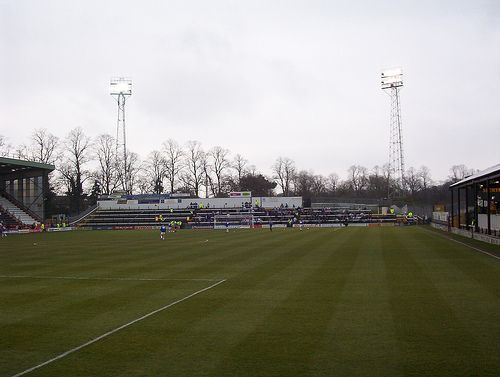

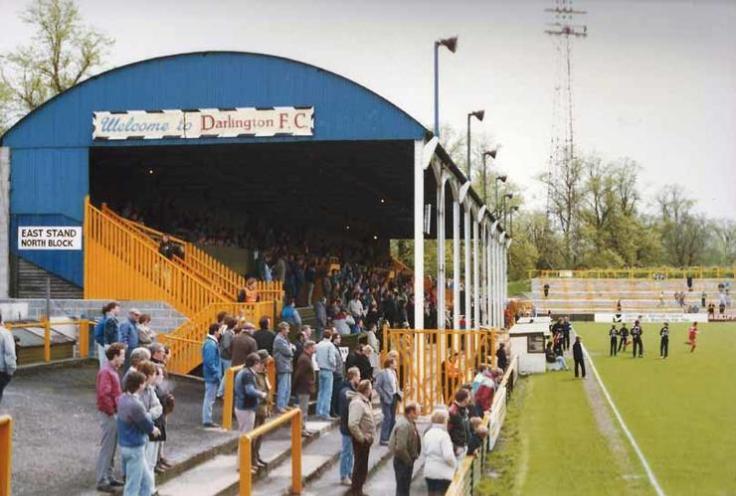

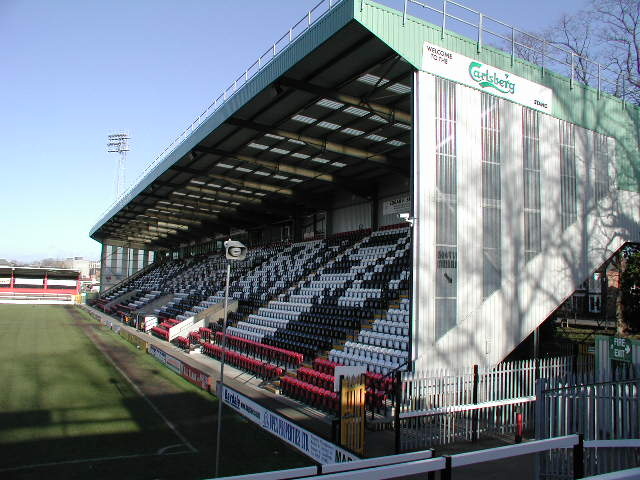

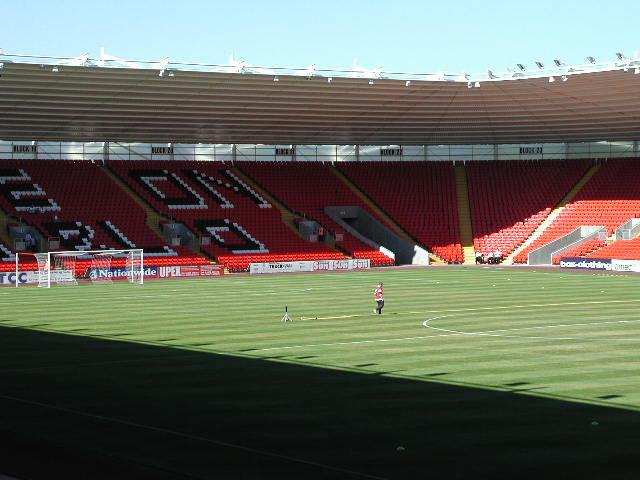



Darlington took on the blue and white stripes of the first club in town, who in turn adopted these colours from the town’s shield, representing the River Tees. They introduced for themselves black and white hoops when they became founder members of the third division north in 1921. The choice for black and white was inspired by the traditional dress code of the Quakers and remains until today, having seen over the years both unusual and fashionable variations in shirt patterns, including chevrons and chest bands.


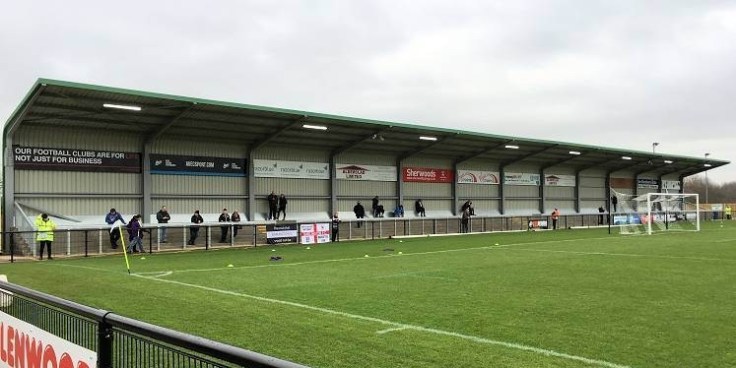
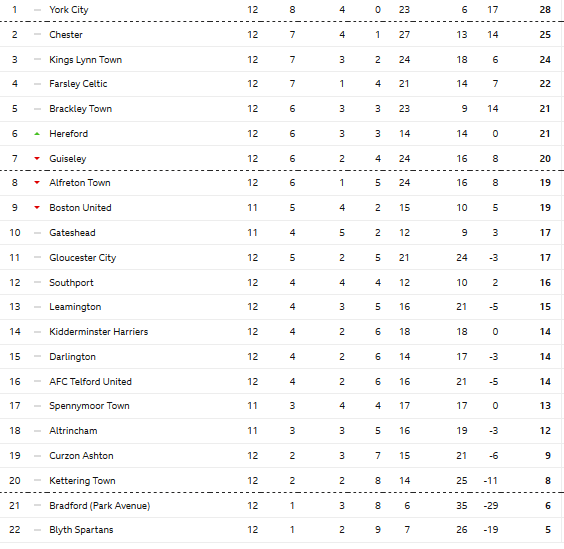

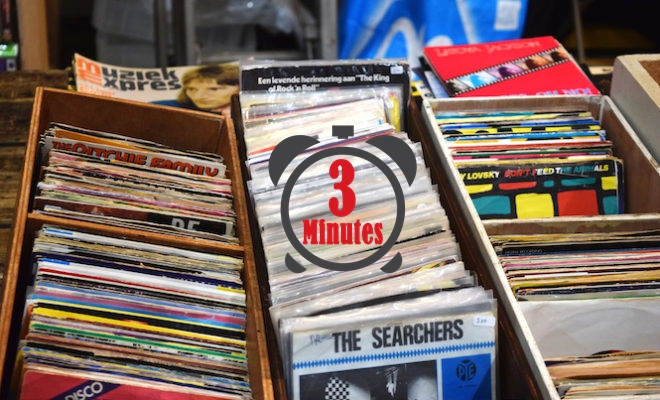

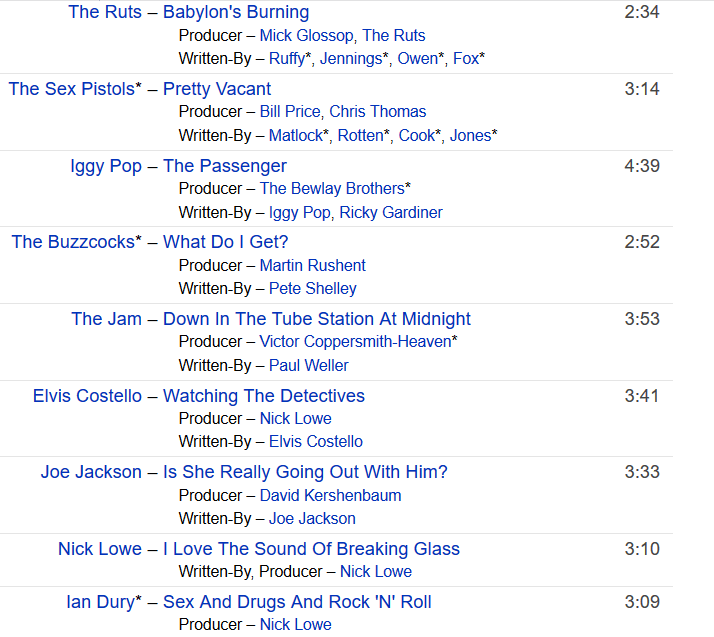

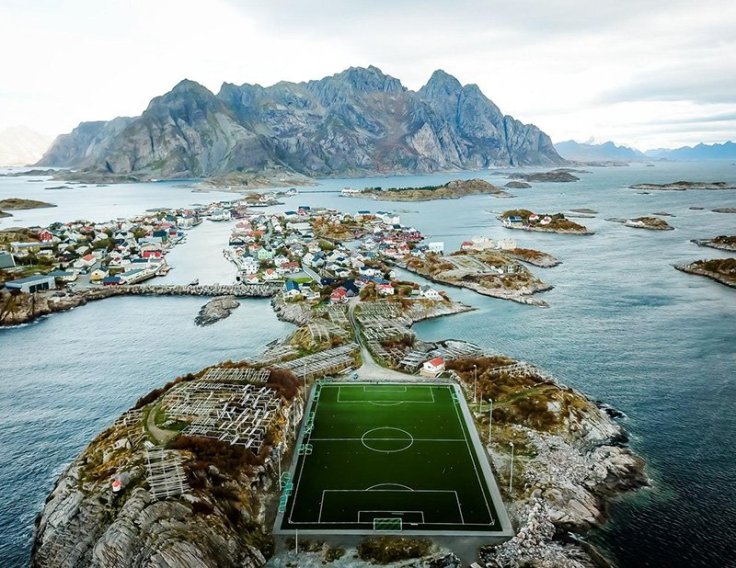

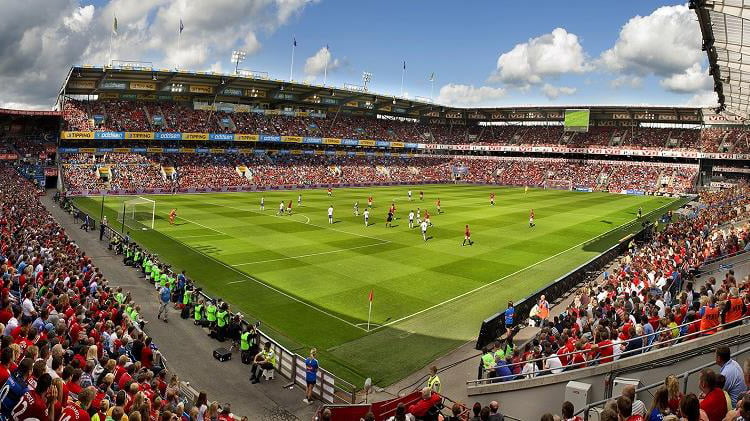
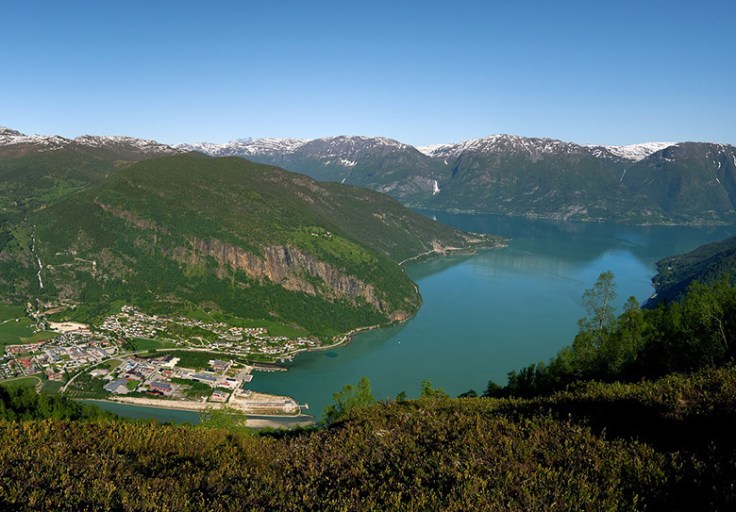
 Rosenborg’s Lerkendal Stadium in Trondheim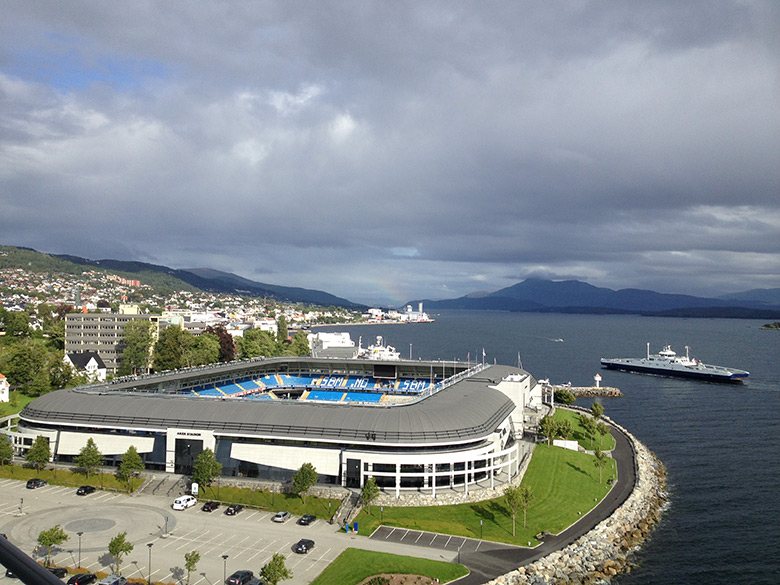
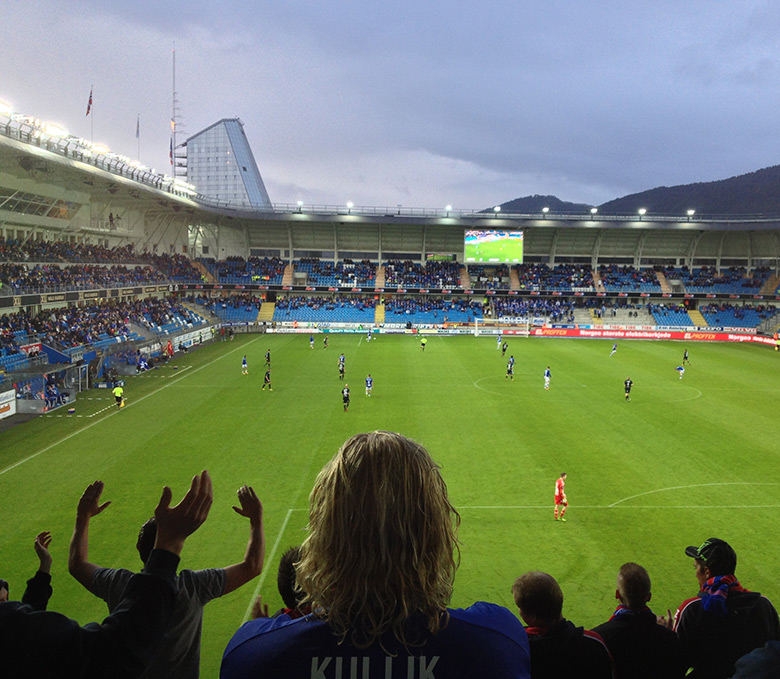
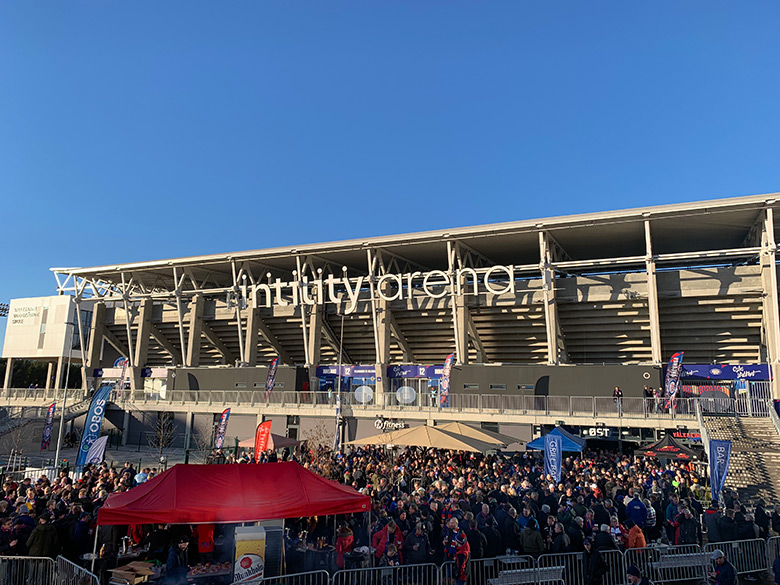
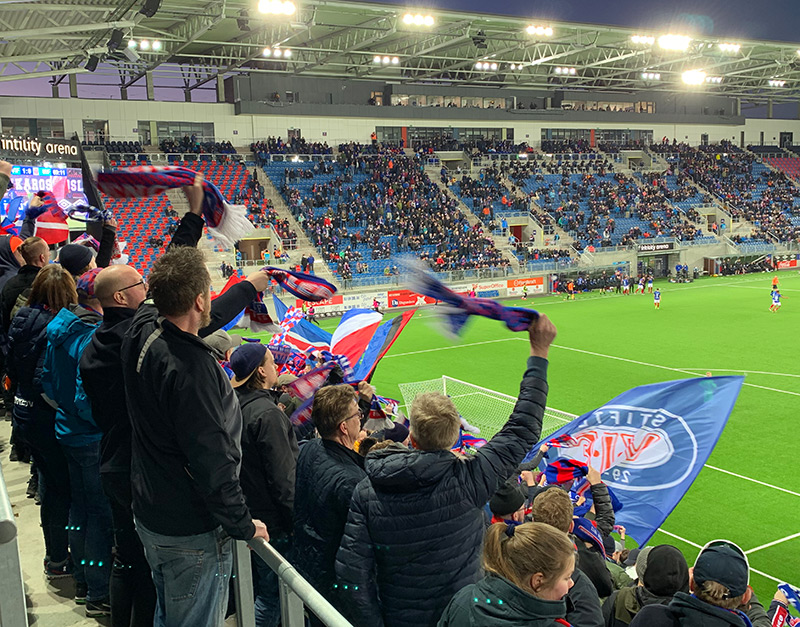

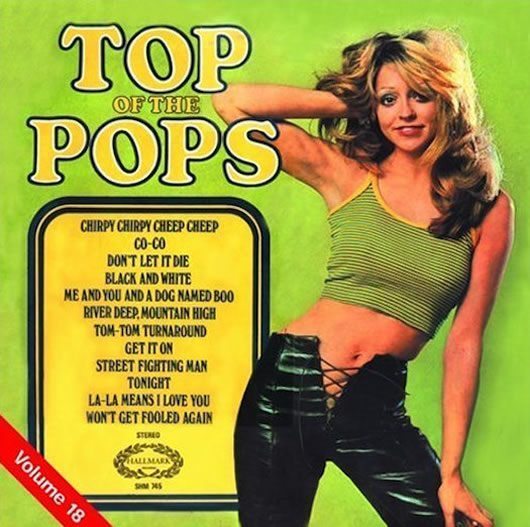
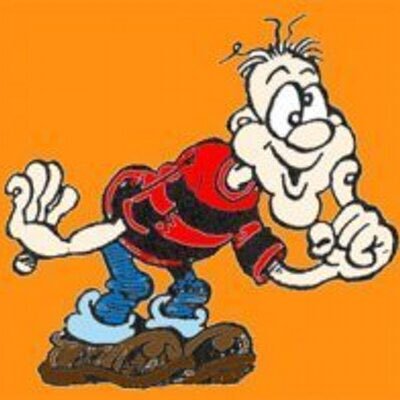
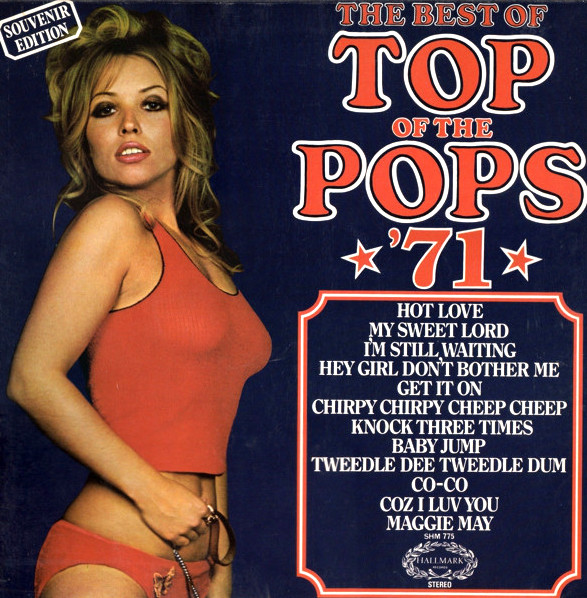
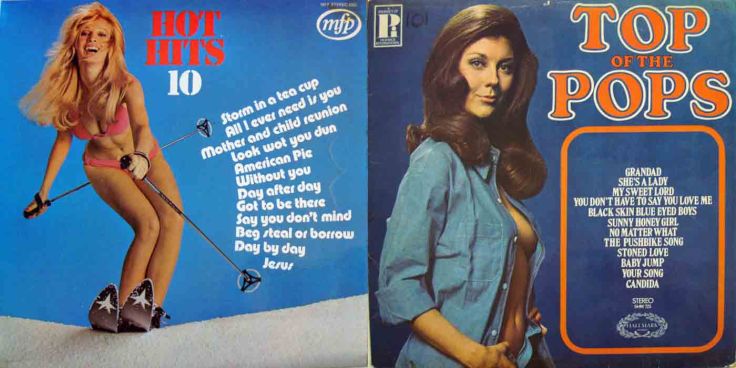



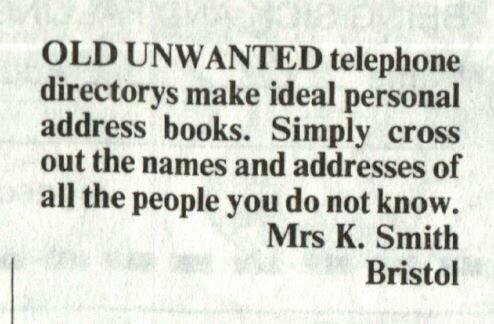


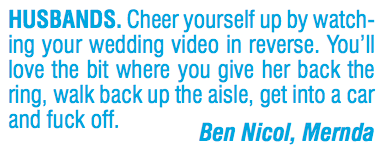


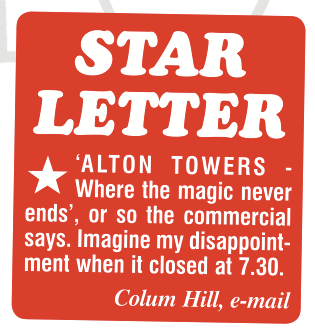
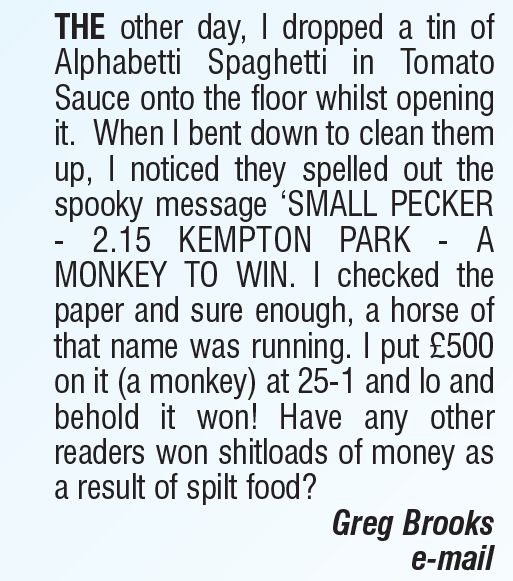
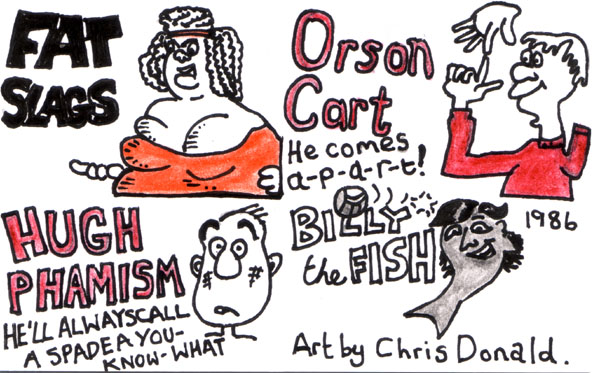
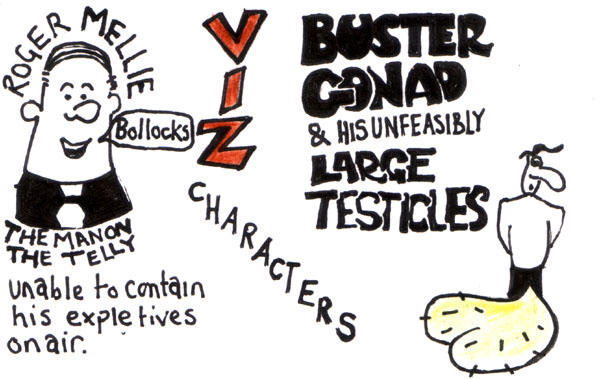

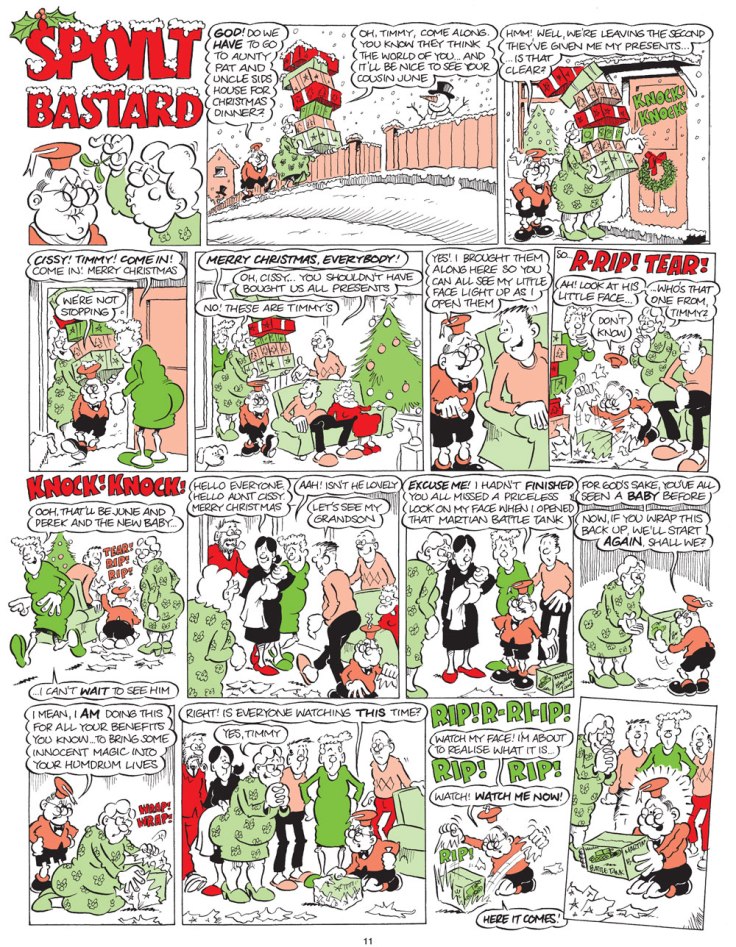
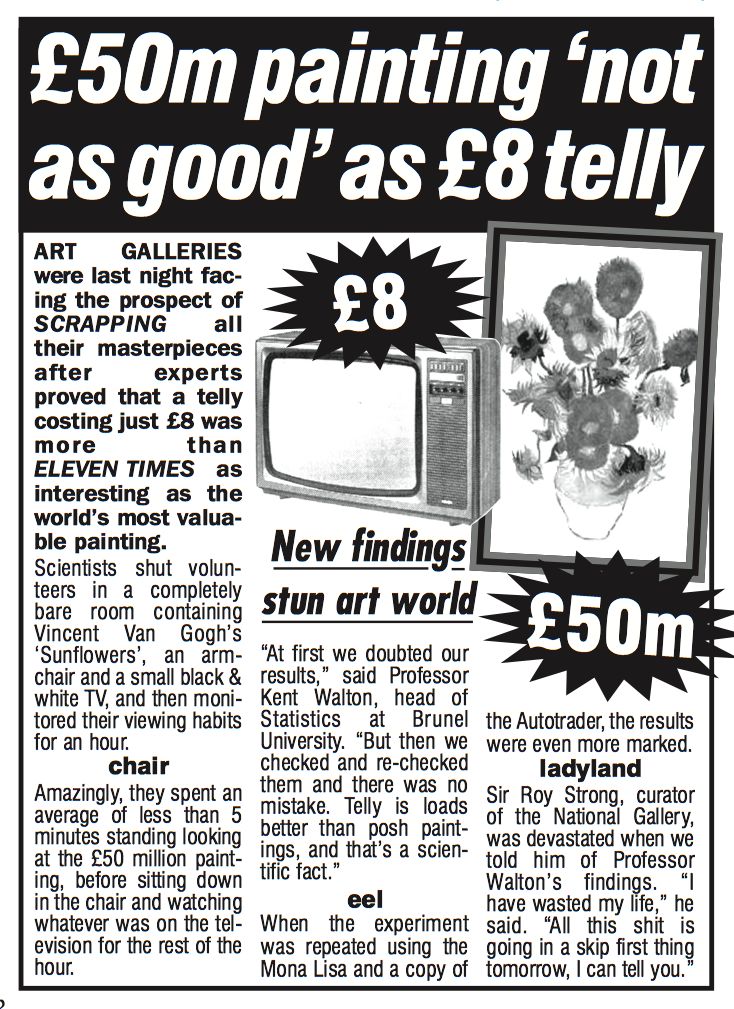


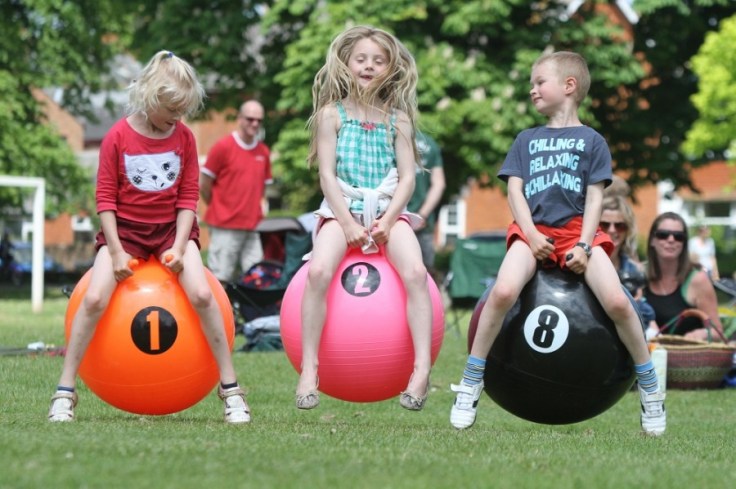


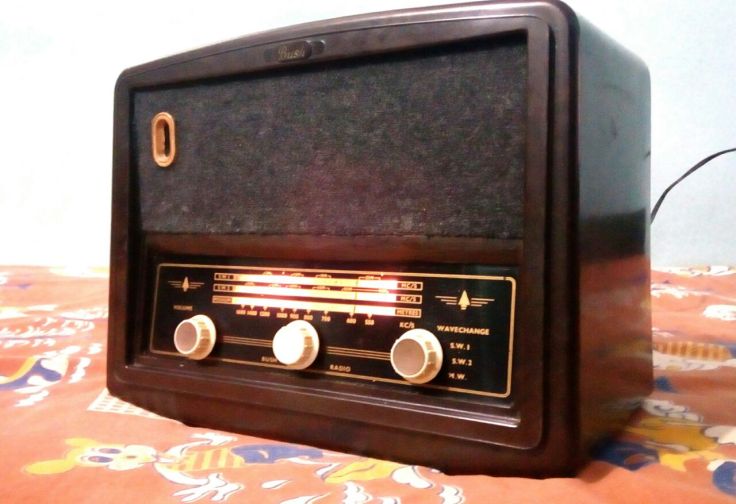
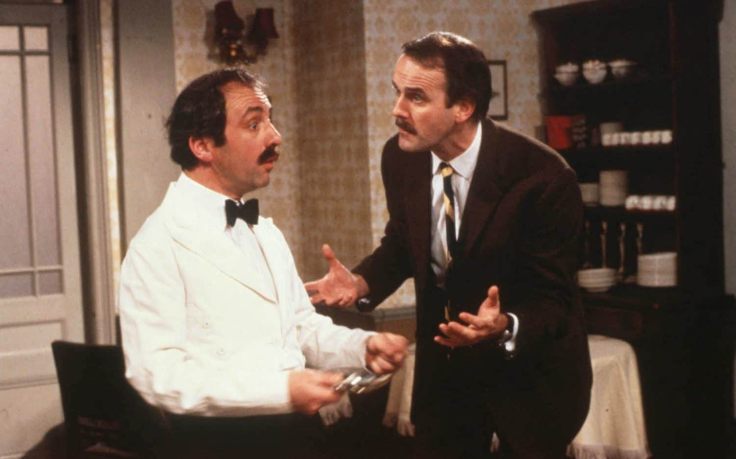








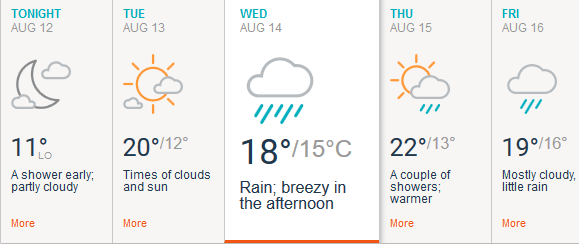
 Acid Mouse Music