When you hear them say “Yeah but all their songs sound the same” and “Heard one song, you’ve heard them all”
Can that fuzzy logic be applied to Placebo?
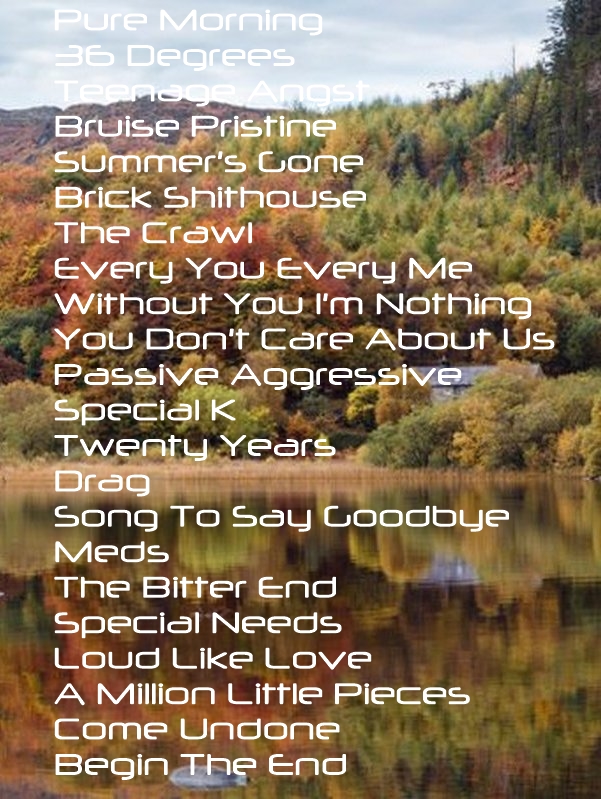
I wanted to learn more about this band and why I adore them so I’ve gleaned the following from the electric highway and made a compilation which, as far as imaginary albums go, I reckon it would be a mover.
The timeline is largely chronological. So far as I’m aware Twenty Years was never on an album, right, sometimes thus happens, but why?
But these are all personal favourites. This one’s my summit.
Anyone heard the Brothers In Rhythm remix? Actually I think it’s pretty neat, if you like that kind of thing.
So what of Placebo? When did they start? Where are they from? I turned to the Great Rock Bible though me thinks they’ve heard of Wikipedia, damn, anyway…
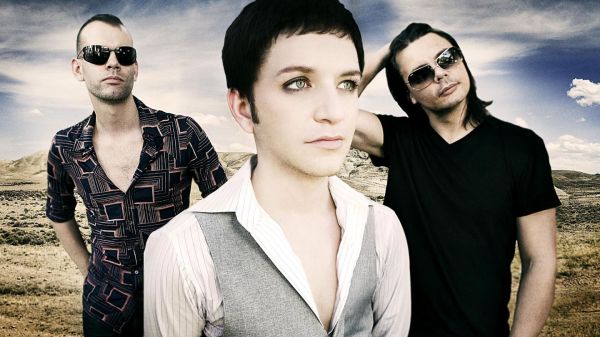
A nu noise for the nutty 90s, the PLACEBO effect was miles apart from the pseudo battles within the Britpop fad. Spearheaded by the openly bisexual, androgynous-looking Brian Molko – a geezer that drew comparisons with 70s glam idols BOLAN and BOWIE – the music, however, traded in the glitter for a darker listening experience. Taking the fast lane out of the post-grunge pile-up, London-based PLACEBO fused elements of avant-garde rock and cerebral metal; Molko’s paint-stripping shrill drawing comparisons with RUSH’s Geddy Lee and PAVLOV’S DOG’s David Surkamp – ah! prog and the 70s.
Formed in October 1994 by the cosmopolitan pair of singer/guitarist Molko (Belgian-born son of American and Scottish parents) and bassist Stefan Olsdal (from Sweden), they’d attended the same American International School of Luxembourg; they met up again on a South Kensington tube having spent time in the States and Sweden respectively. Early the following year, Ashtray Heart – as they were then briefly billed – recruited Englishman Steve Hewitt, although the sticksman had commitments with another band, Breed. Demos cut, drummer/percussionist Robert Schultzberg (also from Sweden), was drafted in as they chose the name PLACEBO. Press blogs at the time stated they’d been joint winners of the “In The City” Battle of the Bands competition – unconfirmed?
Late in ‘95, `Bruise Pristine’, was chosen by Fierce Panda Records as the trio’s debut 7”, although it’d be another act, Soup, who’d appear on the flipside. After only a handful of gigs, PLACEBO signed for Deceptive Records (home to ELASTICA and others), leading to tours with ASH, BUSH and WHALE. However, on the strength of one solitary single, `Come Home’, Molko and Co hit the proverbial jackpot via a deal with Virgin/Hut subsidiary, Elevator Records.
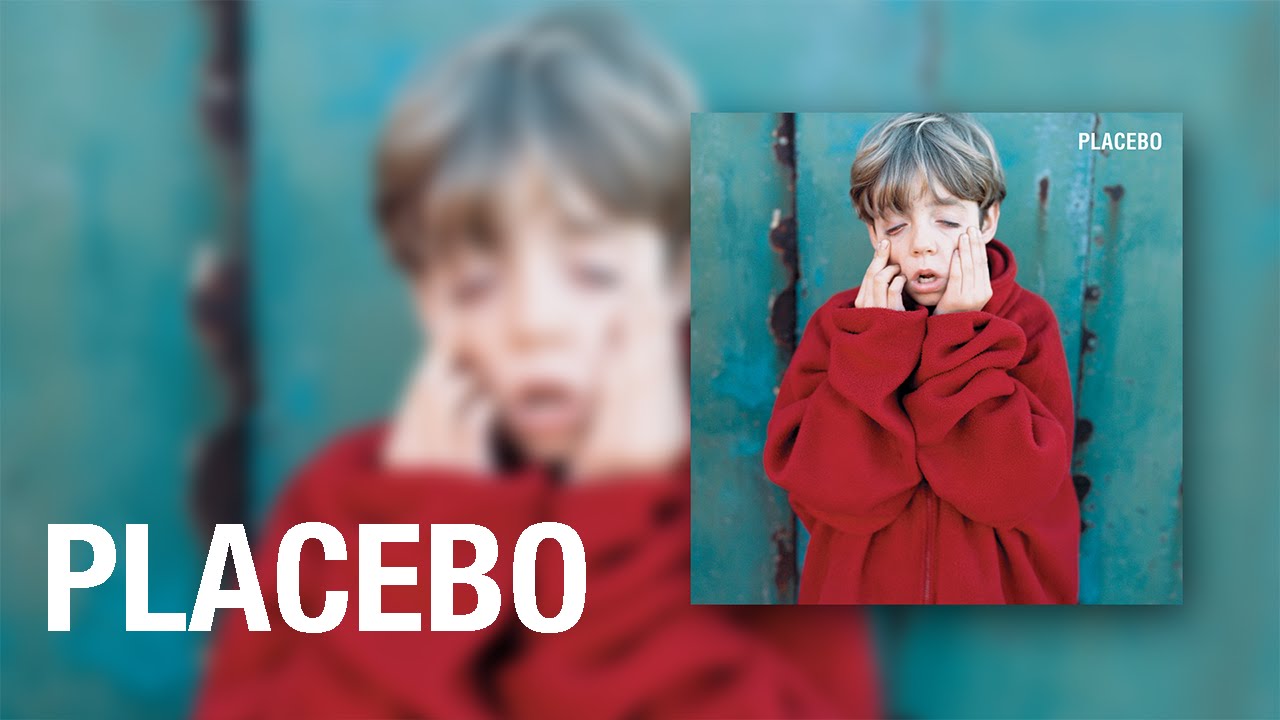
Roping in producer Brad Wood, the trio’s eponymous PLACEBO (1996) {*8} debut album was released to a fawning music press; metal-mag Kerrang!’s strong support helping the record dent the Top 40. Hit singles, `Teenage Angst’, and the glorious chartbuster, `Nancy Boy’, helped regenerate sales of a now Top 5 set which many hailed as one of the year’s best. In addition to the more incendiary tracks, the record also contained such hauntingly reflective songs as the sweet `Lady Of The Flowers’ and `Hang On To Your IQ’.
With Steve Hewitt back in the stool to replace Schultzberg, PLACEBO were back with a bang in the autumn of ’98; two blistering Top 5 singles in quick succession: `Pure Morning’ and `You Don’t Care About Us’, premiering their equally superb Steve Osborne-produced sophomore set,
WITHOUT YOU I’M NOTHING `Every You Every Me’, and the collaborative title track (with Molko’s idol, BOWIE), kept the band in high profile the following year, although the latter track was excluded from the charts for breaching regulations.
With BLACK MARKET MUSIC (2000) {*7}, Molko took his brooding sexual vision to its twisted climax on an album which ranked as one of PLACEBO’s most darkly satisfying to date. Long-time fans would be glad to know that the ever-androgynous frontman was still wrestling with his soiled demons, content to provide a mascara-smeared foil to the bloke-rock clogging up the music biz. And with a couple of further Top 20 hits in `Taste In Men’ and `Slave To The Wage’ (`Special K’ was again deemed too lengthy in format to achieve chart status), PLACEBO’s vision was still in tact.
Still going strong after three albums, PLACEBO issued their fourth, the hauntingly-titled SLEEPING WITH GHOSTS (2003) . The disc saw a more mature Molko letting down his glam-rock snottiness, in favour of dark rock in the vein of MUSE and the COOPER TEMPLE CLAUSE. As always, his high-pitched whine was ever present, as were the complex guitar rhythms and the off-kilter backbeat by the ever reliable Olsdal and Hewitt; best examples were from hit singles `The Bitter End’, `This Picture’ and `Special Needs’.
Add to the mix some dark electronica and the occasional ballad (`English Summer Rain’) and what emerged was a deliciously brash and delicately dark pop-rock record that would be hard not to impress the rock fraternity.
Following on from the anthology, “Once More With Feeling: Singles 1996-2004”, MEDS (2006) {*7}, stripped it back even further, dispensing with any lingering production frippery on an album which returned the band to the scabrous, dirty rock thrills of their debut. On a record which followed the “greatest hits” set into the Top 10, Frenchman Dimitri Tikovoi was charged with the sonic reduction (achieved over an impressively concise two months), surpassing himself with the garish grind of `Infra Red’. Guests included an unobtrusive Michael Stipe (on `Broken Promise’), and The KILLS’ Alison Mosshart, who sassed-up the title track.
While the Yanks were beginning to take notice of the band’s self-conscious alt-rock sounds, and with Steve Forrest now in charge of the drum-stool in place of Hewitt, PLACEBO took on the might of America on album number six, BATTLE FOR THE SUN (2009) {*7}. Released by PIAS for worldwide distribution (Vagrant in North America), and produced by David Bottrill, the impact across the seas was immediate, as it not only underpinned the US Top 50, but smashed the charts all over Europe and beyond. Unlike its predecessors and due to the takeover of all things digital and downloadable, the PLACEBO singles (`For What It’s Worth’ and `The Never-Ending Why’) failed to reach out to the public. Despite this, Molko’s paeans of poetry and gothic glam were dispatched on the hook-line, churning of `Kitty Litter’, the title track and something somewhat déjà vu on `Ashtray Heart’.
Switching to Vertigo Records, the `B3EP’ (featuring a cover of Minxus’ `I Know You Want To Stop’) was issued toward the fall of 2012, while most fans were concerned that it was years since an album. Revolving around themes of inner love and all it encompasses, LOUD LIKE LOVE (2013) {*6}, was again led by mixed reviews. If decreasing sales were anything to go by (peaks of UK No.13 and US No.98), PLACEBO looked to be in danger of crashing and burning. Biting wordplay on the Facebook-(un-)friendly `Too Many Friends’ (the video highlighting a voiceover for transgressive novelist Brett Easton Ellis), was moody Molko searching out for solace from somewhere; other touching songs came by way of `Hold On To Me’, `A Million Little Pieces’ and `Begin The End’.
Marking their 20th anniversary on the rather old-hat/low-key MTV UNPLUGGED (2015) {*6}, PLACEBO sounded decidedly humdrum and unadventurous. Recorded live in front of a select audience in London Studios, only the guest tracks, `Protect Me From What I Want’ (featuring JOAN AS POLICE WOMAN) and `Every You Every Me’ (with Majke Voss Romme aka Broken Twin), and possibly the dependable PIXIES, SINEAD O’CONNOR and PAVEMENT covers, unmasked anything worth shouting about.
I love Placebo. Take it from someone who cares.
A friend in need’s a friend indeed but a friend with weed is better.
At least at the beginning, the Flying Lizards were not so much a band as an avant-garde experiment in Pop Music conducted by musical and visual artist David Cunningham and a rotating handful of experimental musicians.
The Flying Lizards landed in the UK music charts in 1979 and were seen on TOTP performing a rather bizarre rendition of The Beatles song “Money”.
They’d already had their debut single, another cover version, that of the Cochran classic “Summertime Blues”.
As a tween buying these singles and appreciating the uniformity of those yellow and blue sleeves, my interest waned after the single “TV”.
So, forty years on, what has reignited my fascination and admiration for a band who, at the time, no-one could take seriously?
This for starters.
The Secret Dub Life Of The Flying Lizards was a surprise and a pleasant one at that and would have fitted in well anyway at a time when I was listening to the likes of Augustus Pablo, The Scientist and King Tubby.
It could be considered a hidden gem but at least it inspired this post and caused me to dig through their album catalogue to find out just what else had been going on. Here’s a mini-bio of the band, taken from the AllMusic archives.
BIOGRAPHY
The band were the brainchild of David Cunningham, a well-respected avant-garde composer, producer, and visual artist, and it became one of the first salvos in a long and fascinating career. Cunningham was born in Ireland in 1954, and once told a reporter he first took up music in school as a way of avoiding playing rugby with his schoolmates.
Cunningham later developed a keen interest in both music and visual art, and he left Ireland when he was accepted at the Maidstone College of Art in Canterbury, Kent, where he studied film and video installation. While in school, Cunningham began doing live sound for rock bands playing on campus, which led to an interest in recording and music production.
In 1975, Cunningham self-released an album of minimalist music, Grey Scale and using borrowed gear he recorded a deliberately harsh and minimal version of the old Eddie Cochran hit “Summertime Blues,” with art school chum Deborah Evans contributing flat, tuneless vocals. Cunningham claims the low-tech single cost just 20 pounds to make, and after it was turned down by a number of labels, Virgin Records picked it up for release in 1978, under the assumption that it was inexpensive enough to recoup its costs quickly.
Released under the name the Flying Lizards, “Summertime Blues” attracted enough press attention to sell a few thousand copies, putting the project solidly in the black, and Cunningham decided to take another stab at reconfigured pop.
With its clanking prepared piano, crashing percussion sounds (a combination of tambourine and snare drum), and another monotonic vocal by Evans, “Money” was considerably more manic than “Summertime Blues,” through the recording budget was similarly cheap, and the single became an unexpected chart hit both in Europe and the United States.
Cunningham’s deal with Virgin was for only two singles, but with “Money” climbing the charts, they signed him to a new contract, and the Flying Lizards’ first album soon followed, which featured dub-style audio experiments with improvisational musicians Steve Beresford and David Toop bent interpretations of pop music constructs along with the two freak hit singles.
The album sold just well enough to justify Virgin financing another Flying LizardsLP, but 1981’s Fourth Wall put its focus on the eclectic experimentalism of Cunningham’s music, and despite the presence of another bent cover of a pop classic (in this case Curtis Mayfield’s “Move on Up”) and contributions from Robert Fripp, Patti Palladin and Michael Nyman the album was a commercial disappointment though it received strong reviews. By this time, Cunningham was devoting much of his time to producing other artists (including This Heat and Wayne County and after releasing 1984’s Top Ten which combined Cunningham’s eccentric take on pop with sleek electronic textures and the vocals of Sally Peterson — Cunningham retired the Flying Lizards.
I think the Lizards should be fondly remembered as welcome contributors to the music scene at the fag end of a decade that, arguably. was the best for diversity apropos music and fashion. They seemed to disappear after that batch of yellow and blue sleeved singles and had I not researched the band now, I wouldn’t have got to hear all of their extraordinary cover versions. This one I like most of all and it seems fitting to end this article on. I wondered what Tom Jones made of it… what’s new, pussycat?
The first in a series of ten mixes documenting the dance scene be it happy hardcore, techno, trance, acid house… classics and lesser-knowns fused together in a melee of mayhem.
It’s nineties nostalgia at its finest. Loving the Cartouche – been a while since I heard that tune. Here’s the playlist. Something is about to happen – something wonderful.
1. FORCE LEGATO – System
2. ANALOGUE DYNAMIX – A-syd Again
3. CAPRICORN – 20Hz
4. UNO DELIC – Farenheit
5. JONNY L – The Ansafone
6. KICKS LIKE A MULE – The Bouncer (Housequake Mix)
7. 4 FOR MONEY – A Moment In Time (Rising High Dub Mix)
8. QUAZAR – Midsummer Night’s Dream
9. THE SHAMEN – Possible Worlds
10. COMA CLUB – Untitled (B1)
11. CARTOUCHE – Feel The Groove (Underground Remix)
12. CODE INDSUTRY – Fury
13. JENS LISSAT – The Future
14. FORMIC ACID – Trance Dreams
15. QUADROPHONIA – Quadrophonia
16. THE HYPNOTIST – Pioneers Of The Warped Groove
17. URBAN HYPE – A Trip To Trumpton
18. THE SYSTEM – You’re In My System
19. SPOOKY – Schmoo (Stripped Down Dub Mix)
20. THE ARC – Something Wonderful
With Th’ Faith Healers remaining one of my finest loves and having recently been reunited with a long-lost Mouse On Mars number, I wanted to explore this Too Pure outfit in closer detail.
I was aware that other stalwarts, PJ Harvey and Mclusky were on there but who else? That Mouse On Mars track was on this compo which I’ve just ordered from Discogs.
The compilation appears to be a one-off too though I am grateful for it having this version of Don’t Jones Me that I much prefer to the one on Lido (Th’ Faith Healers).
Next is from an article on LOUD AND QUIET. Words by Dominic Haley
10 years, 120 releases and countless DIY bands –
the story of Too Pure Singles Club
From the get-go, Too Pure had always been a launchpad for new sounds, so seeing it consigned to the history books was a real blow to fans of DIY music.
Founded by Richard Roberts and Paul Cox as a more traditional label in 1990, the label had a knack for spotting future movers and shakers, famously teaming up with 4AD to release PJ Harvey’s debut album ‘Dry’ in 1992.
In the late ‘90s and early 2000s Too Pure built on this success, releasing albums from cult indie artists such as Mclusky and Electrelane. However, this run of success came to an end in 2008 when Beggars decided to merge the label with their sister imprint 4AD, but luckily it was decided that the popular singles club would continue as a feeder for the group’s bigger labels.
Since then, the label’s modus operandi has been to champion new, cutting-edge music – and they’ve been pretty good at it over the years. Specialising in limited run vinyl singles, they’ve kicked off some of the best-known bands in indie, punk and experimental music.
They were the first label to release music from the likes of Bear Hands, The Crookes, Jeff The Brotherhood, Esben & The Witch and Pulled Apart by Horses, who have all gone on to great things after Too Pure introduced them to the world.
“I used to work in the warehouse at Beggars, which was awesome,” says Riddlesworth explaining his part in the story. “You had every release down there. It was like a cross between Willy Wonka and Fraggle Rock. Anyway, I started helping Jason White (Beggars’ resident press manager) who ran Too Pure at the time with the mail-outs, just because, I really liked helping out. He was like – ‘I’m too busy, so if you want to do this and look after this label, then just run with it?’ I was more than happy to do that.”
Being a singles club rather than a traditional record label allowed Too Pure to do things that other labels couldn’t. Rather than having to trek down to your local store, the idea was to send the music directly to people’s homes so for just fifty quid a year (sixty-five, if you were outside the UK). Subscribers received a monthly, limited, hand-numbered 7” single on coloured heavy weight vinyl. Whatever didn’t make its way out via the mailing list was then sent to the shops.
That meant quality was always at the top of the list of priorities for Too Pure. As well as releasing good music, the whole idea was to put out collector’s items. “We were always a 7” label – that was the deal. All the singles were mastered at Abbey Road as well, which was great for all the new bands, as it was pretty much the first single for most of these artists.” It was a bold (and pricey) commitment. “The cost of 7″s is one of the reasons we’ve had to stop. It’s become way too expensive now. This is so boring, but if you think a £4.50 dealer for two tracks would cost you like £7 in the shops now. So, that’s £7 for two songs when you can get an album in the shops for like £15.”
To be a Too Pure subscriber was an unpredictable journey – each month the label’s releases could be wildly different from one another. One month you might get a gentle freak folk track and the next month you could be listening to some caustic hardcore. “I just got to do what I wanted. The whole attitude was ‘keep your head down and put out what you like’,” says Riddlesworth. “I’ve been dead lucky there. No one ever said, ‘you need to put this out, or feature this’. I mean if they had told me that kind of stuff it would have been brilliant. I’d just been like ‘fuck it – I’ll put that out.’”
This led to an interesting relationship between Too Pure and its followers. Talking to Paul, you can feel the genuine affection for the people who rode the ride with them. “It was an eclectic mix, so you had to be fucking nuts to like everything,” he laughs. “We had like stuff by Grimm Brides, who are great, but admittedly they are like noise, which isn’t really to everyone’s taste. But, you know what, every year I’d do a little survey to find out what people liked best, and you know what, on the whole people liked a little bit of everything. It’s been really cool.”
Th’ Faith Healers
Th’ Faith Healers are:
Roxanne Stephen, vocals
Tom Cullinan, guitar/vocals
Ben Hopkin, bass
Joe Dilworth, drums
Absolutely devastating. I remember the first time I ever heard th’ (no ‘e’ please) Faith Healers. I was driving to my stupid job (in a candy store, no joke) and found myself stuck in a mammoth bumper-to-bumper jam on the highway. Crackle, crackle… something new floated over the airwaves… a sultry, growly female vocal snaking around in a thumpa-thumpa beat… slinky, cool… suddenly the whole thing turned savage. The singer hissed through her teeth, the guitars (sounded like 50 of ’em) stuttered and spat, and the whole damn thing went into hyperdrive. The storm settled into a heavy groove, both hypnotic and chaotic at once, the song corkscrewed and churned and ended only when it thudded into the ground with a crash. Work (and the rest of the day), needless to say, paled in comparison to this aural onslaught. Utterly perfect… I was in love.
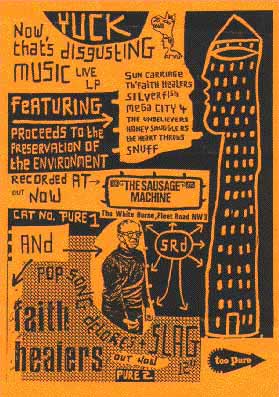
Rewind to 1990: Paul Cox and Richard Roberts are hosting shows at the Sausage Machine Club, in the basement of the White Horse in Hampstead. The two decide to start up a record label to showcase the bands emerging from this scene, Too Pure. Their first signings? Th’ Faith Healers, who else?
Tom Cullinan played the guitar, Ben Hopkin played the bass, Joe Dilworth pounded the drums and former Falcon barperson Roxanne Stephen did the vox-thing. Their first appearance came on the first-ever Too Pure release, a live compilation called Now That’s Disgusting Music, all comprised of bands that had played at the Sausage Machine. It was a tune called ‘Jesus Freak’, and it, basically, came snarling out of your speakers, grabbed you by the throat and demanded that you love it. You were left with no choice but to comply.
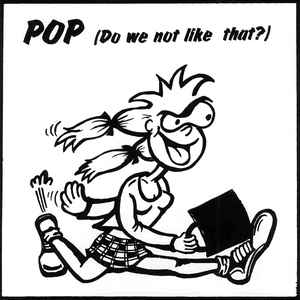
The first Healers 12″ appeared in mid-1990, and contained the tracks ‘Pop Song‘, ‘Delores’ and ‘Slag’. The single appeared following a tour supporting Lush, and was followed with an alcohol-drenched headlining gig in November at the LSE.
In February ’91, the band released the Picture of Health EP. The lead-off cut, ‘Gorgeous Blue Flower’ quickly became a staple of their live set. Reviews were unanimous with praise, live shows rousing successes, so, naturally the band… took a six-month vacation! Th’ Healers re-emerged in the autumn with the In Love EP, featuring a Healers classic, ‘Reptile Smile’ and two other cuts. It galloped to the upper reaches of the indie chart and the band found themselves playing a Christmas party at the Camden Palace.
Meanwhile, Too Pure was rapidly becoming the most talked-about indie label in Europe. Th’ Healers debut LP, Lido, finally appeared in 1992, and featured eight tracks (seven originals and one cover, a mesmerizing take on Can’s ‘Mother Sky’). From the full-throttle mayhem of the amazing ‘Hippy Hole’ to the gentle acoustics (spiked with acid-soaked peppermints, no doubt) of ‘It’s Easy Being You’, Lido served as a perfect souvenir of a brilliant band.
Live shows from the Lido era seem to have taken on legendary status. In reference to Cullinan’s guitar use (abuse), Melody Maker said: “If you give this man a coloring book, he would not draw inside the lines … [Cullinan] squeezes almost every musical idea of the last decade through a mincing chukka beat, and don’t we love it … th’ Faith Healers give me butterflies of giant wingspan in the stomach”.
Th’ Healers’ follow-up to Lido, Imaginary Friend, was finally released in late ’93 to a rabidly-awaiting public. If anyone was expecting another handful of crash ‘n’ burn ravers, they were in for quite a surprise…
“Imaginary Friend is the sound of a group that have sat back, reassessed their strengths and decided on a change of tack,” remarked Paint It Red magazine. “Th’ Faith Healers have looked inwards and come up with a universal cry of despair.”
The album featured only seven tracks, the last of which was a numbing 20-minute dirge, ‘Everything, All at Once Forever’. Amongst the darker hues, however, lie hidden some sparkling pop gems. ‘Kevin’, ‘The People’, and especially ‘Heart Fog’ all eschewed the trademark Healers feedback fuzzbombs for a newfound sense of restraint and control. “Colossal tension … superb stuff,” praised Select.
But it wasn’t to last… in the spring of ’94, th’ Healers imploded. Shortly after returning from a string of US shows (where they supported the Breeders and the Jon Spencer Blues Explosion), the band decided that they’d done all they could do. Rather than limp along halfheartedly, th’ Healers opted to call it quits.
A compilation of early 12″ singles, L’, which had been released in the UK in ’92, was finally made available to US audiences via Too Pure/American Recordings in 1995. Tom now plays guitar in his new band, Quickspace Supersport, and Roxanne has resumed her studies.
In early 2006, th’ Healers regrouped after the US label Ba Da Bing! released their Peel Sessions on CD. Although there are no immediate plans to record new material, the band have announced a brief tour in March and April 2006.
Th’ Faith Healers began life as a punk cover band in which Ben played drums and Tom on guitar. Settling on The Faith Healers as a suitable moniker, they were soon making drunken fools of themselves at every available opportunity. Joe saw them and something at the core of their shambolic mess appealed — so when a vacancy arose, he jumped at the chance to join. Ben and Tom remember Joe’s joining as the point at which they started to become serious about their music, despite the initial attraction being the band’s relaxed attitude.
Three gigs later, desperate to play somewhere other than the Dublin Castle public house, the threesome recruited expatriate Scot and sometime Falcon barperson Roxanne, principally because the promoter at The Falcon had promised them a gig just so he could see her sing. They dropped the ‘e’. Joe later claimed it had been stolen by Thee Hypnotics, and a legend was born.
Amongst the crowd at these primitive gigs were Richard Roberts and Paul Cox, the most implausible record company executives imaginable, who had decided to set up their own label in order to ‘go public’ with some of the emergent talent they’d been putting on stage at their Sausage Machine Club in Hampstead’s White Horse basement. Too Pure Records’ maiden release was a compilation, Now That’s Disgusting Music, that put new bands alongside the more established likes of Mega City Four and Silverfish. Th’ Faith Healers contributed ‘Jesus Freak’, and soon afterwards accepted the invitation to become Too Pure’s first signing.
In mid-1990, Th’ Healers recorded their first 12″, ‘Pop Song‘, ‘Delores’ and ‘Slag’, which was released following a nationwide tour supporting Lush. Suddenly, alongside Silverfish, Th’ Faith Healers were touted by the press as prime movers in the Camden Scene: a loose aggregation of North London-based grunge/noise merchants whose followers indulged in a dance known as The Lurch and frequented gigs at The White Horse, The Falcon and The Bull & Gate. The Lurch (as both the scene and everyone involved in it became collectively known) convened for its Biggest Night Out in November at the L.S.E., where Th’ Healers played a headline gig of such alcohol-fuelled proportions that Tom doesn’t remember it happening at all.
February ’91 brought forth the Picture of Health EP, featuring the lead track, ‘Gorgeous Blue Flower In My Garden’, which the band regard as their most accessible moment. The EP gained them even more glowing press, and their first headline tour was pretty successful until Birmingham, where Ben’s bass amp gave up the ghost and a bemused audience were treated to a bass-less 35-minute version of ‘Slag’.
Just as the fame and fortune beckoned, Th’ absurdly perverse Healers decided to take a six month holiday, finally returning to the studio in the autumn. The resulting In Love EP was fraught by technical problems and is seen as an underachievement by the band. Nevertheless, ‘Reptile Smile’ and company followed the first two twelves into the upper regions of the indie chart and completed a trilogy of bizarre sleeve designs that gave a whole new meaning to the word ‘tasteless’.
After a Christmas party at the Camden Palace where even the Christmas tree was too pissed to stand up, Th’ FaithHealers set about recording their debut LP Lido whilst Too Pure became the most talked about independent record label in Europe. Th’ Healers singles were compiled on a CD, L’, for overseas consumption, and the band’s first John Peel session was released by Strange Fruit Records on an LP of sessions by Too Pure artists.
The relationship between music and football has evolved over the years, but it’s fair to say the twin pursuits have always shared some common ground.
Recently, we have seen the slow demise of the traditional FA Cup final song, in a move which has paralleled the decline of outlets like Top of the Pops on which to perform the music in question.
From a Shots perspective, we use Apache on the East Bank but haven’t, so far as I know, released an official single.
I’m not a fan of The Shadows or sixties music in general so even for sentimental reasons it wouldn’t maker the grade for this particular top ten.
Because there are the two animals: the official club song and the topical song, made by bands whose members supported a particular team (I think The Yobs for exame were Spurs fans but don’t quote me on that) and who would pen poignant lyrics about life on the terraces.
During the 70s and 80s boom time for footy songs, had we been in a higher echelon, perhaps we might have seen and heard such a thing.
Growing up, Reading were our chief rivals. Add Pompey and Bournemouth apropos Hampshire derbies. Woking was largely unheard of, just another concrete jungle up the road.
I looked at the Planet Football website and they’d got a list of 77 songs and Reading made an official release.
They Call Us the Royals
This sounds like the theme song for a new flavour of crisps, or the montage music from a film starring one of the lesser-known Disney Channel stars.
Now that IS embarrassing.
Build a bonfire, build a bonfire, put the Reading at the top
Put the Woking in the middle and burn the fucking lot
I’m sure there’s a tune there somewhere – maybe 50 Cent? Or back in the day Sham 69 or Cockney Rejects would have made a decent fist of it.
Or imagine Champione given the technno / trance treatment – that’d work.
Oh Champione
the one and only
the Aldershot
they said our days are numbered we’re not famous anymore
but Shots rule non league football like they’ve always done before
If you look at the web music press, NME, Ranker and the like have all the usual suspects, Vindaloo, Three Lions, World In Motion… no mention of Half Man Half Biscuit any place.
Glenn and Chris singing Diamond Lights or Kevin Keegan’s “Head Over Heels In Love” are surely instant dismissals. As are things like Embrace with “World At Your Feet” – these are simply bog-standard.
There are tenuous works that almost make the cut that I’m quite fond of. Subbuteo gets a mention in The Undertones’ “My Perfect Cousin” and who knows why arguably the Wedding Presents’ best album was named George Best!
Others just failing to make the grade here are Collapsed Lung’s “Eat My Goal”,
Off the top of my head I could think of four absolute shoe-ins for a top ten football songs of an independent vein and I scoured the internet for the rest; and here they are.
10. DEPTH CHARGE – “Goal!”
It was 1990 and this appealed to me because at the time I was listening to the likes of Transglobal Underground and African Head Charge,
In any event, most of us like the hyperbole of overseas football commentary so this one cuts the mustard.
9. THE FARM – “All Together Now”
Peter Hooton wrote the lyrics in his early 20s after reading about the Christmas truce of 1914. The song was first recorded under the title “No Man’s Land” for a John Peel session in 1983. In 1990, Hooton wrote the chorus after Steve Grimes suggested putting the lyrics of No Man’s Land to the chord progression of Pachelbel’s Canon. To shorten the song for radio, the producer Suggs cut the song to three verses from its original six. It has been used by numerous football teams since, as well as by the Labour Party for their 2017 general election campaign, often played during rallies.
8. THE FALL – “Theme From Sparta FC”
Mark E Smith is a veteran of football songs, from ‘Kicker Conspiracy’ in 1983 to a World Cup song. His finest contribution has to be ‘Theme from Sparta FC’, still part of The Fall’s live set and the theme music to BBC’s Final Score.
7. BILLY BRAGG – “God’s Footballer”
If I hadn’t researched all of this properly then this treasure might have fallen by the wayside, I was only playing Don’t Try This At Home the other day and this track is unskippable, The Molineux nod and the sound of the crowd at the end put the icing on the cake here.
God’s footballer hears the voices of angels Above the choir at Molineux God’s footballer stands on the doorstep And brings the good news of the kingdom to come While the crowd sings ‘rock of ages’ The goals bring weekly wages Yet the glory of the sports pages Is but the worship of false idols and tempts him not
God’s footballer turns on a sixpence And brings the great crowd to their feet in praise of him God’s footballer quotes from the gospels While knocking on doors in black country back streets He scores goals on a Saturday And saves souls on a Sunday For the lord says these are the last days Prepare thyself for the judgment yet to come
His career will be over soon And the rituals of a Saturday afternoon Bid him a reluctant farewell For he knows beyond the sport lies the spiritual
6. MORRISSEY – “Munich Air Disaster 1958”
Mozza’s sad and heartfelt tribute to the Busby Babes deservedly wins a place. I think he could have titled it less directly but it’s straight and to the point and not a bad Morrissey number. Whether a Manchester United fan or not, in football we should always remember and respect those men whose lives were curtailed.
5. SULTANS OF PING FC – “Give Him A Ball (And A Yard Of Grass)”
Probably the first and only musical tribute to Nigel Clough! Irish band The Sultans of Ping shook the music world with all the vigour of a mild bout of indigestion when they strolled onto the scene in the early 1990s. They did leave behind a few decent tracks, including this ode to Cloughie Jnr. The track is available on the excellently titled album Casual Sex in the Cineplex!
Give him a ball and a yard of grass/ He’ll give you a move with perfect pass/ Give him a ball and a yard of space/ He’ll give you a move with godly grace/ He ‘s a nice young man with a lovely smile/ A man can’t have no greater love/ Than give 90 minutes to his friends.
4. PINK FLOYD – “Fearless”
Perhaps a surprise selection to a few but I’ve been thinking outside the box. “You’ll Never Walk Alone” at Anfield and in particular sung before a midweek European night game is poignant enough.
The song has been adopted by other clubs too, notably Celtic, but if you hear the song you predominately associate it with Liverpool FC,
3. YOUSSOU N’DOR and AXELLE RED -‘Les Cour Des Grands’
As an apprecianado of African music, it’s unsurprising to me at least that this fits the bill. It’s a decent video (despite the poor pixel quality) and has the added spice of match commentary. was chosen as the official anthem for the 1998 FIFA World Cup held in France.
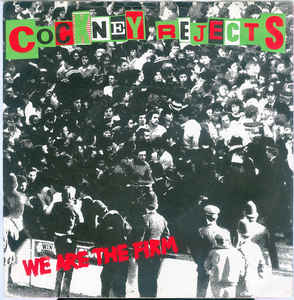
2. COCKNEY REJECTS – “War On The Terraces”
English punk rock band. Their 1980 song”Oi, Oi, Oi” was the inspiration for the name of the Oi! music genre. The band members are loyal supporters of West Ham United and pay tribute to the club with their hit cover version of of “I’m Forever Blowing Bubbles” – a song traditionally sung by West Ham supporters. From a Youtube uploader:
Peel loved them, Morrisey loves them, Shane Mcgowan and Ricky Hatton loves them….the music press hated them, the West Ham loving Cockney Rejects. A volatile cocktail of stree punk, working class values and football mayhem, these young East End urchins felt they were taking Punk back from the Kings Road posuers and back to its grass roots. The Vdeo is a brief history of English hooligansim in the 80s and 90s, it contains some scenes people might find offensive but hey, this is the rejects…it weren’t ever gonna be pretty.
I’m not posting that video here. There’s enough glorification of football violence as it is.
While putting this topic together I discovered that on their Out Of The Gutter LP they have a song called Calling The Shots! Maybe I should now adopt that for this blog as its anthem! My official video will now duly be reworked.
War On The Terraces is the flipside of the We Are The Firm single.
NUMBER ONE!
This was a favourite of John Peel. It’s always been my favourite footy song for it’s lyrics mostly, an honest resonance of a Saturday game in the eighties and a match made on the terraces. A Certain Ratio getting a mention is another plus point. The lyrics are dreadfully misrepresented online so I’ve endeavoured to correct them and print the majority of it here.
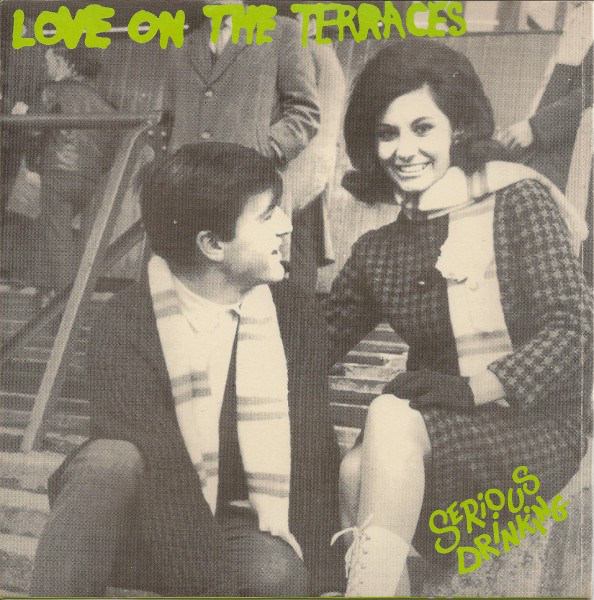
SERIOUS DRINKING – “Love On The Terraces”
Her name was Sharon, She came from Southend With sister Karen, A little skinhead, She liked football, She liked snooker, She liked A Certain Ratio, She liked the Cockney Rejects!
Love, love, love on the terraces Love, love, love on the terraces,
At the stadium, by the river, Buying her programme, And a silk scarf, She had a nice face, And blonde hair, She wore a tracksuit, She was beautiful!
Love, love, love on the terraces Love, love, love on the terraces, Love, love, love on the terraces Love, love, love on the terraces,
It got to halftime, The same as usual, There was a brass band and a Norwich disco
The match got lively, another goal went in another fight broke out then I saw Sharon.
It was love at first sight as the gangs began to fight But I couldn’t give a toss cos this match would be no loss
She’ll never walk alone She nabbed my programme, She broke my heart.
From a Guardian article:
Serious Drinking were my favourite of the Norwich bands. They took their name, they said, from Garry Bushell’s habit of ending interviews in Sounds magazine by popping to the pub with the band for some “serious drinking”. Their instrumental skills were rudimentary. They sang about drinking, about football culture, about country girls becoming punks, in the style of stupid stories told in pubs. Not for nothing was their debut album called The Revolution Starts at Closing Time.
There’s not a lot to say about the musicality of Love on the Terraces. This song will never be more than a footnote, and no one will write books about Serious Drinking in years to come. But listen to it and you’ll know this was a band having fun being in a band. And then wonder how many contemporary indie groups sound like they could play a party at your house without killing it.
Football related songs and good ones really are few and far between. I’ve achieved this by managing to eschew the quite excellent Anfield Rap too.
Circa late eighties and the hip things on the box for alternative music fans were Eurotrash, Rapido and,,, Snub,
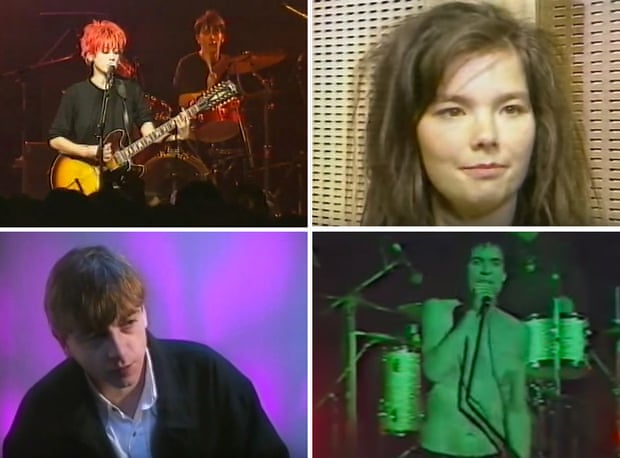
Snub TV was an alternative culture television program that aired from 1987 to 1989 as a segment on the Night Flight overnight programming on the USA Network and subsequently for three seasons on the BBC.
So if like me you’d grown up under the aural guidance of John Peel’s radio programmes, suddenly many of those bands could be seen raw on Snub, rather than just the odd *and some of them were) appearance on TOTP.
The original US program was developed by executive producer Fran Duffy and aired as part of Night Flight on a fortnightly basis. The first 2 seasons were produced in the UK by Pete Fowler and Brenda Kelly. A third season was produced in the US by Duffy with help from Giorgio Gomelsky.
In 1989-1991 a UK version, produced by Fowler & Kelly, aired for three seasons on the BBC and was syndicated to the pan-European TV channel Super Channel and in other countries in Europe, such as Russia, Portugal, Denmark and Greece,
Snub’s early focus on emphasis on the indie and underground music scene in the UK was very much informed by Kelly’s position as editor of The Catalogue, house magazine of The Cartel record distribution group, plus Fowler’s work producing videos for bands. As the BBC show developed the program covered the rise of Madchesyer documenting such bands as Stone Roses.
Snub TV was created by Pete “Pinko” Fowler and Brenda Kelly, who met working at Rough Trade records. Kelly was a budding music journalist and Fowler was a cameraman filming live gigs and promos for Rough Trade bands such as the Smiths and the Go-Betweens, before moving on to video work at Southern Studios.
The pair combined their talents for a new cable show in the US put together by anglophile Fran Duffy, which first aired 30 years ago, in 1987. Snub TV was shot in the UK for about £700 per episode, edited at ITN and Fed-Exed to the US each week, where it ran for 14 episodes.
It featured artists such as My Bloody Valentine, the JAMMS (later KLF) and Björk (in her first TV appearance, with the Sugarcubes). Britain took note, and it was soon acquired by Janet Street-Porter, then head of youth television at the BBC, where it ran for three seasons from 1989 until its demise in 1991.
Despite a healthy chunk of Snub footage being posted on YouTube, the show is not officially available anywhere and huge parts of it – including almost all of the American strand of the series – cannot be viewed at all. Pinko hoped for a release last year, but interest didn’t equate to money. “We were close to putting a DVD out of all the American and English series. I wanted to do it well, to use up outtakes and do fresh interviews with bands that are still pertinent, but nobody was willing to give us the budget to do it properly,” he says. “I want people to see stuff they’ve never seen, it just needs a few thousand quid and we can make something special. I’d love to do an eight-hour box set.”
Snub was where I first saw that Ultra Scene video for Mercy Seat and that’s as good for you today as it’s always been.
The 84-minute compilation video I’ve produced here is a best-of in essence; selected songs and interviews from the three series.
In making it, I was reunited with a few long-lost forgotten loves, notably AC Marias “Just Look” – I was quite excited when I saw that,
I’ve also tweaked, jazzed up, however you’d like to call it, the picture quality and sound where possible as the footage from th shows is via VHS standard,
I trust you’ll enjoy these memories as much as I have in knitting them together.
IN ORDER OF APPEARANCE
House Of Love – Destroy The Heart Ultra Vivid Scene – Mercy Seat Fugazi – Suggestion AC Marias – Just Talk Sonic Youth – Teen Age Riot Pixies – I Bleed We Are Going To Eat You – Heart In The Hand The Sundays – Can’t Be Sure Spacemen 3 – Revolution The Telescopes – Celeste Catherine Wheel – She’s My Friend The Fall – Bill Is Dead A Certain Ratio – Tribeca Loop – From Centre To Wave Blue Aeroplanes – …..and Stones Ride – Drive Blind The Wedding Present – Why Are You Being So Reasonable Now? Jesus Jones – Info Freak Dub Sex – Swerve Pale Saints – Insubstantial Inspiral Carpets – Commercial Rain The Mekons – Ghosts Of American Astronauts
The early seventies were a fertile period for progressively inclined musicians, with music being pushed into new frontiers, not just with new technology and production techniques, but with a mind-set about how that equipment could be used to create new sound.
The music scene in Berlin was no exception, with the development of “Krautrock”, or more respectfully, “Kosmische Musik”. This was a genre that drew on sources such as psychedelic rock, minimalism, the avant-garde, and electronically created music, blending it all in one melting pot and seeing what the results produced.
It was out of this scene that the fledgling Tangerine Dream was created by founder member Edgar Froese, a musician fascinated by technology and inspired to create his own custom-made instruments and merge the sounds with tape recordings and loops. It might sound primitive now but this was the beginning of sequencer technology which has now become the bedrock of electronic and dance music.
Froese quickly entered into collaborations like-minded musicians, and within the space of four years created four remarkable albums, which are collectively known as “The Pink Years”. (A word play on the record label Ohr, which displayed a pink ear as its logo.)
A quick scan of the credits across these four albums reveals the wealth of creative talent with early contributions from the likes of Klaus Schulze, Florian Fricke (Popol Vuh), both of whom who went on to create their own impressive musical legacies, along with sound engineer Dieter Dierks (who later had success producing the Scorpions).
The debut album Electronic Meditation was released in 1970, and is very much a collection of improvised and spontaneous pieces, based around traditional instruments like guitars and drums, with the organ almost relegated to the background to provide ambience and atmosphere. The results are not so far removed from the sort of music that Pink Floyd was experimenting with on their Ummagumma album, but the arrangements are less structured and melodic.
Alpha Centauri, which followed in 1971, saw the arrival of Chris Franke, who would become part of the seminal line-up of TD, with the organ and embryonic synthesisers becoming more prominent in the sound. The arrangements sound a little more structured, but are still full of improvisation and experimentation, and this album might be considered a bridge between the original Kosmische Musik sound and the more ambient music that would follow.
Zeit is very much the definition of “cosmic music”, spread across four lengthy pieces, each running for around 20 minutes. It feels like a lot to absorb, but in fact as soon as the opening cello notes strike up, the listener is drawn into a zone where time becomes meaningless and motionless. The emphasis is on atmosphere and ambience, with little or no rhythm, and no discernible melody, and yet it’s an incredibly absorbing listening experience. Crudely put, it’s like experiencing a space odyssey in your own mind.
The album that followed, Atem, often feels sidelined by comparison, as the music moved towards more recognisable melodies and sequenced patterns. However, for me it’s as rewarding as the previous albums, as it shows the band continuing to progress and redefine their sound. The spacey “out there” feel of Zeit is still present, but you can feel the sound moving closer to the tempos and rhythmic oscillations that would define the following year’s landmark album Phaedra – their first for the Virgin label, and the beginning of a golden period for the trio’s creativity.
The Pink Years set has been exhaustively issued and reissued over the years, but the current record label Esoteric has seen fit to reissue the set again, in a clamshell box with LP style replica cardboard covers for each cd. In terms of packaging it’s disappointingly bare-bones, with no inner sleeves or liner notes, and merely a fold-out poster.
The chief narrative above is credited to fellow WP blog Moments In Transition and author johnstout64
You would need to have pretty much an entire afternoon at your disposal to absorb this mix in its entirety, At just a few seconds over two and three quarter hours it showcases the seventies output and of the mixing, made using Virtual DJ, I think that it does represent a complete journey; Zeit into Atem and Rubycon into Stratosfear worked particularly well. Here is the set menu:
Alpha Centauri
Zeit
Atem
Phaedra
Ricochet (Part 2)
Rubycon (Part 1)
Stratosfear
Madrigal Meridian
Cloudburst Flight
Tangram (Set 1)
20p a play, five plays for a quid as I remember but jukeboxes were really more of a seventies thing. Hard to imagine finding “Cab It Up!” in the late eighties when the pop world was all Stock, Aitken and Waterman.
Coincidentally, the flipside to”Cab It Up!” was Deadbdeat Decendent, actually one of my very early Fall listens upon buying (on vinyl of course) the Seminal Live! LP.
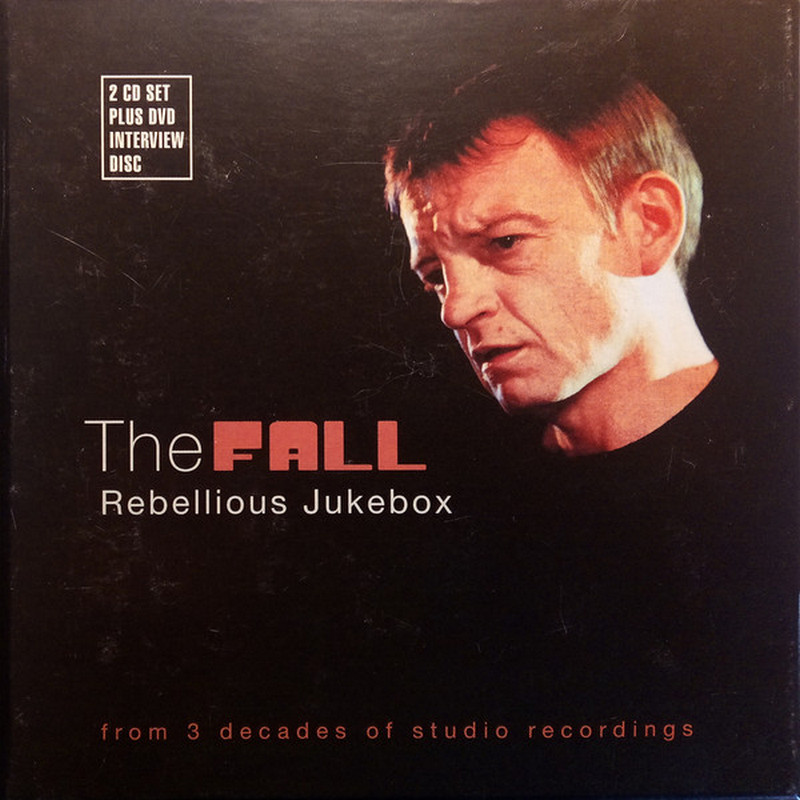
The Fall originally formed in Manchester, England in late 1976, making its live debut in May 1977. For over 40 years, the group continued with founder and sole constant Mark E Smith at the helm, until his untimely death in January 2018.
Around 50 core members have passed through the group’s ranks, bolstered on various occasions by additional guests. To 2018, there have been 32 studio albums, more than 50 singles and approaching 100 live albums, compilations and box sets.
My adoration and loyalty to the band’s music has never waned though I was surprised at their longevity and output. Clearly MES always felt he had more to do rather than prove and wanted to satiate an old fanbase that was still attracting new blood way into the noughties.
If we were to use the millenium as a divide then me, I’m certainly old school in preferring the very early period so in doing this wee project, you won’t be surprised that my ten selections are all from that era.
My introduction to the band was, like so many, because of John Peel’s radio programmes. He loved The Fall. He played a lot of The Fall. And his festive fifties were full of The Fall.
I think the first song I heard was “Container Drivers”, a screeching, rockabilly-like blast that just grabbed you by the short ‘n’ curlies. After that I remember buying their debut LP, Live At The Witch Trials, oh and Totally Wired on a single.
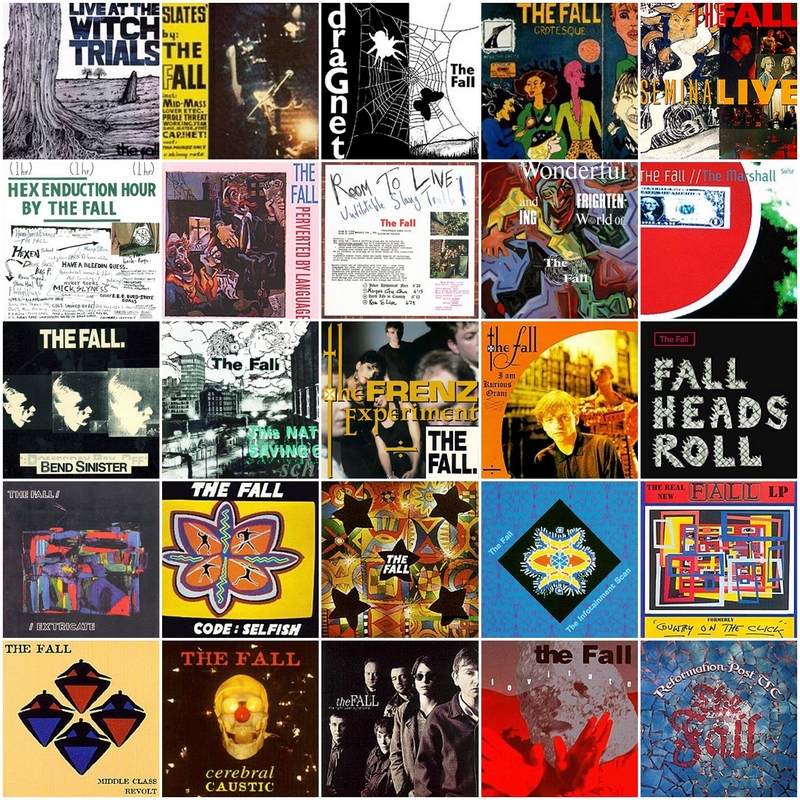
Geotesque remains my favourite Fall album and it was a tough call leaving out English Scheme and Impression Of J. Temperance but something had to give.
Preparing a favourite ten songs by The Fall for me was a lot easier to do than say, ten favourites by REM. Both have extensive album discographies but The Fall are just different gravy. There’s usually a killer song on an album in comparison to REM having three or four ‘hits’, given their more mainstream appeal.
01. Surmount All Obstacles (Middle Class Revolt)
02. Australians In Europe (B-side of Hit The North)
03. Leave The Capitol (Slates)
04. Gramme Friday (Grotesque)
05. Fantastic Life (Room To Live)
06. No Bulbs (The Wonderful And Frightening World)
07. High Tension Line (Shiftwork)
08. Hexen Definitive / Strife Knot (Perverted By Language)
09. Guest Informant (The Frenz Experiment)
10. Jawbone And The Air Rifle (Hex Enduction Hour)
And I guess that my top ten may come as a surprise to Fall fans who know much better than I. For example, from Extricate, I really like Bill Is Dead. It’s just stands out to me from the other songs, not sure what it is about it but for me it even tops Telephone Thing!
High Tension Line gets in by virtue of it being one of the very few Fall items I bought on 12″!
Along with a few of others in Wrong Place, Right Time, Free Range and the aforementioned Deadbeat Descendent, Bill just fails to make the cut here.
10. Jawbone And The Air Rifle (Hex Enduction Hour)
09. Guest Informant (The Frenz Experiment)
08. Hexen Definitive / Strife Knot (Perverted By Language)
07. High Tension Line (Shiftwork)
06. No Bulbs (The Wonderful And Frightening World)
05. Fantastic Life (Room To Live)
04. Gramme Friday (Grotesque)
03. Leave The Capitol (Slates)
02. Australians In Europe (B-side of Hit The North)
01. Surmount All Obstacles (Middle Class Revolt)
This selection I like to play in this order as am album in its own right too – I think it flows without the contraflow. If you like, why not use the LEAVE A REPLY box and tell us your ten fave Fall numbers.
The Fall are still going today so far as I’m aware and perhaps back then against the back drop of regular chart music, they were really out on there own and truly this nation’s saving grace.
CREDITATION
Eoin Murray, Vinyl Factory The Fall Online The Great Rock Bible











 Three gigs later, desperate to play somewhere other than the Dublin Castle public house, the threesome recruited expatriate Scot and sometime Falcon barperson Roxanne, principally because the promoter at The Falcon had promised them a gig just so he could see her sing. They dropped the ‘e’. Joe later claimed it had been stolen by Thee Hypnotics, and a legend was born.
 February ’91 brought forth the







 Acid Mouse Music